Skip to content
You can now search across every topic, entity and event.What's new
Iran Conflict 2026
21JUN

The EU can now sell a tanker's cargo

2 min read
17:51UTC

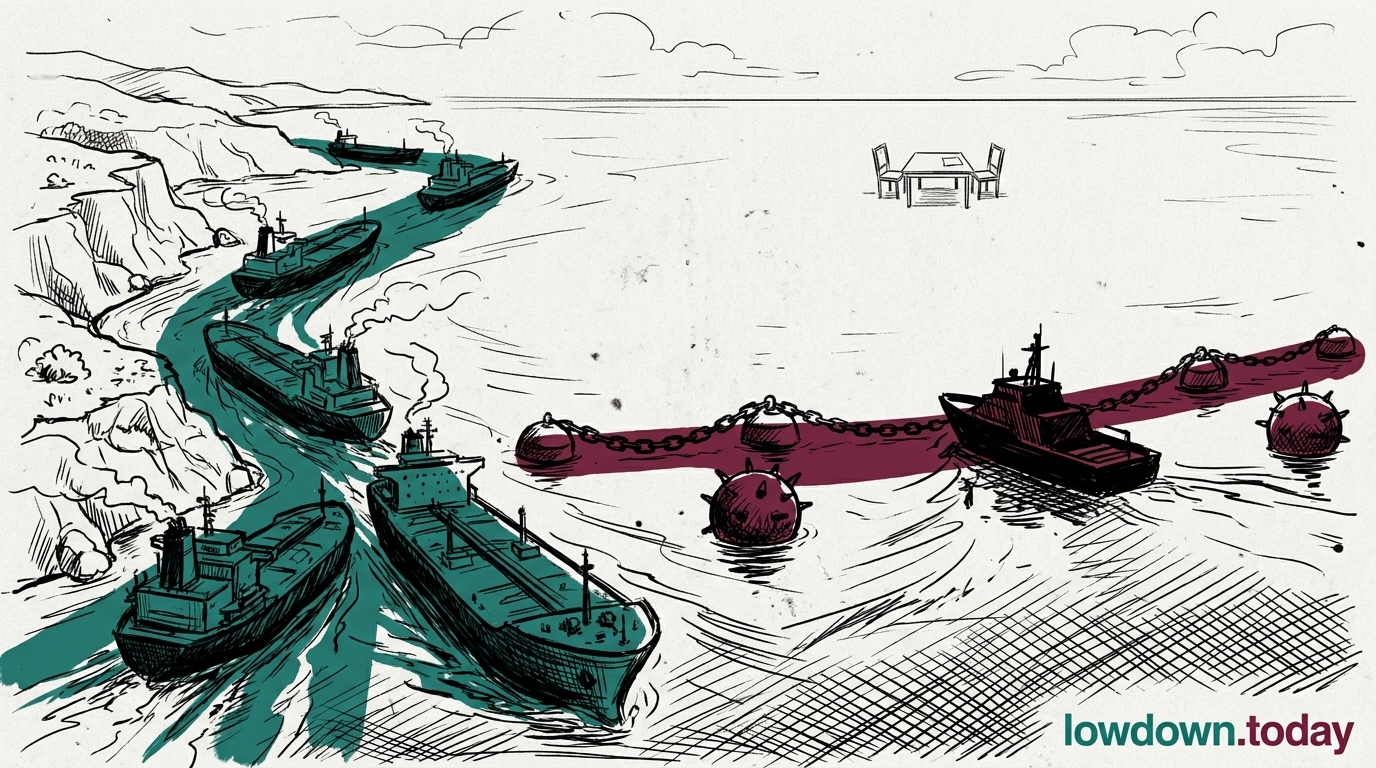
A member state that boards a shadow-fleet tanker may now confiscate and sell its cargo outright, rather than hold the vessel in storage indefinitely, under enforcement powers the EU brought into force this week.

ConflictAssessed
Key takeaway

EU boarding states can now seize and sell a shadow tanker's cargo; the frozen price cap will not rise.

A member state that boards a shadow-fleet tanker may now confiscate and then sell its cargo, rather than hold the vessel and its oil in storage indefinitely, under enforcement provisions in the Council of the EU's 21st sanctions package 1. The shadow fleet is the ageing, opaquely owned tanker pool that moves sanctioned Russian crude outside Western insurance and ownership chains. Until now, boarding one left a state holding a vessel it could not easily dispose of; selling the cargo turns a storage liability into a recovered asset and a direct cost to the operator.

The package widened the net in two further ways. It lifted the count of listed vessels from 632 to 673 and, for the first time, designated a crewing agency rather than a ship, extending listing risk from the hulls to the labour supply chain that mans them. The listing criteria now reach bunkering and support vessels, not tankers alone.

The clause that reaches this desk sits in the price cap. The G7 cap's automatic adjustment is paused to 15 July 2027, the Council citing the market situation around the strait of Hormuz. A floating cap would have drifted the $44.10 ceiling upward as Brent climbed; freezing it means Russia gains none of that legal headroom even as the flat price rises. The binding constraint stays the shadow-fleet insurance workaround, which the freeze leaves untouched, so sanctioned crude can still clear above the cap in practice while the ceiling itself no longer moves.


Deep Analysis

In plain English

The EU's newest sanctions package, adopted on 23 July, gives member states a new power: if they stop and board a sanctioned Russian oil tanker, they can now sell its cargo instead of just holding the ship in port indefinitely, which used to tie up money and space without resolving anything. The package also, for the first time, sanctioned a company that supplies crew to these tankers rather than only the ships or their owners, and added 41 more vessels to its blacklist, bringing the total to 673.

What could happen next?
  • Consequence

    Boarding states gain a financial incentive to enforce more actively, since detained cargo now converts to recoverable value rather than an open-ended storage cost.

  • Precedent

    The first crewing-agency designation sets a template for the EU to target labour-supply contractors across the shadow fleet, not only vessel owners and flag states.

First Reported In

Update #20 · Saudi crude reroutes to Suez, freight bites

Council of the European Union· 27 Jul 2026
Read original
Causes and effects
This Event
The EU can now sell a tanker's cargo
The confiscate-and-sell power changes the economics of detention for both the boarding state and the shadow-fleet operator, and it arrives alongside the first designation of a crewing agency and a freeze on the price cap's upward drift.
Different Perspectives
Shipping and insurance industry
UKMTO counted about 20 US-facilitated Hormuz transits a day to 11 September against only 6 visible on AIS, with traffic still around 90% below the 138-a-day pre-war baseline. War-risk underwriters cannot price hulls they cannot see, or resolve whether the tanker El Gaia hit a mine, as Iran claims, or a missile and drone, as CENTCOM says.
European refiners
European refiners
European refiners, including Poland's Orlen, absorbed a roughly $26 gap between Dated Brent at $130.80 on 15 September and ICE Brent futures settling at $103.87 on 18 September, a spread that widened from $13.45 on 9 September rather than newly opening. Their futures hedges no longer cover what they now pay for physical barrels.
Saudi Arabia
Saudi Arabia
Saudi Aramco zeroed European term customers' October allocations and rerouted roughly 60 million barrels to Asia through Ras Tanura and Sohar, using Red Sea and Gulf terminal capacity built years ago to cut Hormuz exposure. Riyadh reallocated existing supply rather than negotiating a shortfall with Europe.
Qatar
Qatar
Qatar's energy minister Saad al-Kaabi told Bloomberg at the Qatar Economic Forum on 20 September that Bessent's two-year Hormuz-obsolescence forecast is wrong, and that Doha has deliberately built no bypass pipeline. Qatar's gas exports run through one waterway by choice, not oversight.
Iran (foreign ministry and Majlis)
Iran's foreign ministry and 130 Majlis deputies moved toward NPT withdrawal this week, with lawmaker Hossein-Ali Haji Deligani filing a triple-urgency bill on 20 September that Speaker Qalibaf has not yet scheduled. Tehran treats treaty membership as leverage still on the table, not yet spent.
Russia and China
Russia and China
Moscow and Beijing vetoed the Panel of Experts' renewal, maintaining Resolution 2231 lapsed in October 2025 and the 2025 snapback was never validly triggered, so the sanctions architecture the Panel enforces has no current legal standing. Both governments frame the veto as upholding law, not shielding Tehran.



