Skip to content
You can now search across every topic, entity and event.What's new
Iran Conflict 2026
18JUN

US partly lifts its Anthropic model curb

3 min read
10:02UTC

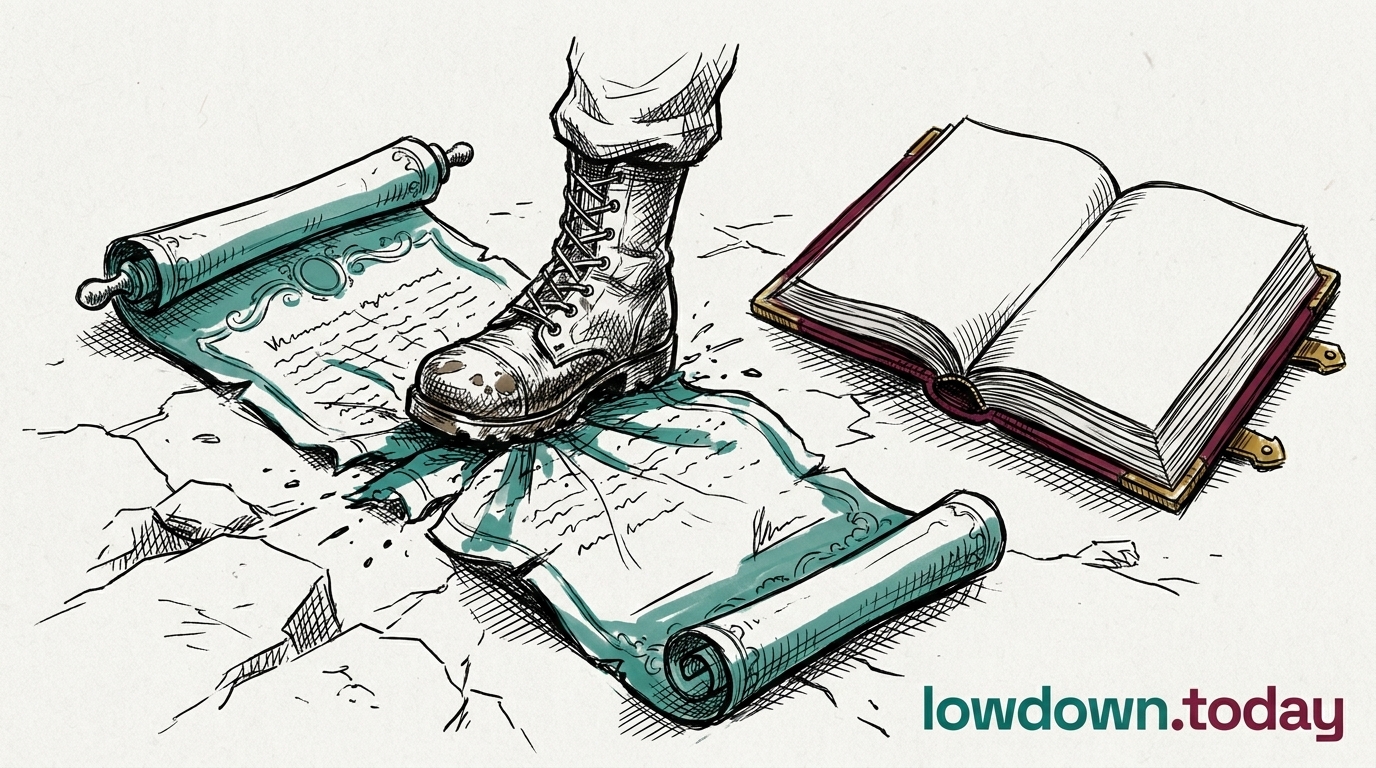
The US Commerce Department partially lifted its restriction on Anthropic's top models on 27 June, fifteen days after the order, turning a hard cut-off into a fast-moving one.

ConflictDeveloping
Key takeaway

Commerce partly lifted the Anthropic restriction within fifteen days, exposing US model access as an adjustable policy lever.

The US Commerce Department partially lifted its restriction on Anthropic's frontier models on 27 June, turning a hard cut-off into a fast-moving one. The reversal came fifteen days after the original order that had pulled the two models worldwide, converting an outright block into a partial, conditional restriction whose remaining scope is still unsettled.

Commerce did not spell out which users regain access or on what terms. The speed of the climbdown, barely two weeks from order to partial lift, shows the restriction working as a policy lever rather than a fixed technical limit, one Washington can tighten or loosen at will. The same discretion runs through the 24 July trade ruling now approaching .

The episode lands five weeks before the EU AI Act's general-purpose AI (GPAI) rules start to bite on 2 August, the date the bloc's AI Office can begin fining model providers. European enterprises weighing procurement against that clock now face a moving target. A model whose availability can change inside a single quarter is hard to standardise on, and that hands the European labs an opening they did not have to win.


Deep Analysis

In plain English

Fifteen days after the US government ordered Anthropic to cut off access to its most powerful AI models for users outside America, a different US government body, the Commerce Department, partially reversed that decision on 27 June. The models were not fully restored to their previous state, but users could access them again under new conditions. The episode matters not because access was cut and then partially restored, but because of what that sequence reveals: the US government treated Anthropic model access as a switch it controls, turned it off, and then turned it partly back on within a fortnight. European businesses that had built their software or services around Anthropic models now know that the switch exists. Five weeks later, the EU's new rules for powerful AI models come into force, and any business using those models needs to plan for the possibility that access could be interrupted again.

What could happen next?
  • Risk

    European enterprises that retained Anthropic models after the partial lift face a documented precedent: the US can reimpose the restriction without advance notice, leaving GPAI-regulated workflows in compliance jeopardy.

    Immediate · Assessed
  • Opportunity

    The partial lift's demonstrated conditionality accelerates commercial migration to EU-incorporated AI providers, creating a defined addressable market for Mistral and Aleph Alpha among GPAI-regulated enterprise buyers.

    Short term · Reported
  • Precedent

    The 15-day order-to-reversal cycle establishes that US export controls on AI models can be imposed and partially lifted on policy grounds within a single business month, making frontier-model access a managed political variable rather than a stable commercial service.

    Long term · Assessed
First Reported In

Update #10 · Digital euro to trilogue; Senate bars CBDC

CNBC· 30 Jun 2026
Read original
Causes and effects
This Event
US partly lifts its Anthropic model curb
The fast partial reversal shows US restrictions on frontier-model access can move within a single quarter, complicating European procurement before 2 August enforcement.
Different Perspectives
Lloyd's Market Association
War-risk underwriters price the Houthis' Red Sea attacks because the group announces its targets in advance, but the unclaimed Damietta drone gives insurers a hit with no author to price against. An attack nobody claims costs shipping more than one that is claimed, since premiums are set against a known pattern, not raw damage.
US Central Command
US Central Command
CENTCOM has announced no strike on Iran since resuming bombing on 30 July within hours of an IRGC salvo on Jordan, and centcom.mil did not respond to requests to confirm any pause. The command has gone quiet before while a larger operation was being weighed, so silence alone proves nothing about what it has or has not done.
Hengaw
Hengaw
Hengaw recorded at least 67 executions in Iran during July, of which the state acknowledged only eight, and reported the 1 August execution of protest detainee Arvin Kheirkhahan at Shahrud with no advance notice to his family. A family's first notice of a death sentence is now usually the instruction to collect a body.
Egypt
Egypt
Egypt's government asked media on 2 August to report the Damietta attack accurately, named no author, and said no findings will be published before its own investigation concludes. Cairo holds the debris and jurisdiction over an attack on its own soil, and naming a culprit now would pull it into a dispute it has avoided for five months.
Iran's Foreign Ministry
Araghchi called the Hormuz talks with Oman final-stage on 2 August, four days after his own deputy rejected Oman's lane proposal, and denied the Damietta drone strike as an Israeli false flag while two Iranian officials privately claimed it for Tehran. Iran's public position now contradicts itself on both files at once.
Bahrain and Kuwait
Bahrain and Kuwait
Bahraini and Kuwaiti aircraft flew their own strikes on Iranian depots in July with Emirati air cover behind them, and Ynetnews reports some Gulf capitals wanted the 2 August strike to proceed rather than stop. States that have already taken fire see a closing window on Iranian weakness, not a reason to pause.