Skip to content
You can now search across every topic, entity and event.What's new
Iran Conflict 2026
17JUN

Treasury rolled over a sale clock, not the crude waiver

2 min read
09:37UTC

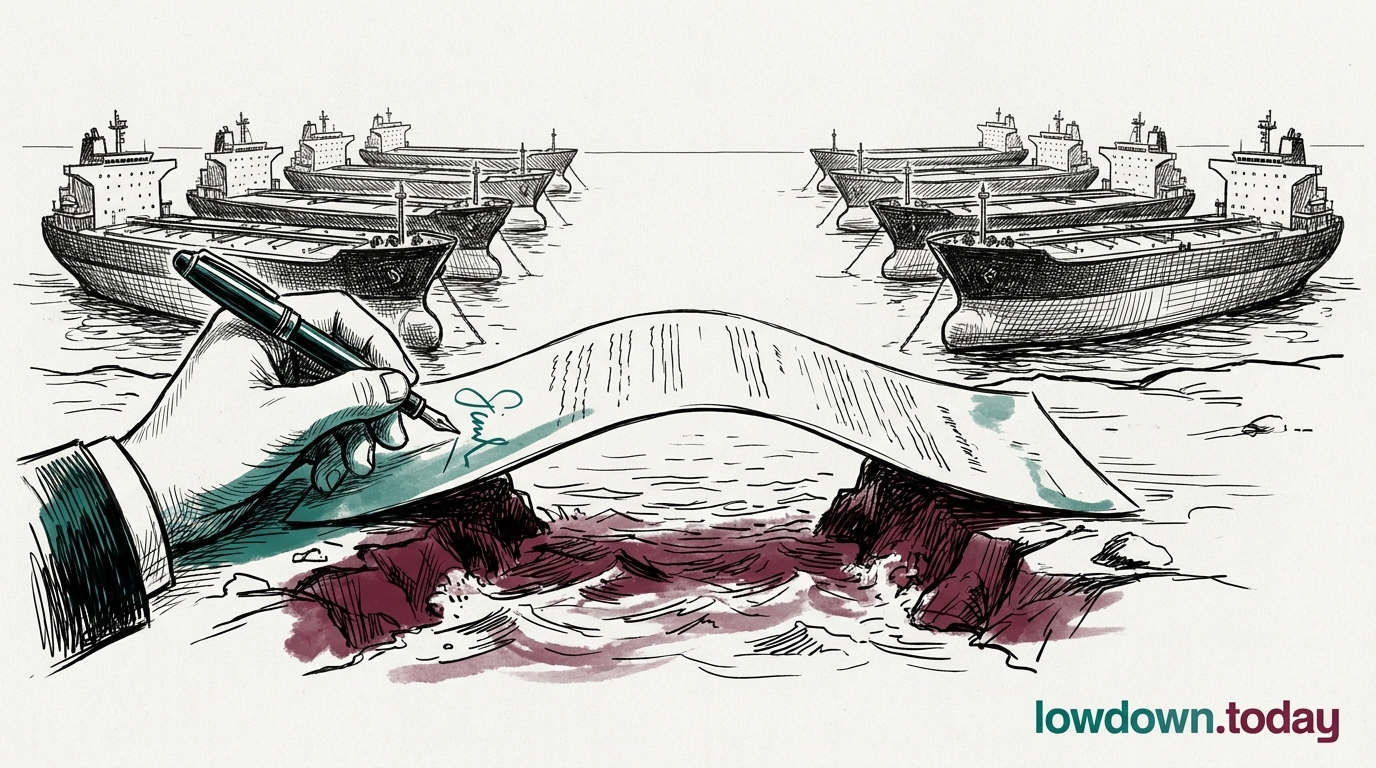
OFAC's principal Russia action of the window was General Licence 131H, the eighth straight monthly rollover of the window to negotiate a Lukoil International GmbH sale.

ConflictDeveloping
Key takeaway

OFAC issued its eighth straight monthly rollover of the Lukoil sale window and left Russia's lapsed crude waiver alone.

The US Treasury's Office of Foreign Assets Control (OFAC), the body that writes and enforces American sanctions, issued General Licence 131H on 24 July 1. A general licence is a standing authorisation that permits a class of transaction which sanctions would otherwise prohibit. This one authorises negotiating and entering into contingent contracts for the sale of Lukoil International GmbH and related maintenance activities, running to 22 August. It is the eighth consecutive monthly rollover of that same window, and it covers negotiation only: closing any sale still needs a separate, deal-specific OFAC licence.

It is the principal Russia-related action OFAC took in the window, and it is not the one the market was watching. The crude-oil waiver remains unrenewed, having already lapsed without a successor when this briefing last checked the register . A general licence that expires and is not replaced does the work of a new sanction while requiring no announcement, no coalition and no vote, since the prohibition it was suspending simply resumes.

Sanctions agencies are read as much by what they choose to touch as by what they issue. OFAC has continued rolling over the routine Lukoil divestment window on schedule while leaving the oil file untouched, and an agency that is administratively active but substantively still is telling readers that inaction on crude is a position rather than an oversight.


Deep Analysis

In plain English

OFAC is the US Treasury office that enforces sanctions. On 24 July it issued General Licence 131H, which lets parties keep negotiating a sale of Lukoil International GmbH, the sanctioned Russian oil major's German subsidiary, without breaching sanctions. It is the eighth month running that OFAC has extended this window rather than let it lapse. This is a narrow, technical rollover about one company sale, not a loosening of sanctions on Russian oil. Separately, the US still has not replaced the waiver that used to let some Russian crude oil be traded without penalty, and that gap remains unresolved.

Deep Analysis
Root Causes

OFAC general licences function as narrow, renewable carve-outs from a sanctions programme's default prohibition; rolling over the Lukoil International GmbH negotiation window for an eighth straight month while allowing the crude-oil waiver to lapse reflects a policy choice to keep a managed exit route open for a specific divestment, while withdrawing the more economically consequential carve-out for oil trade.

The licence authorises negotiation and contingent contracts only, not a completed sale; closing any transaction still requires a separate, deal-specific OFAC authorisation, so the rollover itself changes nothing about whether a sale can close.

What could happen next?
  • Meaning

    Rolling over the Lukoil International GmbH sale window for an eighth straight month while letting the crude-oil waiver lapse shows US sanctions policy keeping a narrow divestment channel open while withholding the broader energy-trade carve-out.

  • Consequence

    Prospective buyers retain a legal channel to negotiate for Lukoil International GmbH but cannot close a sale without a further, deal-specific OFAC licence, and Russian crude-oil trade channels remain without a renewed waiver.

First Reported In

Update #26 · Russia's costliest month, smallest gain

US Treasury OFAC· 3 Aug 2026
Read original
Causes and effects
This Event
Treasury rolled over a sale clock, not the crude waiver
The agency kept a routine divestment clock ticking and left the crude-oil waiver where it lies.
Different Perspectives
Lloyd's Market Association
War-risk underwriters price the Houthis' Red Sea attacks because the group announces its targets in advance, but the unclaimed Damietta drone gives insurers a hit with no author to price against. An attack nobody claims costs shipping more than one that is claimed, since premiums are set against a known pattern, not raw damage.
US Central Command
US Central Command
CENTCOM has announced no strike on Iran since resuming bombing on 30 July within hours of an IRGC salvo on Jordan, and centcom.mil did not respond to requests to confirm any pause. The command has gone quiet before while a larger operation was being weighed, so silence alone proves nothing about what it has or has not done.
Hengaw
Hengaw
Hengaw recorded at least 67 executions in Iran during July, of which the state acknowledged only eight, and reported the 1 August execution of protest detainee Arvin Kheirkhahan at Shahrud with no advance notice to his family. A family's first notice of a death sentence is now usually the instruction to collect a body.
Egypt
Egypt
Egypt's government asked media on 2 August to report the Damietta attack accurately, named no author, and said no findings will be published before its own investigation concludes. Cairo holds the debris and jurisdiction over an attack on its own soil, and naming a culprit now would pull it into a dispute it has avoided for five months.
Iran's Foreign Ministry
Araghchi called the Hormuz talks with Oman final-stage on 2 August, four days after his own deputy rejected Oman's lane proposal, and denied the Damietta drone strike as an Israeli false flag while two Iranian officials privately claimed it for Tehran. Iran's public position now contradicts itself on both files at once.
Bahrain and Kuwait
Bahrain and Kuwait
Bahraini and Kuwaiti aircraft flew their own strikes on Iranian depots in July with Emirati air cover behind them, and Ynetnews reports some Gulf capitals wanted the 2 August strike to proceed rather than stop. States that have already taken fire see a closing window on Iranian weakness, not a reason to pause.



