Skip to content
You can now search across every topic, entity and event.What's new
Iran Conflict 2026
17JUN

CENTCOM Gulf blockade tally reaches 127

2 min read
09:37UTC

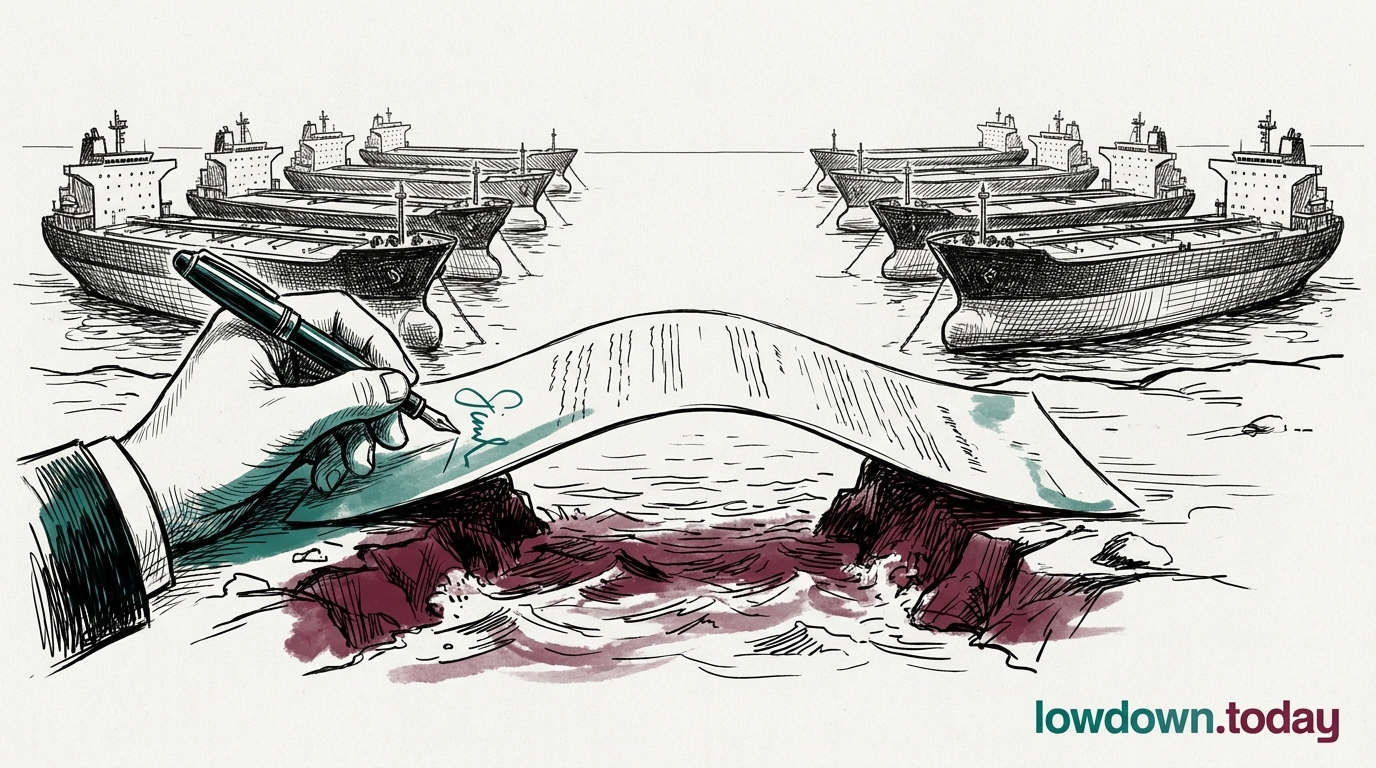
A CENTCOM Hellfire crippled the tanker M/T Lexie bound for Kharg Island on 2 June, lifting the Gulf blockade tally to 127 vessels redirected and six disabled.

ConflictDeveloping
Key takeaway

A CENTCOM Hellfire disabled the M/T Lexie, lifting the Gulf blockade tally to 127 redirected and six disabled.

US Central Command (CENTCOM), the American military command for the Middle East, disabled the tanker M/T Lexie with a Hellfire missile on 2 June while the vessel was bound for Kharg Island, Iran's main oil-export terminal 1. The strike brought CENTCOM's running blockade tally to 127 vessels redirected and six disabled, up from 121 redirections recorded on 1 June . CENTCOM has been intercepting and turning back commercial traffic in the strait of Hormuz, the 33-kilometre chokepoint through which much of the Gulf's oil moves.

The Lexie is the latest in a sequence of munition-based interdictions rather than warnings or boardings, and each one feeds the war-risk premium underwriters charge on Gulf transits. Higher premiums raise the cost of every cargo that still moves through the strait and deepen the squeeze on Iran's already shrinking seaborne oil exports. The blockade is a physical enforcement act stacking up alongside the week's signed sanctions, a counterweight to the verbal claim that a deal is nearly done.


Deep Analysis

In plain English

CENTCOM, the US military command covering the Middle East, has been enforcing a blockade in the Gulf to stop ships delivering supplies to Iran or removing Iranian oil. Under this blockade, US forces intercept vessels, warn them not to proceed, and redirect them away from Iranian ports. When a ship ignores those warnings, CENTCOM has started disabling them using Hellfire missiles, originally designed as air-to-ground weapons. On 2 June a tanker called the M/T Lexie ignored warnings while heading to Kharg Island, Iran's main oil export terminal, and was struck and disabled. CENTCOM has now disabled six hulls by Hellfire missile since the blockade began in early March. Each disabled vessel raises the insurance cost for every ship in the region. Lloyd's of London and other marine insurers calculate war-risk premiums based on the frequency of armed incidents in a given area. Six disabled hulls by munition in 100 days places the Strait of Hormuz, through which roughly one-fifth of global oil flows, in the highest war-risk tier. Those premiums feed into the cost of shipping everything from crude oil to grain to consumer goods, adding to price pressures globally.

Deep Analysis
Root Causes

The Hellfire interdiction method emerged from a specific legal and operational constraint: boarding operations are slow, risk casualties on both sides, and require a prize crew to accompany captured vessels. Hellfire disabling of engine rooms removes the vessel from the transit path with no US personnel exposure and no prize-crew obligation.

CENTCOM adopted the tactic after the first boarding operations in March drew complaints from flag-state governments about seizure under international maritime law. The disabled-hull approach creates its own legal question: whether disabling a civilian vessel in international waters constitutes an act of war against the flag state, a question no belligerent government has yet tested in court.

First Reported In

Update #120 · The deal's last 5% is uranium nobody can find

House of Saud· 7 Jun 2026
Read original
Different Perspectives
Lloyd's Market Association
War-risk underwriters price the Houthis' Red Sea attacks because the group announces its targets in advance, but the unclaimed Damietta drone gives insurers a hit with no author to price against. An attack nobody claims costs shipping more than one that is claimed, since premiums are set against a known pattern, not raw damage.
US Central Command
US Central Command
CENTCOM has announced no strike on Iran since resuming bombing on 30 July within hours of an IRGC salvo on Jordan, and centcom.mil did not respond to requests to confirm any pause. The command has gone quiet before while a larger operation was being weighed, so silence alone proves nothing about what it has or has not done.
Hengaw
Hengaw
Hengaw recorded at least 67 executions in Iran during July, of which the state acknowledged only eight, and reported the 1 August execution of protest detainee Arvin Kheirkhahan at Shahrud with no advance notice to his family. A family's first notice of a death sentence is now usually the instruction to collect a body.
Egypt
Egypt
Egypt's government asked media on 2 August to report the Damietta attack accurately, named no author, and said no findings will be published before its own investigation concludes. Cairo holds the debris and jurisdiction over an attack on its own soil, and naming a culprit now would pull it into a dispute it has avoided for five months.
Iran's Foreign Ministry
Araghchi called the Hormuz talks with Oman final-stage on 2 August, four days after his own deputy rejected Oman's lane proposal, and denied the Damietta drone strike as an Israeli false flag while two Iranian officials privately claimed it for Tehran. Iran's public position now contradicts itself on both files at once.
Bahrain and Kuwait
Bahrain and Kuwait
Bahraini and Kuwaiti aircraft flew their own strikes on Iranian depots in July with Emirati air cover behind them, and Ynetnews reports some Gulf capitals wanted the 2 August strike to proceed rather than stop. States that have already taken fire see a closing window on Iranian weakness, not a reason to pause.



