Skip to content
You can now search across every topic, entity and event.What's new
Iran Conflict 2026
13JUN

Pakistan pledges to continue mediating alone

1 min read
10:52UTC

Deputy PM Ishaq Dar confirmed Pakistan will continue its mediator role despite the Islamabad breakdown.

ConflictDeveloping
Key takeaway

Pakistan holds the mediator role alone, with 10 days to produce a follow-up session.

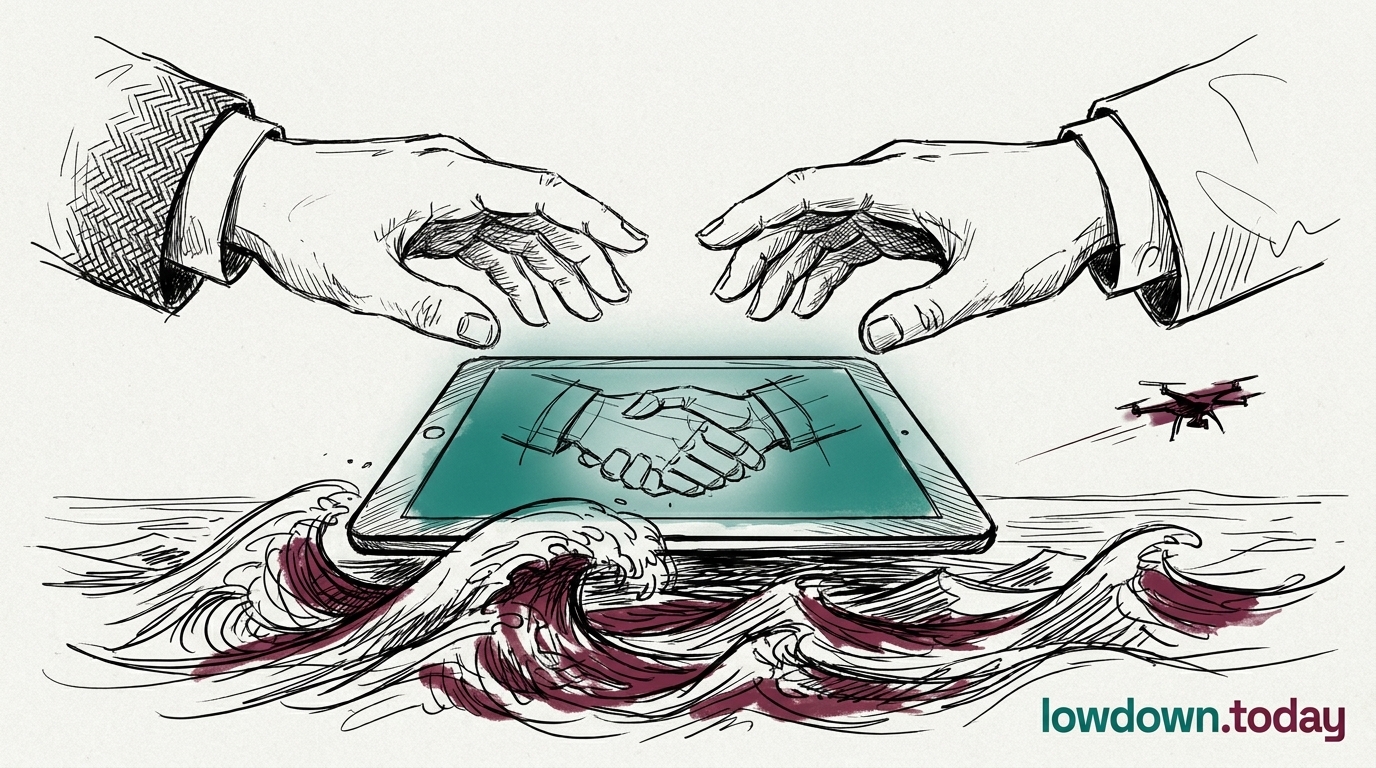
Pakistan's Deputy Prime Minister Ishaq Dar confirmed on 12 April that Islamabad will continue mediating between the US and Iran despite the talks producing no agreement. Dar stated: "Islamabad has been and will continue" as mediator. Iran's Foreign Ministry signalled willingness to continue but proposed no date.

Pakistan hosted the talks by invoking the precedent of the 1988 Geneva Accords, when it hosted proximity negotiations between the Soviet Union and Afghanistan. Pakistani officials logged more than 25 high-level contacts in the days preceding the talks to arrange the format. Sessions shifted from proximity to direct, with Pakistani officials mediating in the room.

Vance's departure leaves Pakistan as the only state with an active claim to the mediator role. Oman, which facilitated earlier indirect channels, has not publicly offered to host a next round. Egypt relayed a truce offer in early April but has not been part of the Islamabad format. Pakistan now has roughly 10 days to produce a follow-up session before the ceasefire expires around 22 April.

Pakistan's neutrality took damage during the talks themselves. Defence Minister Khawaja Asif posted anti-Israel content on social media during the opening session , an unforced error that compromised the host country's image of impartiality. Whether that incident weakens Islamabad's standing as a future venue remains to be seen.

Deep Analysis

In plain English

Pakistan offered to host the talks and serve as a go-between because it has diplomatic relations with both the US and Iran, and because it wanted to establish itself as a regional power broker. After the talks failed to produce a deal, Pakistan's Deputy PM Ishaq Dar said his country would keep trying. The problem is that Pakistan's value as a mediator depends on being trusted by both sides. During the talks, Pakistan's Defence Minister posted on social media calling Israel 'a cancerous state'. Israel immediately said Pakistan could not be a neutral mediator. That controversy has not been resolved. Pakistan needs another round of talks to happen in Islamabad to prove the first round was not a one-off. If no second round is scheduled before the ceasefire expires, Pakistan's diplomatic investment is wasted.

What could happen next?
  • Consequence

    Pakistan's mediating credibility is contingent on producing a second round before the ceasefire expires; without a scheduled session, Islamabad's role as a diplomatic channel becomes a historical footnote rather than an active mechanism.

  • Risk

    The Pakistan Defence Minister's social media post calling Israel 'a cancerous state' remains unresolved; Netanyahu's office specifically stated Pakistan cannot be a neutral arbiter, which limits Islamabad's ability to serve as a venue if the US-Israel relationship constrains the format.

First Reported In

Update #66 · Islamabad collapses: 10 days to expiry

NPR· 12 Apr 2026
Read original
Causes and effects
This Event
Pakistan pledges to continue mediating alone
Pakistan is now the only active mediator with a stated commitment to continue, but its credibility depends on producing a follow-up session before the ceasefire expires.
Different Perspectives
Iran's Supreme Leader's office and Iranian households
A letter published through state media named Lebanon's territorial integrity and an end to Israeli operations there as the war's ending condition; the same week, spokesperson Mohajerani cut the subsidised petrol ration from 70 to 50 litres a month. Iranian agencies still disagree on who inside the office signed the letter.
Oman
Oman
Muscat proposed a voluntary-funded coalition to police Hormuz, the corridor its own coastline gives it standing to manage, while Iran wants control and toll rights over shipping and Washington insists on free navigation. Oman's remit stops at the strait; it has no comparable claim over Iraq, the Caspian, or Lebanon.
Kyiv
Kyiv
President Volodymyr Zelenskyy confirmed the Caspian strike on an Iranian vessel carrying military cargo from Russia's Astrakhan region, opening a front that ties Iran's war to its supply relationship with Moscow rather than to anything the Gulf mediators are discussing.
Riyadh
Riyadh
Maj Gen Turki Al Malki named Iraq as the launch point for drones intercepted over the Eastern Province and Riyadh, the first time this war has reached Saudi Arabia from that direction rather than from Yemen. Nothing landed, but a second launch geography aimed at Saudi oil now exists alongside the Houthi front.
Baghdad
Baghdad
Iraq's Foreign Ministry summoned its own ambassador in Riyadh after Saudi Arabia's Defence Ministry said the drones came from Iraqi territory, while the same day drones struck Iranian-Kurdish opposition camps inside Iraq. Baghdad is disowning attacks it did not launch from territory it does not fully control.
The Pentagon and Congress
Acting press secretary Joel Valdez attributed the toll's reversal to site anomalies, the same explanation the department gave for the opposite cut on 24 July; Representative Thomas Massie called the category change an absurd ruse designed to reset the war's legal clock. Neither side agrees on which explanation, or which war, is real.