Skip to content
You can now search across every topic, entity and event.What's new
Iran Conflict 2026
13JUN

EU targets shadow fleet's service layer

2 min read
10:52UTC

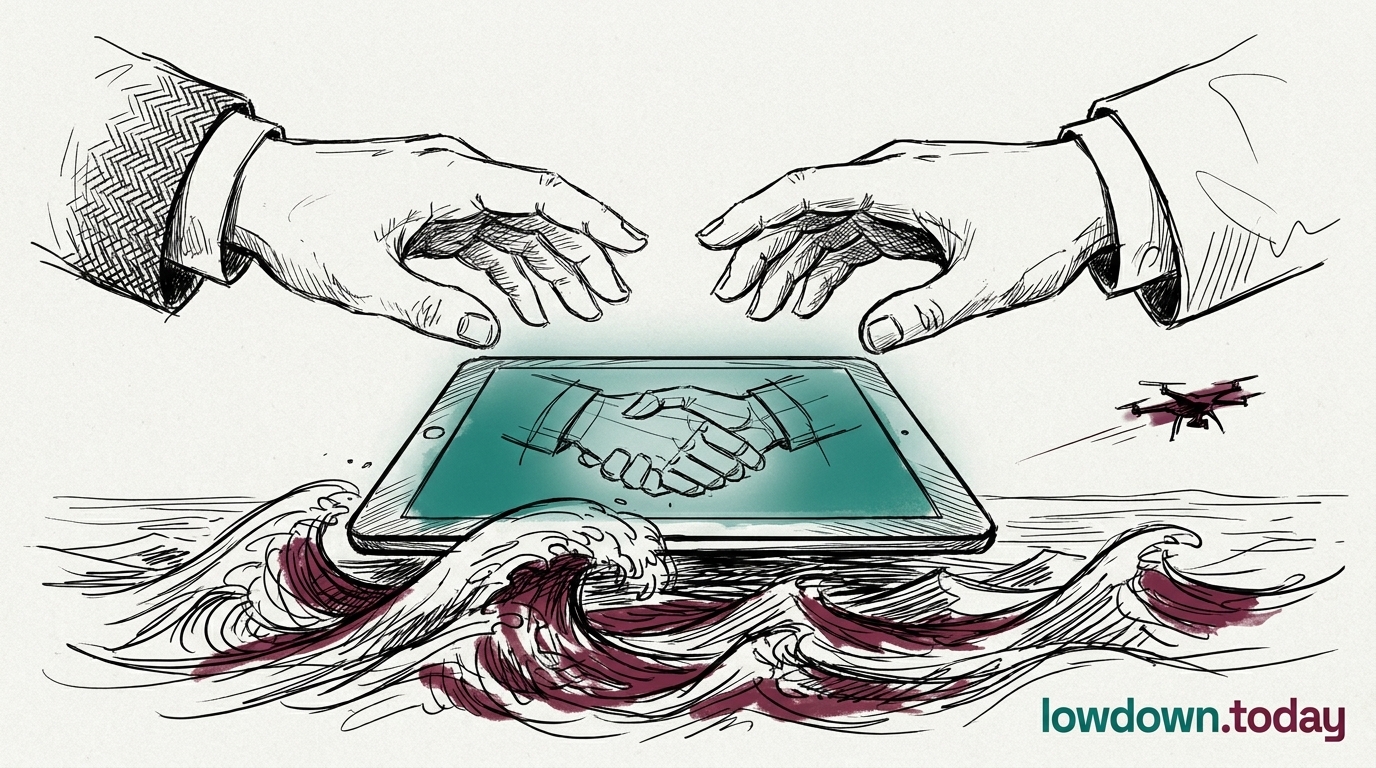
The EU's draft 21st sanctions package would, for the first time, target the bunkering and ship-to-ship services behind Russia's shadow fleet and freeze the $44.10 oil price cap to January 2027.

ConflictDeveloping
Key takeaway

The EU's 21st package would hit shadow-fleet support services and freeze the $44.10 cap, squeezing Urals without new OFAC action.

The European Commission's draft 21st sanctions package would, for the first time, target the service layer behind Russia's shadow fleet, the bunkering, ship-to-ship (STS) transfer and port services that keep sanctioned tankers moving, alongside about 30 more vessel listings 1. It also freezes the $44.10 price cap, the G7 and EU ceiling on the price at which Russian seaborne crude can be lawfully shipped using Western services, to January 2027, blocking the upward adjustment toward roughly $75 that a falling Brent would otherwise trigger .

The package still needs member-state unanimity and heads to a mid-July vote before the 15 July auto-lift. Its support-vessel target hits a gap earlier rounds left open: listing shadow vessels did little while their bunkering and STS providers stayed in business, so designating the service layer attacks the same logistics chain from the supply side .

For Russian-barrel economics, a frozen cap plus a squeezed service layer keeps downward pressure on Urals, Russia's main export grade, without a single new designation from OFAC, the US sanctions enforcer .

Deep Analysis

In plain English

Russia keeps exporting oil despite Western sanctions using a shadow fleet: a large group of tankers, mostly older vessels, that operate outside the normal Western-insured shipping system. Earlier EU sanctions packages listed specific shadow-fleet tankers, but that approach left a gap: the services that keep those tankers running (bunkering with fuel to keep them going, ship-to-ship transfers where crude is moved between vessels at sea to obscure its origin, and port services in friendly ports) remained undesignated and continued operating freely. The EU Commission's draft 21st package proposes plugging that gap by sanctioning the service providers themselves. It also proposes roughly 30 additional vessel listings. Separately, the package proposes freezing the Russia oil price cap at $44.10 per barrel until January 2027. Under the current formula, the cap would automatically adjust upward toward roughly $75 on 15 July 2027 as the six-month Urals crude average has risen. A freeze blocks that adjustment, keeping the ceiling lower and limiting Russia's oil revenue. The package still needs unanimous approval from all EU member states at a mid-July vote; it has not yet been adopted.

What could happen next?
  • Consequence

    If adopted before 15 July, the $44.10 price-cap freeze blocks the automatic adjustment toward $75, limiting Russia's oil revenue per barrel on any cargo using Western services to a level below Russia's $59 federal budget benchmark (ID:4565).

    Immediate · Assessed
  • Risk

    If EU member-state unanimity fails at the mid-July vote, the $44.10 cap auto-lifts toward $75, easing Russia's fiscal constraint and partially offsetting the revenue pressure that market price alone has been carrying (ID:4565).

    Short term · Reported
  • Precedent

    First-ever EU designation of shadow-fleet bunkering and STS service providers, if adopted, shifts the enforcement model from listing ships to targeting the logistics layer, following the North Korea sanctions escalation path.

    Medium term · Assessed
  • Risk

    Greek and Maltese shipping interests face direct commercial exposure to support-vessel designations; their governments' past resistance to maritime-services provisions creates the primary unanimity risk for the package's core innovation.

    Short term · Reported
First Reported In

Update #12 · ISAB Priolo dodges the cliff

Baker McKenzie· 30 Jun 2026
Read original
Different Perspectives
Iran's Supreme Leader's office and Iranian households
A letter published through state media named Lebanon's territorial integrity and an end to Israeli operations there as the war's ending condition; the same week, spokesperson Mohajerani cut the subsidised petrol ration from 70 to 50 litres a month. Iranian agencies still disagree on who inside the office signed the letter.
Oman
Oman
Muscat proposed a voluntary-funded coalition to police Hormuz, the corridor its own coastline gives it standing to manage, while Iran wants control and toll rights over shipping and Washington insists on free navigation. Oman's remit stops at the strait; it has no comparable claim over Iraq, the Caspian, or Lebanon.
Kyiv
Kyiv
President Volodymyr Zelenskyy confirmed the Caspian strike on an Iranian vessel carrying military cargo from Russia's Astrakhan region, opening a front that ties Iran's war to its supply relationship with Moscow rather than to anything the Gulf mediators are discussing.
Riyadh
Riyadh
Maj Gen Turki Al Malki named Iraq as the launch point for drones intercepted over the Eastern Province and Riyadh, the first time this war has reached Saudi Arabia from that direction rather than from Yemen. Nothing landed, but a second launch geography aimed at Saudi oil now exists alongside the Houthi front.
Baghdad
Baghdad
Iraq's Foreign Ministry summoned its own ambassador in Riyadh after Saudi Arabia's Defence Ministry said the drones came from Iraqi territory, while the same day drones struck Iranian-Kurdish opposition camps inside Iraq. Baghdad is disowning attacks it did not launch from territory it does not fully control.
The Pentagon and Congress
Acting press secretary Joel Valdez attributed the toll's reversal to site anomalies, the same explanation the department gave for the opposite cut on 24 July; Representative Thomas Massie called the category change an absurd ruse designed to reset the war's legal clock. Neither side agrees on which explanation, or which war, is real.