Skip to content
You can now search across every topic, entity and event.What's new
Iran Conflict 2026
9JUN

OPEC+ weighs a fourth August hike

2 min read
10:36UTC

The eight-member OPEC+ group meets on Sunday 5 July to set August quotas, with the market expecting a fourth straight hike of roughly 188,000 barrels a day.

ConflictDeveloping
Key takeaway

OPEC+ is expected to vote a fourth 188,000-barrel hike on Sunday, a market-share signal not deliverable supply.

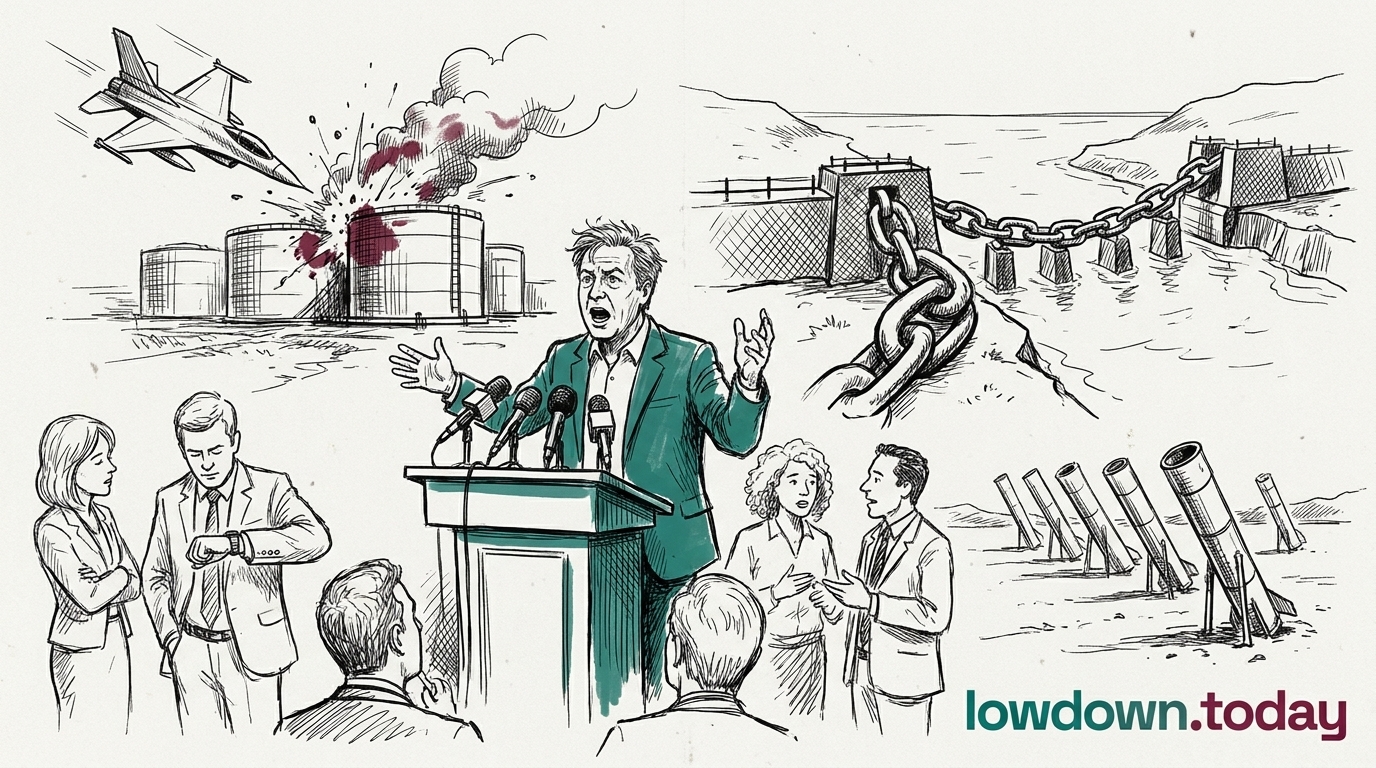
The eight-member OPEC+ subgroup is due to meet on Sunday 5 July to set August quotas, with the market expecting a fourth consecutive rise of roughly 188,000 barrels a day after some 800,000 barrels a day added across April to July. OPEC+, the producer alliance of OPEC states plus Russia and other partners that controls about 37% of global crude, has not yet decided; the vote lands after this briefing publishes. 1

Group output sat near a 37-year low in June even as the alliance ratified its July hike , so any August barrels are nominal quota rather than deliverable crude. Delegates signal the increase, and it reads as a claim on future market share, not oil that reaches the water next month.

Onto a falling crude tape with products already lagging, a paper increase widens the flat-versus-structure split this desk trades. Ministers either approve the hike or pause the unwind at the weekend, and the desk trades the result on Monday.

Deep Analysis

In plain English

OPEC+ is a group of oil-producing countries, led by Saudi Arabia and Russia, that meets regularly to decide how much oil its members are allowed to pump. On Sunday 5 July, eight of those countries will vote on next month's production limit. Most traders expect them to raise output again, the fourth increase in a row, adding to roughly 800,000 barrels a day already added since April. More oil pumped generally pushes prices down, but the group is choosing to prioritise winning back market share over propping up prices for now.

Deep Analysis
Root Causes

The eight-member subgroup, Saudi Arabia, Russia, Iraq, the UAE, Kuwait, Kazakhstan, Algeria and Oman, holds monthly discretion over tranche size under the Declaration of Cooperation framework. The structural pressure to keep hiking despite a falling price is market-share defence: pausing now would reward Iraq and Kazakhstan, both chronic quota over-producers, for cheating rather than compliance.

That pressure sits awkwardly against OPEC's own June Monthly Oil Market Report, which trimmed 2026 demand growth for a third consecutive month; hiking supply while cutting demand forecasts is a market-share bet, not a balanced-market call, and if Saudi Arabia unilaterally throttles back while other members keep pumping above their allotted share, group discipline erodes further.

What could happen next?
  • Risk

    A confirmed fourth hike into a sub-$71 Brent tape raises the odds of a pause or reversal at the following month's meeting if prices keep falling.

First Reported In

Update #13 · Distillate deficit eases; the crack won't

Oil & Gas 360· 3 Jul 2026
Read original
Different Perspectives
India
India
India buys more Saudi crude than any other country and has 2.5 million nationals working in the kingdom, so a $100 Brent and a live strike on Saudi tankers reach New Delhi through both fuel bills and remittance risk. Neither channel has an alternative route the way Saudi Arabia's own pipeline does.
Qatar
Qatar
Qatar co-authored the four-mediator ten-day ceasefire proposal alongside Egypt, Pakistan and Oman, centred on resuming Hormuz navigation, while separately pursuing its dated compensation claim against Iran at the UN Security Council filed on 21 July. Doha is mediating and litigating in the same week.
Israel
Israel
Israeli intelligence, reported by the Wall Street Journal, assesses Iran moved thousands of centrifuges and part of its roughly 440kg enriched-uranium stock into Pickaxe Mountain after the June 2025 strikes on its three main nuclear sites. Some of the US refuelling aircraft now deploying to the region are bound for Israeli bases and Ramon Airport.
Houthis
Houthis
Yahya Saree announced the missile and drone strikes on the Encelia and Layla on 22 July as enforcement of the embargo his forces had declared by radio warning alone two days earlier. Six vessels already turned back on the broadcast; the strike shows Houthi forces will use weapons once warnings stop working.
Saudi Arabia
Saudi Arabia
Saudi Arabia's state news agency confirmed only a fire on the Encelia's bow, with the crew safe; the Layla strike remains unconfirmed by Riyadh. The kingdom built its Petroline pipeline specifically to bypass Hormuz through the Red Sea, so the tanker fire lands on the route Riyadh had already spent billions escaping.
United States
United States
Washington is weighing both ten-day proposals but wants a longer truce than either offers, and moved F-16 and F-35 jets plus refuelling aircraft into the region while it decides. That deployment, not Trump's Pickaxe Mountain remarks, is the measurable US action, buying options for the day talks fail rather than betting on them.