Skip to content
Briefings are running a touch slower this week while we rebuild the foundations.See roadmap
Iran Conflict 2026
8JUN

EU: Russia gave Iran intel to target US

2 min read
09:58UTC
ConflictDeveloping

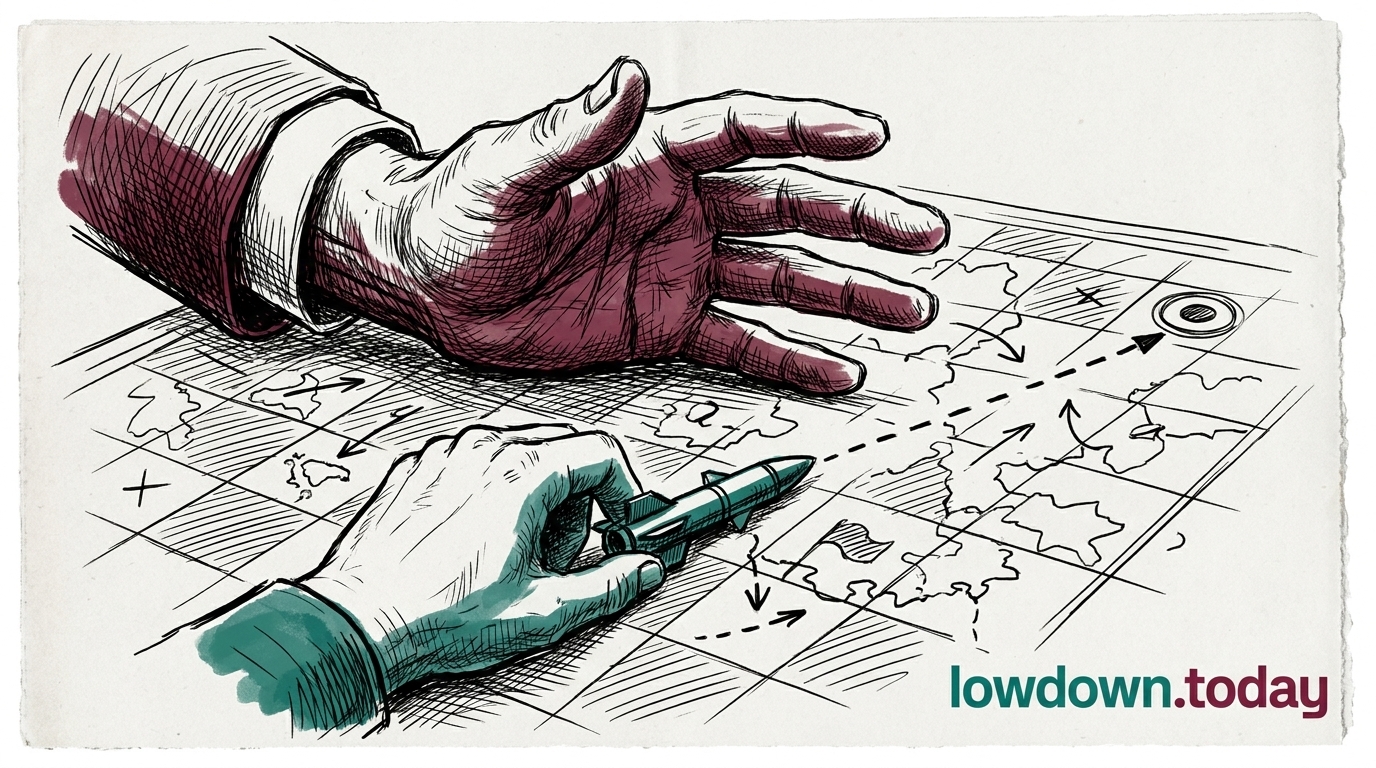
EU foreign affairs chief Kaja Kallas accused Russia on 26 March of providing intelligence to Iran 'to kill Americans' and supplying drones to bolster Iranian capabilities against neighbouring countries and US military bases. 1 Western intelligence indicates phased drone deliveries are completing by the end of March. Kallas stated directly: 'Russia is helping Iran with intelligence to target Americans, to kill Americans, and Russia is also supporting Iran now with the drones.'

The accusation is public and specific. The American silence is conspicuous. Kallas is the EU's most senior foreign affairs official and is speaking in her institutional capacity. The claim that Russia is providing targeting intelligence against US forces is qualitatively different from Russian arms sales or diplomatic support: it constitutes active operational participation in attacks on American military personnel.

Washington has not responded. If Russia is actively providing targeting intelligence against US forces in the Middle East, that approaches, though does not trigger textually, the threshold for NATO Article 5 considerations. The treaty requires an 'armed attack' against a member state; intelligence-sharing that enables attacks on US forces in non-NATO territory does not meet the textual threshold. But it approaches the spirit of collective defence. The alliance deliberately avoids defining grey-zone provocations because any definition would invite adversaries to operate just below it. No senior US or NATO official has publicly addressed what the response to Russian operational support for attacks on American forces should be. The question is not being asked because nobody wants to hear the answer while the primary military focus remains Iran.

Deep Analysis

In plain English

Europe's most senior foreign policy official said Russia is giving Iran information about where American soldiers are located so Iran can attack them, and is also supplying Iran with drones. This would normally be an enormous story triggering a response from Washington. The fact that the US has said nothing publicly is itself the story: if America acknowledged that Russia is helping kill its soldiers, it would face enormous pressure to do something about it, and the US military is already fully committed to the Iran campaign.

Deep Analysis
Root Causes

The structural cause is the gap in international law between direct armed attack and intelligence enabling. NATO's collective defence framework was designed for territorial invasion, not for information-age warfare where the most consequential support is data, not troops.

The US administration cannot acknowledge the full scope of Russian involvement because doing so creates an obligation to respond it is not positioned to meet.

First Reported In

Update #49 · Hormuz toll into law; Tangsiri killed

Institute for the Study of War· 27 Mar 2026
Read original
Different Perspectives
Bahrain / Gulf partners
Bahrain's PAC-3 interceptor magazine sits at 87% depletion after absorbing IRGC salvos aimed at US bases; no resupply is scheduled before 2027, concentrating the intercept burden on US assets and Israeli Iron Dome and Arrow-3.
IAEA / Vienna process
IAEA officials cited proliferation concerns over 440.9 kg of HEU unaccounted for after 97 days without inspector access; the Board session that opened 8 June cannot retroactively close the evidentiary gap its own resolution documents.
China
China
China absorbed the Shanghai Qianye designation by OFAC and opposes censure at the IAEA Board, arguing the verification gap was created by strikes rather than Iranian non-compliance, a framing it shares with Russia to protect the non-Western bloc's Board votes.
Russia
Russia
Putin reaffirmed at SPIEF on 6 June his offer to hold Iran's uranium stockpile as custodian, a proposal the IAEA's 97-day verification gap now renders undeliverable: no one can transfer or confirm a stockpile that has not been inspected.
United States / Trump administration
Trump publicly asked Netanyahu not to retaliate and described a deal as 95% done; Rubio then acknowledged enrichment terms could take months. The 24-hour gap between the request and the Mahshahr strike removes the credible-restraint argument from US diplomatic leverage with Tehran.
Israel / Netanyahu government
Netanyahu struck the Mahshahr complex and missile sites inside Iran within 24 hours of Trump's public no-retaliation request, a second kinetic override of US counsel that confirms Israel will not allow Tehran to dictate the terms of the exchange.