Skip to content
Briefings are running a touch slower this week while we rebuild the foundations.See roadmap
Iran Conflict 2026
7JUN

Easter ceasefire expires; violation counts diverge

3 min read
10:12UTC

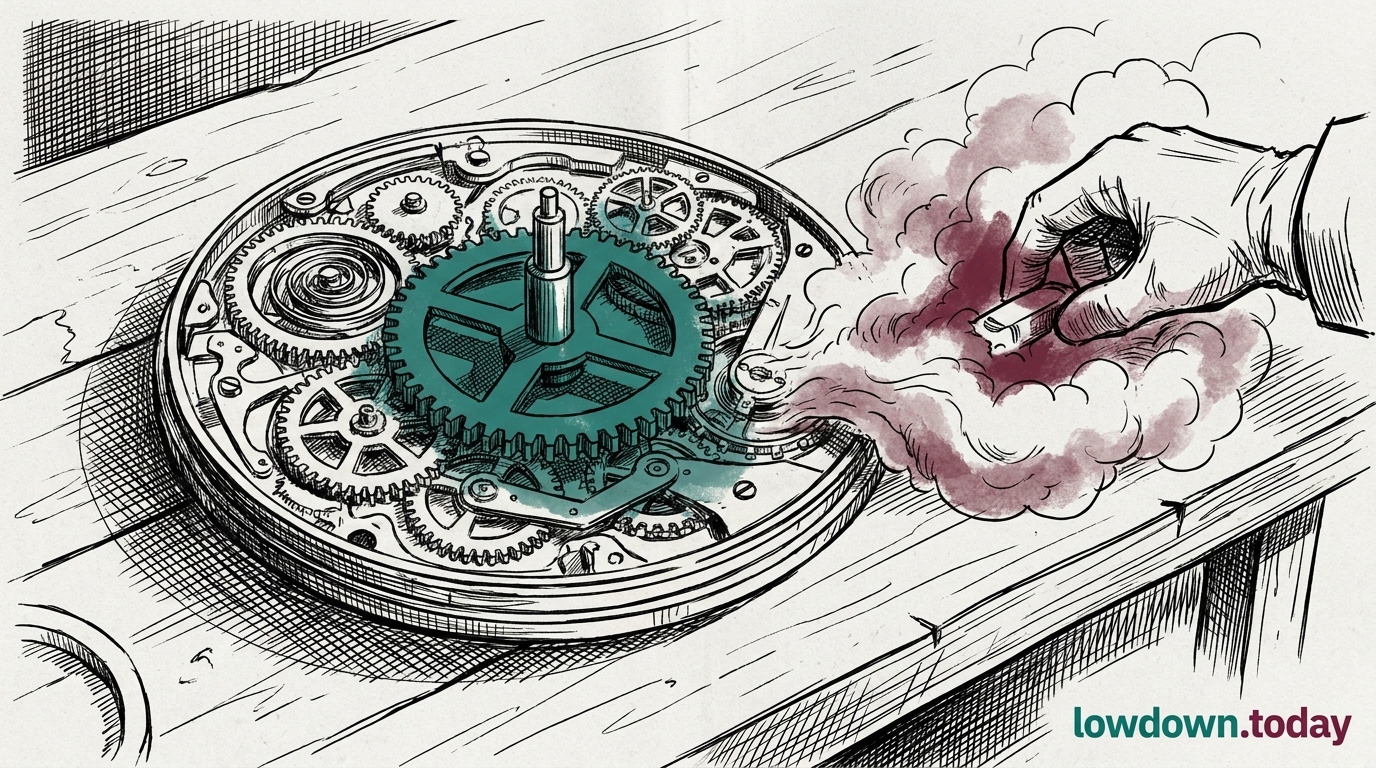
Putin's truce ended at midnight Moscow time on 13 April. Kyiv logged 10,721 violations; Moscow logged 1,971. Novaya Gazeta Europe's reading of asymmetric compliance is the useful one.

ConflictDeveloping
Key takeaway

Ceremonial truces pause the wire stories, not the war.

Vladimir Putin's unilateral Orthodox Easter truce, decreed on 9 April, expired without extension at the end of 12 April. The Ukrainian General Staff tallied 10,721 Russian breaches over the period, including 119 ground assaults. The Russian Ministry of Defence tallied 1,971 Ukrainian breaches, including 258 artillery firings, 1,329 kamikaze drone strikes, and 375 munitions drops.

The Kremlin had rejected Volodymyr Zelenskyy's earlier Easter proposal targeting energy infrastructure attacks in late March . Putin's eventual decree came without any prior US diplomatic contact, per his published Kremlin calendar showing nine days of domestic engagements and no US meetings ahead of the announcement. Novaya Gazeta Europe, a Russian exile outlet based in Riga, assessed that Russia held back on strategic-strike activity throughout the pause while tactical-range fire carried on. That matches the pattern of asymmetric compliance: a partial halt on rear-area bombardment paired with unchanged close-in operations.

The timing of the window closes is the other analytic point. The decree concluded just as Hungarian polling day entered its final hours , giving Moscow a news cycle of Orthodox Easter imagery during the period the electorate was still voting. The immediate post-expiry barrage is detailed in event 4. The sequence is now a datable pattern: decree, partial compliance, expiry, return to baseline tempo. Any future Russian ceremonial ceasefire can be read against the same test, Russian long-range activity during the window, and the first 24 hours after.


Deep Analysis

In plain English

Russia's Vladimir Putin called a 32-hour ceasefire for the Orthodox Easter holiday. It ran from the evening of 11 April to midnight on 13 April. After it ended, both sides accused the other of thousands of violations during the window. Ukraine logged over 10,000 Russian violations, mostly artillery fire and small attacks along the front. Russia logged nearly 2,000 Ukrainian violations. Both sets of numbers are real in the sense that fighting continued; they differ because each side uses its own definition of what counts as a violation. The ceasefire was announced by Putin without any prior negotiation with the US or Ukraine, and it expired without any framework for extension. The night after it ended, Russia launched its largest drone barrage in days.

Deep Analysis
Root Causes

The 10,721 violation count that Ukraine logged measures a different thing than battlefield restraint: it includes every artillery round, every drone, every mortar that crossed the contact line during the 32-hour window. The Russian count of 1,971 Ukrainian violations uses the same imprecise instrument in the opposite direction. Neither count addresses whether the ceasefire altered the strategic trajectory of the war, which it did not.

The structural reason these unilateral ceasefires produce the same outcome each time: they are announced without any enforcement mechanism, without any agreed definition of a violation, and without any consequence for non-compliance. Their function is domestic Russian information management and international signal-sending, not battlefield management.

What could happen next?
  • Consequence

    The fourth unilateral Russian ceasefire decree, each producing the same violation-count dispute, establishes a pattern that makes future unilateral ceasefire claims less credible with each repetition.

  • Risk

    The ceasefire's alignment with Hungarian polling day, ending at midnight on 12 April, the day of the election, created a domestic political frame for Orbán that was disrupted when Tisza won decisively despite the timing.

First Reported In

Update #13 · Treasury kills the Russian crude waiver

Al Jazeera· 16 Apr 2026
Read original
Different Perspectives
Bahrain / Gulf partners
Bahrain's PAC-3 interceptor magazine sits at 87% depletion after absorbing IRGC salvos aimed at US bases; no resupply is scheduled before 2027, concentrating the intercept burden on US assets and Israeli Iron Dome and Arrow-3.
IAEA / Vienna process
IAEA officials cited proliferation concerns over 440.9 kg of HEU unaccounted for after 97 days without inspector access; the Board session that opened 8 June cannot retroactively close the evidentiary gap its own resolution documents.
China
China
China absorbed the Shanghai Qianye designation by OFAC and opposes censure at the IAEA Board, arguing the verification gap was created by strikes rather than Iranian non-compliance, a framing it shares with Russia to protect the non-Western bloc's Board votes.
Russia
Russia
Putin reaffirmed at SPIEF on 6 June his offer to hold Iran's uranium stockpile as custodian, a proposal the IAEA's 97-day verification gap now renders undeliverable: no one can transfer or confirm a stockpile that has not been inspected.
United States / Trump administration
Trump publicly asked Netanyahu not to retaliate and described a deal as 95% done; Rubio then acknowledged enrichment terms could take months. The 24-hour gap between the request and the Mahshahr strike removes the credible-restraint argument from US diplomatic leverage with Tehran.
Israel / Netanyahu government
Netanyahu struck the Mahshahr complex and missile sites inside Iran within 24 hours of Trump's public no-retaliation request, a second kinetic override of US counsel that confirms Israel will not allow Tehran to dictate the terms of the exchange.



