Skip to content
Briefings are running a touch slower this week while we rebuild the foundations.See roadmap
Iran Conflict 2026
4JUN

Debris near Knesset and Holy Sepulchre

3 min read
11:25UTC

Intercepted Iranian missile fragments landed within metres of Israel's parliament and Christianity's holiest church. Even accidental structural damage to the Holy Sepulchre would change how 2.4 billion Christians perceive this war.

ConflictDeveloping
Key takeaway

Debris near the Church of the Holy Sepulchre activates Jordan's Hashemite custodial obligations, testing Amman's fragile neutrality.

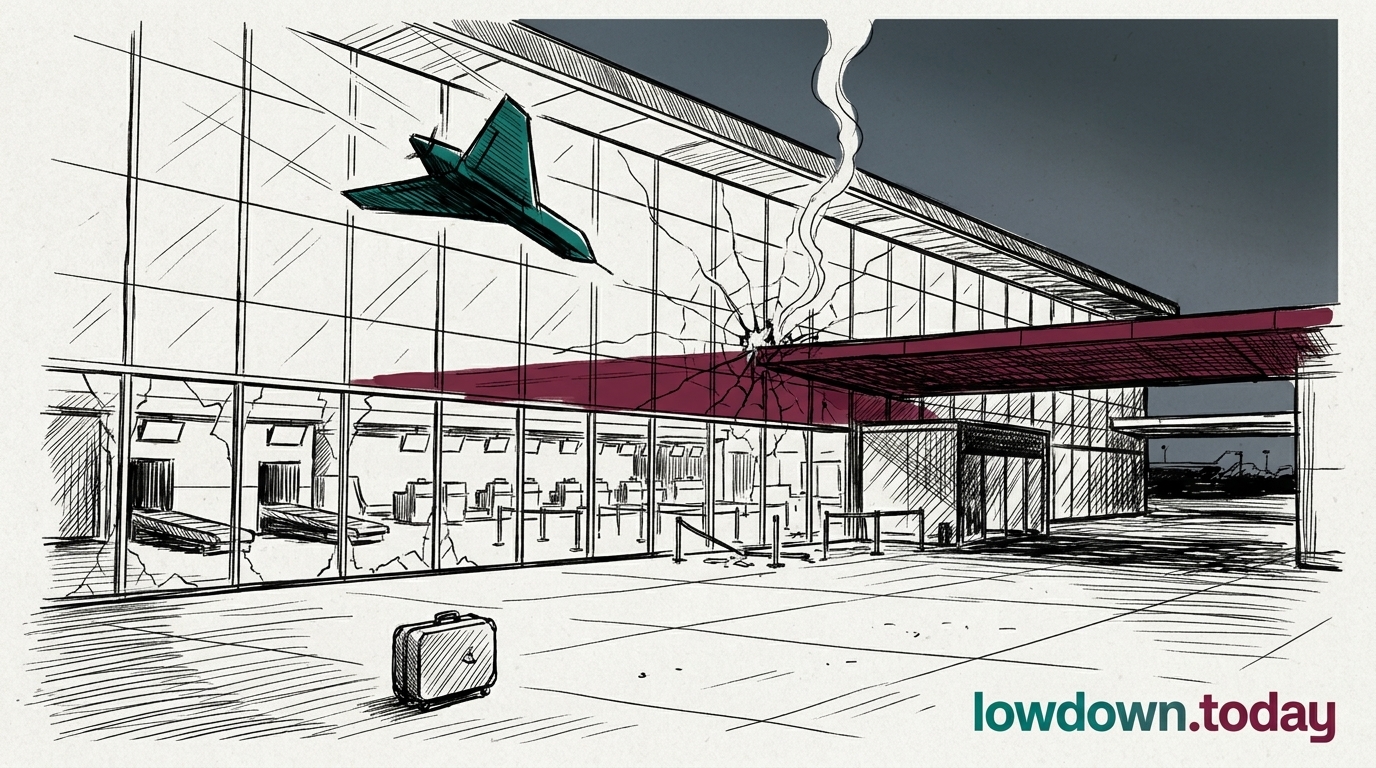
Fragments from intercepted Iranian missiles fell near the Knesset and the Church of the Holy Sepulchre in Jerusalem's Old City on Sunday 1. A large piece struck a home in East Jerusalem. One person suffered burns from touching hot shrapnel.

The debris is consistent with the cluster munitions that first penetrated Israeli air defences on Friday, when 11 Iranian cluster missiles reached central towns including Shoham, Holon, and Rishon LeZion . Interception does not neutralise a cluster warhead — it disperses the payload. Haaretz's analysis of Friday's strikes found one missile scattered 70 submunitions across a residential area. When these weapons reach Jerusalem, the debris field does not distinguish between a parliamentary building and the most contested religious terrain on earth.

The Church of the Holy Sepulchre — the site where Christians hold that Jesus was crucified, buried, and resurrected — is revered by 2.4 billion people. The Old City covers less than one square kilometre and contains the holiest sites of three religions within walking distance of each other. Confirmed structural damage to the Church, the Al-Aqsa Mosque compound, or the Western Wall would force a political reckoning in capitals where this war has so far registered as a fuel-price problem. European and Latin American governments that have confined their responses to economic diplomacy would face pressure from constituencies for whom Jerusalem's holy sites carry a weight that Gulf oil infrastructure does not.

The fragment that struck an East Jerusalem home landed in a Palestinian neighbourhood. Residents there have no access to the bomb shelters available in West Jerusalem and limited early-warning infrastructure. The geography of falling debris maps onto the geography of the occupation: the same interception that protects the Knesset scatters shrapnel onto people who have no part in the decisions that brought the missiles overhead.


Deep Analysis

In plain English

When Israel shoots down an incoming missile, the destroyed missile does not simply vanish — its wreckage falls somewhere. On Sunday, fragments landed near two of Jerusalem's most politically charged buildings: the Knesset, Israel's parliament, and the Church of the Holy Sepulchre, which Christians believe is the site of Jesus's crucifixion and burial. Nobody was seriously hurt, but the symbolic weight is enormous. The Church is the holiest site in Christianity for many denominations, and even accidental damage — a broken window, a scorched wall — would transform how billions of people around the world perceive this conflict. Right now, most Europeans and Latin Americans experience the war primarily through petrol prices. Physical damage to the Church would make it personal for many of them in a way that casualty statistics have not.

Deep Analysis
Synthesis

Jordan holds legal custodianship over the Islamic waqf in Jerusalem and has a formal role in Christian site protection under the 1994 Wadi Araba Treaty. Debris near the Church of the Holy Sepulchre obligates Amman to respond diplomatically — potentially straining Jordan's careful neutrality in ways that no previous incident in this war has.

What could happen next?
  • Risk

    Any visible damage to the Church of the Holy Sepulchre would trigger Vatican diplomatic intervention and European public pressure for an immediate ceasefire.

    Immediate · Assessed
  • Consequence

    Jordan's Hashemite custodianship obligations over Jerusalem's holy sites will force Amman to issue formal protests, testing its carefully maintained neutrality.

    Short term · Assessed
  • Precedent

    First instance of active missile intercept operations generating debris inside Jerusalem's protected Old City zone, establishing a contested legal and political baseline.

    Long term · Assessed
First Reported In

Update #38 · Israel enters Lebanon; Hormuz pact fails

ToI Knesset debris· 17 Mar 2026
Read original
Different Perspectives
Israel
Israel
IDF Chief Eyal Zamir declared on 3 June there was no ceasefire for his forces, and strikes killed at least 10 civilians and one Israeli soldier on 4 June. The IDF killed Hezbollah's chief engineer and warned three south Lebanon villages to evacuate on 5 June, advancing into ground the unsigned Washington framework has not caught.
Hezbollah / Lebanon
Hezbollah / Lebanon
Naim Qassem rejected the Washington Lebanon framework on 4 June as "absurd, humiliating and insulting", blocking a ceasefire instrument that required Hezbollah to withdraw north of the Litani before any Israeli withdrawal. Over one million Lebanese remain displaced; the framework's collapse prolongs that toll.
Iran
Iran
Foreign Minister Araghchi publicly coupled the Lebanon ceasefire to the Iran-US nuclear track on 4 June, carrying IRGC authority rather than his own civilian mandate. The IRGC delegation has sent no HEU counter-proposal since Araghchi confirmed no progress that same day; Mojtaba Khamenei's 21 May order to keep the 440.9 kg stockpile inside Iran remains operative.
United States
United States
Rubio placed the Iran-US deal at 95 per cent complete on 4 June while the administration signed no Iran instrument and OFAC designated only Cuban targets. Trump separately disclosed and rejected an airlift plan to collect Iran's HEU stockpile, claiming the material is "entombed", a claim the IAEA cannot verify.
China
China
Beijing's MOFCOM Blocking Rules constrain OFAC enforcement on the mainland; China has not corroborated Trump's verbal account of any bilateral summit, and the rial's failure to hold its Rubio bounce, combined with the IRGC's stablecoin rail closure, increases Chinese yuan-denominated oil-payment exposure through Hormuz.
Bahrain
Bahrain
The IRGC struck Bahrain on 3 June as its sirens sounded and its PAC-3 magazine neared exhaustion; excluded from Rubio's 2 May emergency resupply, Bahrain received a 50-round Federal Register notice on 1 June on an 18-month delivery timeline, meaning it is defending the US Fifth Fleet headquarters on the last rounds it has.



