Skip to content
Briefings are running a touch slower this week while we rebuild the foundations.See roadmap
Iran Conflict 2026
3JUN

Majlis codifies Hormuz toll in law

2 min read
09:04UTC

The blockade that began as a military measure is becoming domestic legislation, with projected revenues reaching $800 million per month.

ConflictDeveloping
Key takeaway

Iran is converting a wartime blockade into permanent law, making reversal a sovereignty question.

Iran's Majlis began drafting legislation on 31 March to codify the IRGC's Hormuz toll into permanent domestic law. 1 A vote was expected before the end of March but cannot proceed until parliament reconvenes. At projected scale, revenue estimates reach $600 million to $800 million per month from oil tankers and LNG carriers combined.

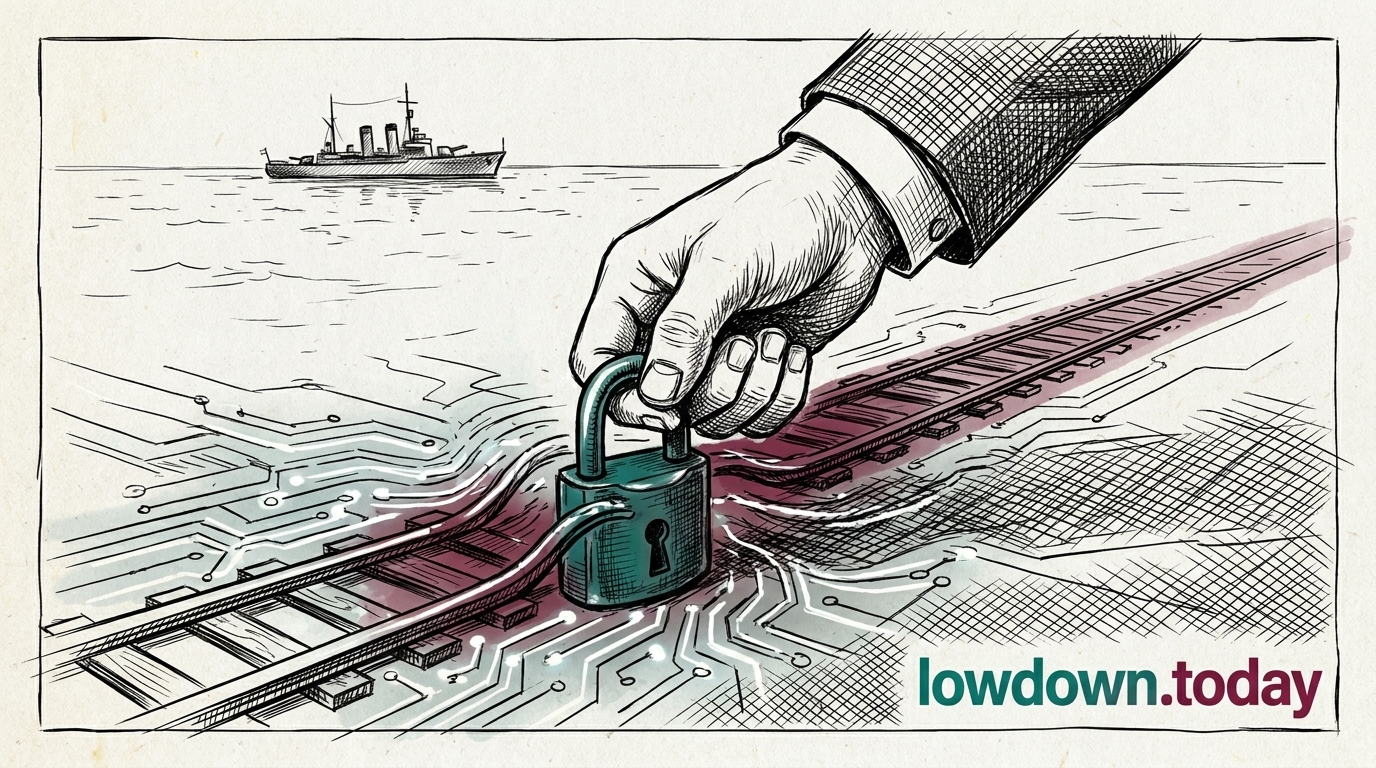
The legislative step matters because it changes the nature of what the toll is. An operational wartime measure can be reversed by the military that imposed it. A law can only be reversed by the parliament that passed it, with Guardian Council approval, after a political process that no Iranian politician has incentive to initiate. Shadow fleet vessels already account for 80% of Hormuz transits , and the toll is being paid by state-backed Chinese container ships. The infrastructure is built. Legislation is the lock.

The last time a state imposed transit fees on a major international waterway was the Ottoman Empire's Bosphorus tolls, abolished by the 1936 Montreux Convention. Iran's version is being codified in real time during an active war. The NPT withdrawal bill remains frozen in the same parliament : the Majlis has not sat in 31 days, with no reconvening date announced. When it does sit, both bills advance simultaneously.


Deep Analysis

In plain English

Iran's parliament is writing a law to permanently charge ships a toll to cross the Strait of Hormuz. The law has not passed yet because parliament has not met in over a month. The difference between a wartime toll and a permanent law is significant. A wartime toll can end when the war ends. A law can only be changed by parliament, which means it could last for decades regardless of how the war ends. The last time a country charged transit fees on a major international waterway was the Ottoman Empire, which charged Bosphorus tolls until a 1936 international agreement abolished them. Iran is trying to do the same thing in 2026.

What could happen next?
  • Precedent

    If enacted, this would be the first domestic law codifying a sovereign charge on an international strait in modern maritime history, challenging UNCLOS innocent passage rights.

    Long term · 0.85
  • Consequence

    Reversing the toll post-war becomes a sovereignty dispute requiring treaty revision rather than a military question, making it functionally permanent.

    Medium term · 0.8
  • Risk

    When parliament reconvenes, both the toll bill and the NPT withdrawal bill advance simultaneously, presenting the international community with two irreversible legislative facts at once.

    Short term · 0.7
First Reported In

Update #53 · Trump drops Hormuz goal; toll becomes law

NBC News / Lloyd's List· 31 Mar 2026
Read original
Different Perspectives
Lloyd's of London underwriters
Lloyd's held its Hormuz war-risk rate at $10-14 million per voyage; underwriters need a UN Security Council resolution or formal PGSA de-listing before repricing, not a Senate testimony. The PGSA remains on the SDN list under EO 13224, so any vessel transiting a nominally reopened strait still deals with a sanctioned counterparty.
Saudi Arabia and Gulf states
Brent crude at $95-97 on 2-3 June reflects Gulf producers benefiting from the conflict premium; a genuine Hormuz deal would likely cut that premium by $10-15 per barrel. Riyadh's $87 per barrel budget breakeven means the current price is comfortable, reducing the Gulf's urgency to push for a rapid settlement.
China
China
OFAC's Nobitex designation leaves China's informal bilateral currency-swap lines with Iran as the CBI's remaining rial-defence mechanism; Chinese financial institutions face secondary-sanctions risk if they interact with successor wallets. Beijing's MOFCOM Blocking Rules protect mainland refineries from direct designation but do not shield informal swap-line counterparties.
Lebanon / Hezbollah
Lebanon / Hezbollah
Lebanon's Washington delegation demanded full Israeli withdrawal and the return of 1.2 million displaced; Hezbollah deployed an FPV drone that killed an Israeli soldier at Yohmor while talks ran, demonstrating it can impose costs even at Israel's deepest penetration point. Lebanon's government cannot deliver the Hezbollah disarmament guarantee Israel demands.
Israel / Benjamin Netanyahu
Israeli forces seized Beaufort Castle above the Litani on 1-2 June and advanced to within 10 km of the Zaharani river while ceasefire delegations sat in Washington; the advance ran entirely outside the Beirut-only truce Netanyahu accepted on 1 June. Each kilometre taken raises Israel's withdrawal price before any permanent text is signed.
Iran: Foreign Ministry and domestic population
Araghchi rang six capitals in 48 hours to reopen talks the SNSC had suspended, calling the IRGC line 'speculation'; at home, 37 political prisoners were executed since 19 March while students marched in Tehran, Mashhad and Hamadan. The diplomatic thaw has not eased the state's wartime repression tempo.


