Skip to content
Briefings are running a touch slower this week while we rebuild the foundations.See roadmap
Iran Conflict 2026
17MAY

AUMF unfiled, blackout hits 1,728 hours

3 min read
10:45UTC

Senator Lisa Murkowski's Iran AUMF remained unfiled on 13 May, rendered procedurally moot by Hegseth's Article 2 testimony. Iran's internet blackout reached 1,728 cumulative hours by 12 May, projecting the 2,000-hour milestone to 18-19 May.

ConflictDeveloping
Key takeaway

Murkowski's AUMF stayed unfiled on 13 May while Iran's blackout passed 1,728 cumulative hours.

Senator Lisa Murkowski's threatened Iran AUMF remained unfiled on 13 May 2026, the deadline she set on 9 May having passed and Pete Hegseth's Article 2 testimony on 12 May having rendered the instrument procedurally moot. Murkowski's earlier condition for filing had been a credible White House plan with defined objectives, success metrics, exit criteria and congressional reporting. None of those documents has arrived; what arrived instead was a cabinet officer telling appropriators under oath that none of them is required.

Iran's internet blackout reached 1,728 cumulative hours by 12 May, per NetBlocks data extending the 1,704-hour figure logged on 11 May . At the current round-the-clock accrual rate, the 2,000-hour milestone falls around 18-19 May, the week Trump returns from Beijing. Seventy-two days of near-total global isolation for roughly 90 million Iranians, with ATMs and hospital systems routed through the loyalist tier that still carries IRGC command and control, is now a domestic governance fact rather than a wartime emergency measure.

The Trump-Xi summit in Beijing on 14-15 May formally lists Iran as an agenda item alongside trade and Taiwan 1. The agenda line is the only paper on which Iran appears this week; everything else (Hegseth's testimony, the blackout extension, the BRICS Delhi meeting, the $29 billion war cost) runs on the verbal track that the Day 75 unsigned streak now confirms as method.

Deep Analysis

In plain English

Three things that have stayed the same since the Iran conflict began are worth summarising together. First: Senator Lisa Murkowski, a Republican from Alaska, had threatened to introduce legislation requiring President Trump to get congressional approval for the Iran war. As of 13 May, she still had not introduced it. The day before, a senior US official told Congress that Trump does not need congressional approval anyway. Second: Iran has had its internet cut off almost entirely since the war began in February. By 12 May that had added up to 1,728 hours, about 72 days, with no internet access for roughly 90 million people. At the current rate, the 2,000-hour mark arrives around 18-19 May. Third: the Trump-Xi summit in Beijing, starting 14 May, officially listed Iran on its agenda alongside trade and Taiwan. Both the US and China have now acknowledged Iran as a topic requiring bilateral discussion.

First Reported In

Update #96 · Hegseth: no AUMF needed. Trump flies east

The White House· 13 May 2026
Read original
Causes and effects
This Event
AUMF unfiled, blackout hits 1,728 hours
Three loose ends crystallise the week's posture: the legislative brake formally moot, the domestic isolation extending toward a new milestone, and the Trump-Xi summit listing Iran without any signed text behind the agenda line.
Different Perspectives
Gulf shipping and insurance markets
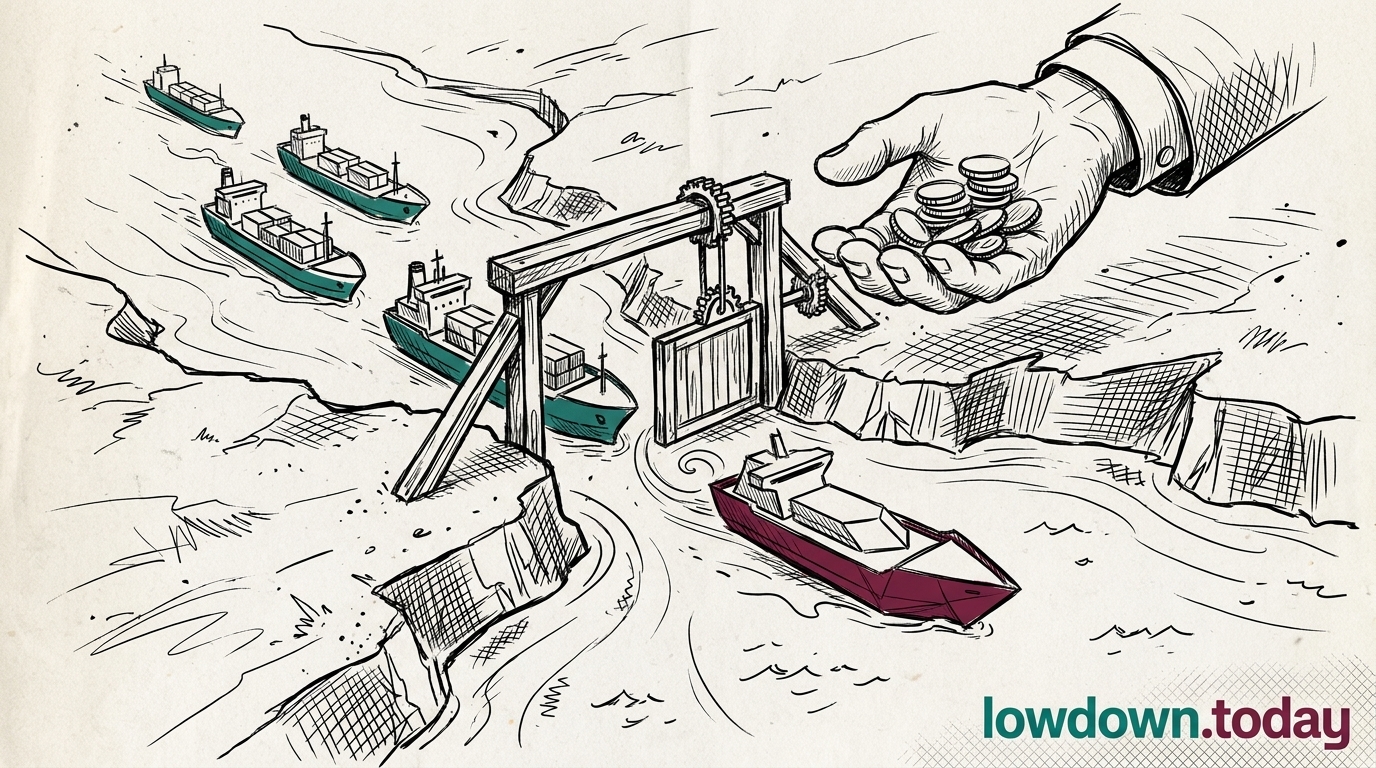
With Hormuz and Bab el-Mandeb both hostile at once, war-risk underwriters face their first dual-chokepoint pricing problem; the rerouting hedge that absorbed one closure is gone for Israeli-linked hulls. Any deal that reopens Hormuz without a Houthi stand-down clause delivers only partial shipping relief.
Russia and China
Russia and China
Russia and China met IAEA chief Grossi jointly in Geneva on 5 June to coordinate an advance blocking position against Washington's censure resolution, the first documented instance of proactive pre-session obstruction rather than reactive post-vote dissent. Beijing's move came four days after OFAC designated Shanghai Qianye Energy under Iran energy sanctions.
Saudi Arabia
Saudi Arabia
Saudi Arabia was left out of the emergency $4.01 billion Patriot waiver Qatar received on 2 May as its own PAC-3 stocks ran near-empty from intercepting Iranian salvoes over Aramco facilities. Riyadh is on a standard 18-month FMS queue behind a production line booked through 2030, with no equivalent priority to Qatar's Al Udeid basing role.
Houthis (Ansar Allah)
The Houthis declared a complete ban on Israeli Red Sea navigation on 8 June and struck Jaffa, their first attack on Israeli territory since April, seven days after the Tasnim authorisation to activate other fronts including Bab el-Mandeb. The declaration put both chokepoints under hostile authority simultaneously.
Iran
Iran
Iran agreed the 9 June mutual halt after the Mahshahr exchange and coordinated with Russia and China to block Washington's IAEA censure resolution, using the Board as a second front while the bilateral pause held on the military one. Tehran's acceptance of the Lebanon carve-out contradicts the linkage position it stated on 1 June.
Benjamin Netanyahu and the IDF
Israel struck the Karun Petrochemical plant at Mahshahr on 8 June over Trump's explicit objection, then agreed a halt with Iran the following day scoped on Israeli terms with Lebanon carved out. Netanyahu's posture is that the IDF will not accept Iranian missile factories as off-limits regardless of US diplomatic timelines.