Skip to content
You can now search across every topic, entity and event.What's new
European Tech Sovereignty
27MAY

War leaves US farms 2m tonnes short

2 min read
15:19UTC
TechnologyDeveloping

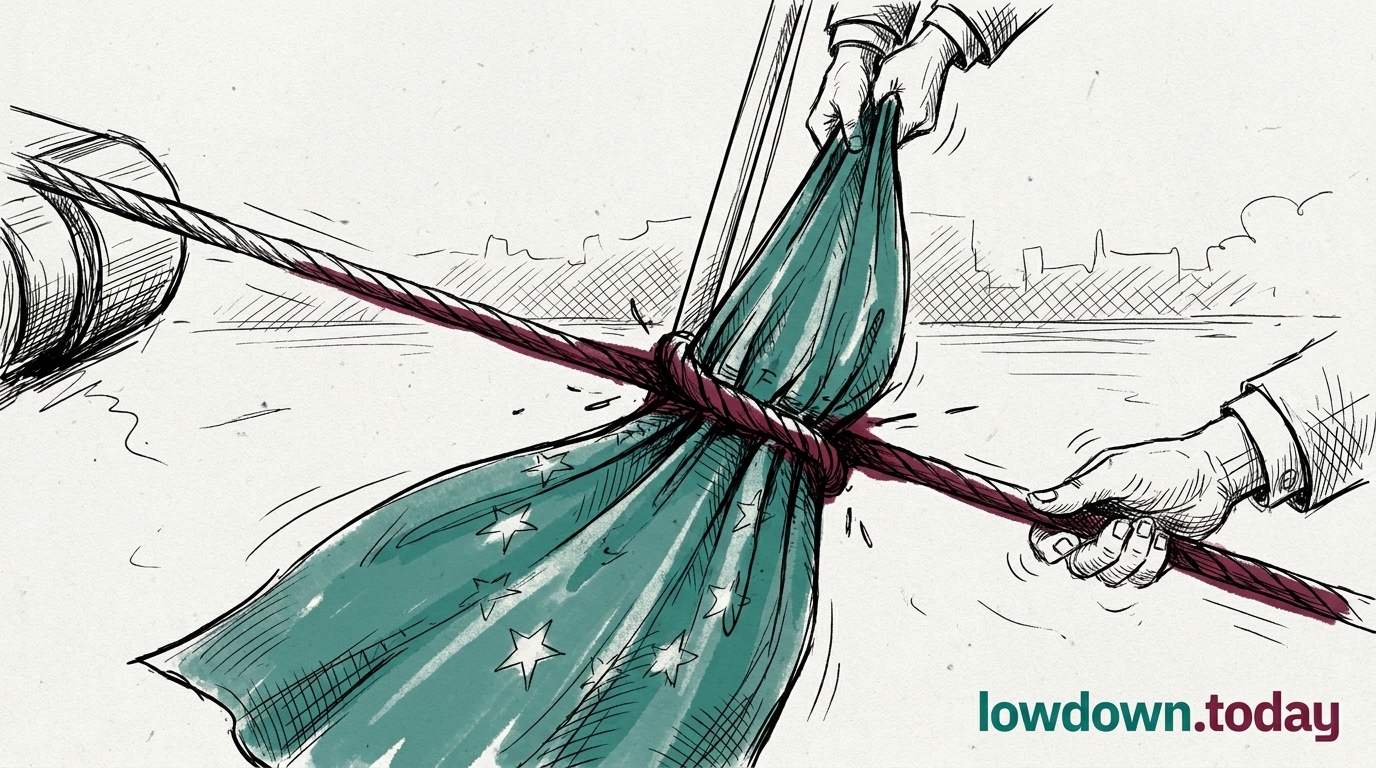
The Fertilizer Institute projects US farmers will be short 2 million tonnes of urea this spring, with urea prices up 30% since the war began. Some farmers cannot obtain supply at any price. 1 Spring planting is underway now. The shortage is not a forecast; it is a current constraint on fields being sowed this week.

The domestic economic pressure from this conflict has been building. US gasoline had already reached $3.98 per gallon , up 36% from pre-war levels. US diesel previously topped $5 per gallon . The fertiliser shortage adds a production-cost dimension to the energy-cost dimension: fuel to run farm equipment costs more, fertiliser to grow crops costs more or is unavailable, and transport costs have increased across the supply chain.

Urea is synthesised from natural gas. Iran and Russia together account for approximately 25% of global urea exports. The war has simultaneously disrupted Iranian production via strikes on petrochemical facilities and Russian supply chains via shipping insurance complications in the Gulf. The shortage is structural, not speculative: the 2 million tonne shortfall represents approximately 15% of annual US nitrogen fertiliser demand.

Corn planted without adequate nitrogen produces thin, pale stalks and reduced yields. The Fertilizer Institute's projection implies yields on affected acres could fall 10-20%, with downstream effects on global grain prices by autumn 2026. No administration response has been announced. The political dimension is acute: rural America, which supported the war at higher rates than urban centres per Pew data , is the constituency absorbing the most direct economic blow from a conflict it disproportionately endorsed.

Deep Analysis

In plain English

American farmers need fertiliser for spring planting right now. Most of it comes by ship through the Strait of Hormuz, which Iran controls. The war has disrupted those shipments. If fertiliser does not arrive in time, food prices rise for everyone.

Deep Analysis
Root Causes

US agriculture's dependency on imported fertiliser via a single maritime chokepoint.

The spring planting window is biologically fixed. Farmers who miss it cannot recover the yield later in the season.

First Reported In

Update #49 · Hormuz toll into law; Tangsiri killed

Siasat / Al Jazeera· 27 Mar 2026
Read original
Different Perspectives
United States (Google/Alphabet)
Alphabet lost its final Android appeal on 2 July with no further court to hear it, a result its Computer and Communications Industry Association allies frame as precedent, not deterrence, since the €4.1bn fine changed nothing about Google's Play Store terms across eight years of litigation.
UK Department for Science, Innovation and Technology
DSIT opened its £96m second Sovereign AI wave on 3 July, switching from April's equity stakes to fixed-price contracts because Britain has no domestic hyperscaler or Bpifrance-style lender to fund capacity another way. It is betting on buying outcomes it controls alone rather than joining an EU-wide framework.
German federal government
Berlin backed both German deliverables this week, Infineon's fab and Aleph Alpha's merger, but is finding one far harder to close than the other. It wants enforceable protective rights inside Cohere's cap table before the merger closes, a legal instrument the Bundeskartellamt has no filing to review yet.
European Commission
European Commission
The Commission banked a clean CJEU win on the eight-year Android case on 2 July, removing Google's last comparator argument before President von der Leyen rules on the far larger DMA self-preferencing fine due 27 July. Brussels treats Infineon's early Dresden delivery as proof the Chips Act mechanism works, at the node Europe already led.
Bruegel (EU industry sceptics)
Bruegel economist Mario Mariniello argued the EU sovereignty package mimics US and Chinese strategy while EU cloud providers hold roughly 15% of their home market; using nationality as a proxy for security without fixing the underlying capital and energy gaps that drive the dependency creates €86bn of migration cost without the security benefit it is sold as delivering.
France
France
France published a joint sovereignty definition with Germany at VivaTech and mobilised €13bn under Tibi Phase 3, placing SAP's partnership with Mistral as the working proof that a German enterprise-software giant running a French sovereign model inside public administration is what digital sovereignty looks like in practice.
