Skip to content
You can now search across every topic, entity and event.What's new
European Tech Sovereignty
27MAY

Google loses €4.1bn EU Android appeal

2 min read
15:19UTC

The Court of Justice dismissed Google and Alphabet's last appeal on 2 July, confirming a €4.1bn Android fine and exhausting an eight-year antitrust fight.

TechnologyAssessed
Key takeaway

Google's last Android appeal is dead just as Brussels weighs a bigger DMA fine.

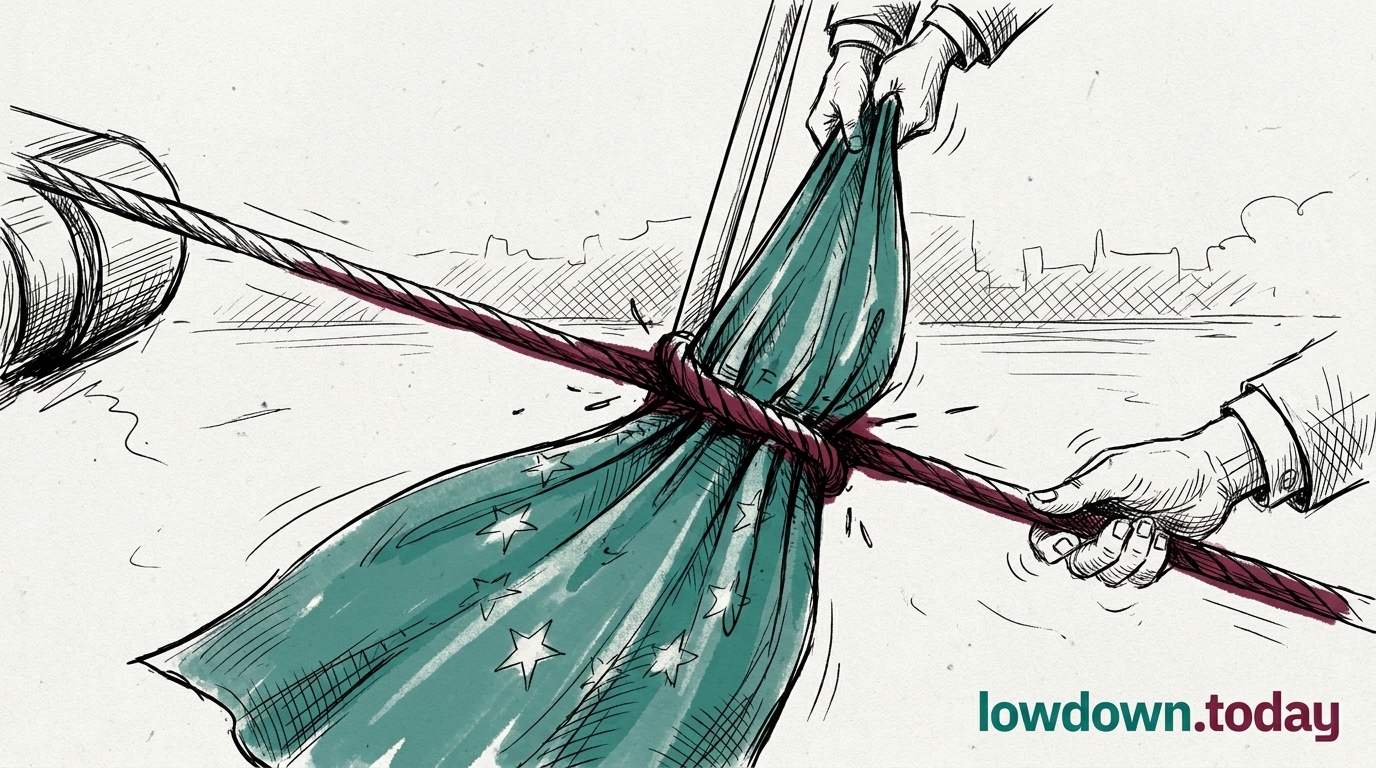
The Court of Justice of the European Union (CJEU), the EU's highest court, dismissed Google and Alphabet's final appeal on 2 July, confirming a €4.1bn fine for the company's Android practices 1. The 2018 case turned on Google forcing pre-installation of Search and Chrome as a condition of licensing its Play Store, and it is now exhausted of appeals 2.

Brussels is running a separate and newer track against Google under the Digital Markets Act (DMA), the EU law policing how dominant 'gatekeeper' platforms treat rivals. The Android fine rests on older abuse-of-dominance law; the DMA cases run on the fresh gatekeeper framework. Both hardened The Commission's posture inside the same fortnight.

The European Commission must decide a far bigger case within three weeks, and the Google verdict stiffens its hand. It has to rule on the DMA self-preferencing fine that Ursula von der Leyen has personally held since March , a freeze that has sat on the Commission's enforcement docket ever since , with a binding search-data decision due 27 July . A final court win on the oldest Google file removes any lingering doubt that large platform penalties survive appeal.

Deep Analysis

In plain English

The Court of Justice of the European Union, the EU's highest court, based in Luxembourg, has just closed the book on an eight-year-old case against Google. Back in 2018, the European Commission (the EU's competition regulator) fined Google for forcing phone makers to pre-install its Search and Chrome apps if they wanted the Play Store. Google appealed all the way up. This month's ruling was its last chance, and it lost, so the €4.1bn fine now stands for good, with no further court left to ask.

Deep Analysis
Root Causes

The eight-year gap between the Commission's 2018 decision and this month's final dismissal traces to the EU's two-tier judicial architecture: an Article 102 abuse case must clear the General Court before a CJEU appeal is even possible, and Google exhausted both stages plus a 2022 request for a fine recalculation along the way.

Brussels built the DMA's ex-ante obligations to close that lag: the search-data sharing rules due by 27 July take effect on gatekeeper designation rather than after a multi-year abuse investigation, which is why the Commission reached for the newer instrument in its live Google case instead of opening another Article 102 file.

First Reported In

Update #11 · Dresden delivers, the logic gap stays open

Court of Justice of the European Union· 8 Jul 2026
Read original
Causes and effects
This Event
Google loses €4.1bn EU Android appeal
A settled eight-year case stiffens the Commission's hand three weeks before it rules on Google's far larger Digital Markets Act fine.
Different Perspectives
United States (Google/Alphabet)
Alphabet lost its final Android appeal on 2 July with no further court to hear it, a result its Computer and Communications Industry Association allies frame as precedent, not deterrence, since the €4.1bn fine changed nothing about Google's Play Store terms across eight years of litigation.
UK Department for Science, Innovation and Technology
DSIT opened its £96m second Sovereign AI wave on 3 July, switching from April's equity stakes to fixed-price contracts because Britain has no domestic hyperscaler or Bpifrance-style lender to fund capacity another way. It is betting on buying outcomes it controls alone rather than joining an EU-wide framework.
German federal government
Berlin backed both German deliverables this week, Infineon's fab and Aleph Alpha's merger, but is finding one far harder to close than the other. It wants enforceable protective rights inside Cohere's cap table before the merger closes, a legal instrument the Bundeskartellamt has no filing to review yet.
European Commission
European Commission
The Commission banked a clean CJEU win on the eight-year Android case on 2 July, removing Google's last comparator argument before President von der Leyen rules on the far larger DMA self-preferencing fine due 27 July. Brussels treats Infineon's early Dresden delivery as proof the Chips Act mechanism works, at the node Europe already led.
Bruegel (EU industry sceptics)
Bruegel economist Mario Mariniello argued the EU sovereignty package mimics US and Chinese strategy while EU cloud providers hold roughly 15% of their home market; using nationality as a proxy for security without fixing the underlying capital and energy gaps that drive the dependency creates €86bn of migration cost without the security benefit it is sold as delivering.
France
France
France published a joint sovereignty definition with Germany at VivaTech and mobilised €13bn under Tibi Phase 3, placing SAP's partnership with Mistral as the working proof that a German enterprise-software giant running a French sovereign model inside public administration is what digital sovereignty looks like in practice.
