Skip to content
You can now search across every topic, entity and event.What's new
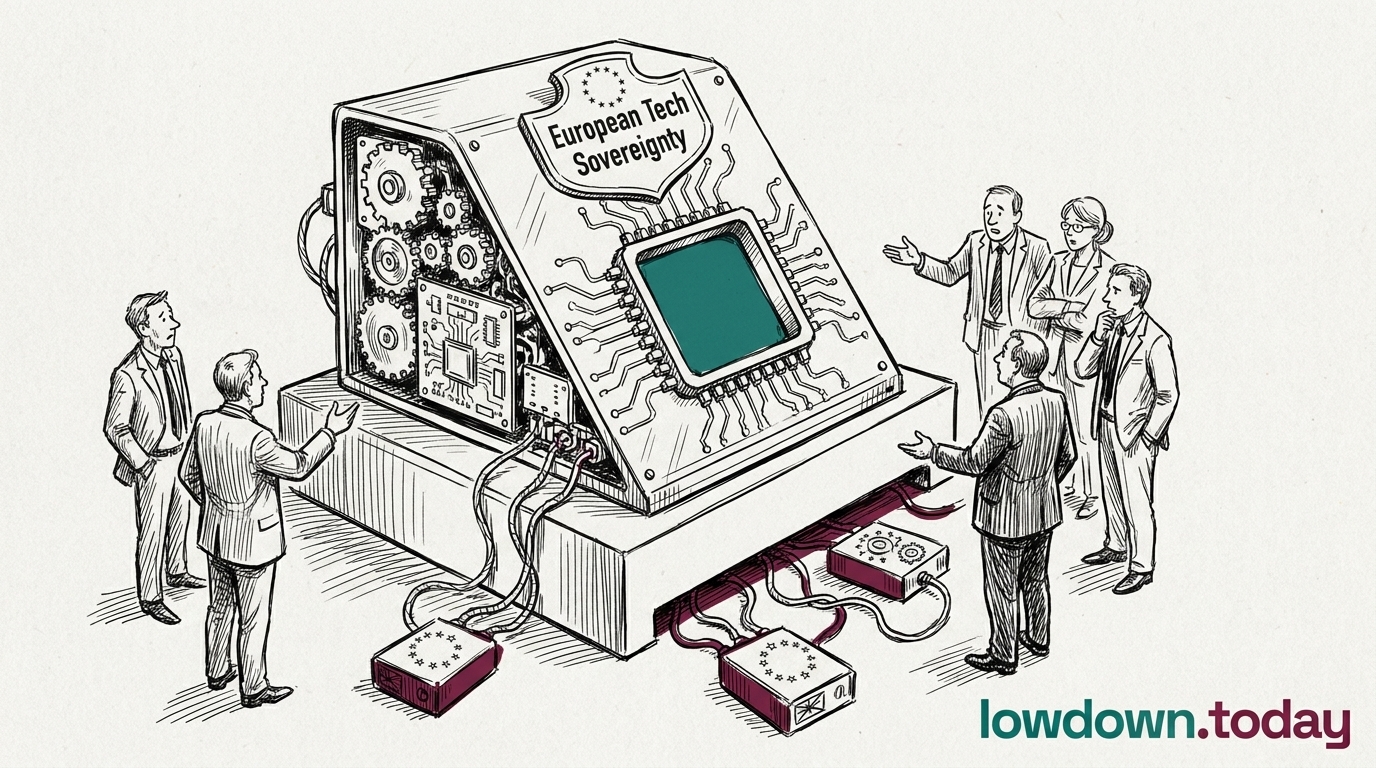
European Tech Sovereignty
23APR

Trump Extends Hormuz Deadline for Fifth Time

2 min read
09:21UTC

Five deadlines in six weeks, zero enforcement. The coercive mechanism has become diplomatic cover for continued talks.

TechnologyAssessed
Key takeaway

Five deadlines, zero enforcement; the threat is now the extension.

The 6 April power-grid deadline was superseded by a 48-hour Hormuz ultimatum, which has now been extended again to Tuesday 8pm ET (8 April). This is the fifth reformulation of the same threat in six weeks.

The pattern: 16 March to 23 March. 23 March to 6 April. 6 April replaced by 48-hour ultimatum expiring 7 April. 7 April extended to Tuesday. Each deadline arrived with escalating rhetoric. None produced action. Trump told Axios the US is in deep negotiations and threatened to blow up everything if no deal by Tuesday. The words are documented. The action is the extension itself.

Coercive diplomacy requires credible commitment to escalation. Five extensions in 42 days is the opposite of credibility. What the pattern reveals is that Trump has no appetite for the energy infrastructure campaign he threatens. Each extension is a policy decision disguised as a tactical pause. Iran's General Aliabadi dismissed Trump as helpless, nervous, unbalanced and stupid. The deadline no longer functions as leverage; it functions as domestic political communication.

The Islamabad Accord's timing is not coincidental. It provides Trump with a potential face-saving exit from the deadline cycle. If the accord gains traction, Tuesday's deadline can be reframed as a diplomatic success rather than a sixth capitulation.

Deep Analysis

In plain English

Trump has threatened to bomb Iran's power grid five times in six weeks and extended the deadline every time. The threats no longer carry weight because Iran knows they will not be acted on. The new peace plan from Pakistan may give Trump a way to step back from the deadlines without looking like he backed down.

Deep Analysis
Root Causes

US coercive diplomacy required credible escalation. Five deadline extensions destroyed that credibility. The gap between rhetoric and action has become the defining feature of US policy in this conflict, creating the diplomatic vacuum Pakistan filled.

Escalation

Mixed. The extension itself is de-escalatory (no strike). But each extension without consequence makes the eventual choice between striking and permanently abandoning the threat more binary. The Islamabad Accord offers a third path.

What could happen next?
  • US coercive credibility in the Middle East is materially damaged for the remainder of this conflict

  • Trump faces growing political exposure from both anti-war and hawkish constituencies

First Reported In

Update #60 · Pakistan's Ceasefire Plan Fills the Vacuum

Time· 6 Apr 2026
Read original
Different Perspectives
United States (Google/Alphabet)
Alphabet lost its final Android appeal on 2 July with no further court to hear it, a result its Computer and Communications Industry Association allies frame as precedent, not deterrence, since the €4.1bn fine changed nothing about Google's Play Store terms across eight years of litigation.
UK Department for Science, Innovation and Technology
DSIT opened its £96m second Sovereign AI wave on 3 July, switching from April's equity stakes to fixed-price contracts because Britain has no domestic hyperscaler or Bpifrance-style lender to fund capacity another way. It is betting on buying outcomes it controls alone rather than joining an EU-wide framework.
German federal government
Berlin backed both German deliverables this week, Infineon's fab and Aleph Alpha's merger, but is finding one far harder to close than the other. It wants enforceable protective rights inside Cohere's cap table before the merger closes, a legal instrument the Bundeskartellamt has no filing to review yet.
European Commission
European Commission
The Commission banked a clean CJEU win on the eight-year Android case on 2 July, removing Google's last comparator argument before President von der Leyen rules on the far larger DMA self-preferencing fine due 27 July. Brussels treats Infineon's early Dresden delivery as proof the Chips Act mechanism works, at the node Europe already led.
Bruegel (EU industry sceptics)
Bruegel economist Mario Mariniello argued the EU sovereignty package mimics US and Chinese strategy while EU cloud providers hold roughly 15% of their home market; using nationality as a proxy for security without fixing the underlying capital and energy gaps that drive the dependency creates €86bn of migration cost without the security benefit it is sold as delivering.
France
France
France published a joint sovereignty definition with Germany at VivaTech and mobilised €13bn under Tibi Phase 3, placing SAP's partnership with Mistral as the working proof that a German enterprise-software giant running a French sovereign model inside public administration is what digital sovereignty looks like in practice.
