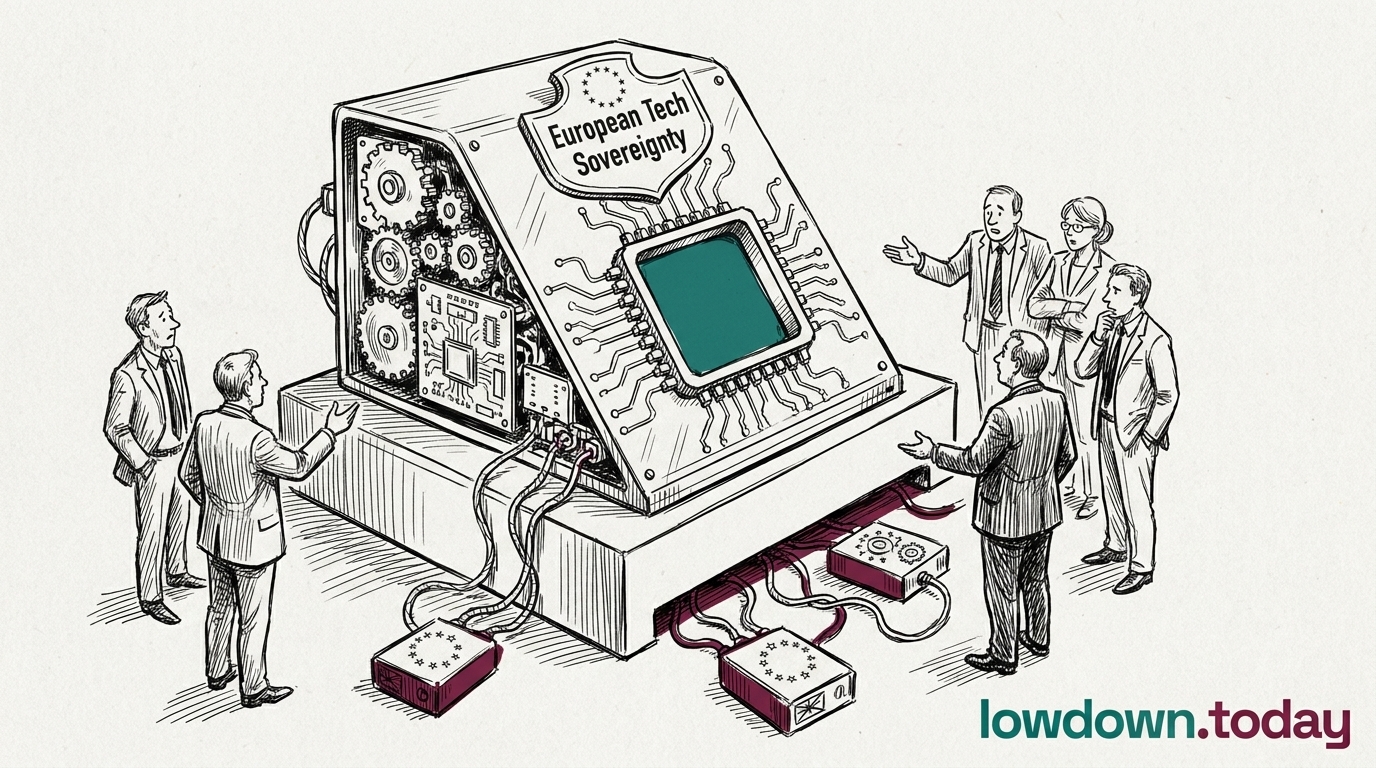
Forum Europe opens the first Sovereign Tech Europe conference at the Stanhope Hotel in Brussels on 23 April 2026 under the hashtag #EUTechSov26, with a published programme of 45 speakers drawn from the European Commission, national ministries, cloud trade bodies and think-tanks. Mistral AI, Aleph Alpha and Cohere are not on the programme. No Commissioner attends in person. Anne Le Hénanff, France's Minister Delegate for AI and Digital Affairs, delivers the opening keynote; Xavier Coget from the cabinet of Executive Vice-President Henna Virkkunen delivers the Commission's address in her place.
Cristina Caffarra, founder of the EuroStack Initiative Foundation, takes the afternoon keynote to put a vertical European compute stack on the agenda. Francisco Mingorance, Secretary General of CISPE, follows with an address titled "Making Sovereignty Verifiable" four days after he had called the Commission's own cloud award "sovereignty washing". Aura Salla MEP, rapporteur for the Digital Omnibus Regulation, shares the regulatory panel with Cisco's EU policy head Chris Gow and Zscaler's Casper Klynge. External perspectives come from allied diplomatic missions rather than from European product Teams. The builders whose work would execute a sovereign stack are represented, where they are represented at all, through trade associations.
Commission defenders will argue that a deliberative policy forum is precisely the right venue for a sovereignty debate that is still about rule-setting rather than about decoupling. That reading has force. Regulators, rapporteurs and cloud trade bodies are the constituencies whose drafting power shapes the Digital Omnibus Regulation, and convening them in one room before the AI Act's GPAI enforcement activation has procedural logic. CISPE's push for an auditable sovereignty framework is the sort of compliance scaffolding that procurement can cite.
The counter-reading is harder to dismiss after one week of sovereignty instruments that arrived without their architects. The sovereign cloud framework was named without a European AI model company on the shortlist; the DSIT cohort was named with seven infrastructure firms and no application-layer builder. A policy forum whose speaker list omits every European frontier-model firm will produce auditable compliance frameworks rather than production capability, and the room in Brussels today is structurally populated by the people who regulate sovereignty rather than by those who would build it.





