Skip to content
You can now search across every topic, entity and event.What's new
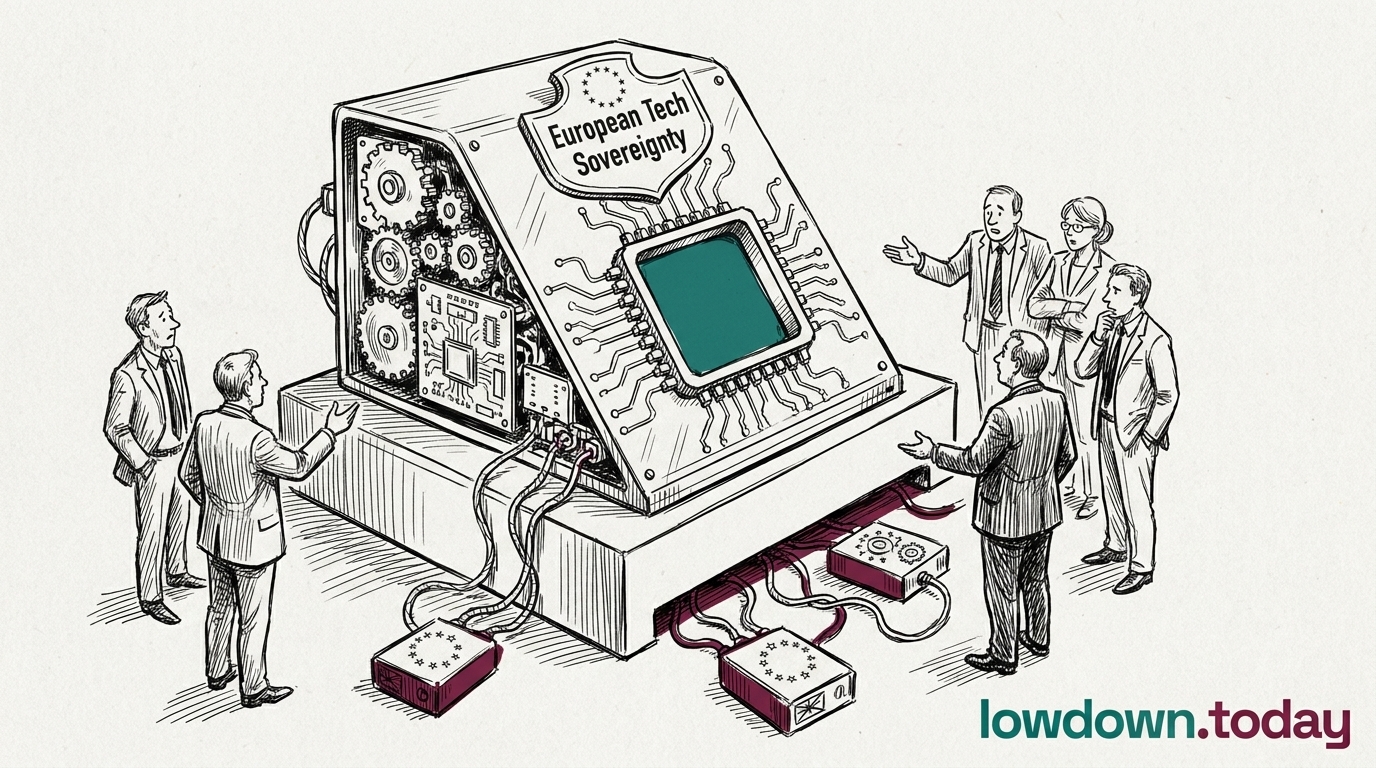
European Tech Sovereignty
23APR

Brent jumps 5.08% on Monday short-squeeze

3 min read
09:21UTC

Brent settled 5.08% higher at $97.82 on Monday 8 June, the first settlement after the weekend, as traders covered short positions following the referenced Iran-Israel escalation rather than buying fresh.

TechnologyDeveloping
Key takeaway

The Monday jump is a covering rally with no long base, so it fades when the catalyst stales.

Brent settled 5.08% higher at $97.82 on Monday 8 June, the first settlement after the weekend, having closed near $93 on Friday 5 June 1. West Texas Intermediate added a similar margin to roughly $94.80. The move tracked the Iran-Israel missile exchange overnight 6-7 June, the dated escalation that lit the catalyst; the military and diplomatic detail belongs to the Iran-conflict-2026 file, and this market owns only the price consequence.

The character of the rally matters more than its size. This was traders closing out bets that prices would fall, not new buyers convinced they will rise. A covering rally adds risk premium to the flat price without committing a barrel behind it, and it unwinds as fast as it built once the headline stales.

Brent-WTI compressed to $2.75-$2.87, down from the $3.55 it had re-widened to on 29 May , with both legs rallying in parallel rather than Brent pulling away. That parallel strength pins the crude arb mechanically near $2.80 instead of reopening it. The squeeze extends the WTI net-short unwind that CFTC data had already confirmed was complete , and it sits on top of a sixth consecutive US crude draw to 424.4mb . The barrels are tight; the question is whether positioning can hold a price the physical market did not bid up on its own.

Deep Analysis

In plain English

Oil prices can move sharply for reasons that have nothing to do with physical supply: it can also be because of how traders are positioned. In the weeks before 8 June, many professional traders had placed bets that oil prices would fall, a type of trade called a 'short position'. When an Iran-Israel missile exchange over the weekend prompted concern that the conflict was escalating, those traders rapidly reversed their bets, buying oil contracts to close out their losing short positions. This buying rush is called a 'short-squeeze'. The result was Brent crude jumping over 5% on the Monday to $97.82. The physical supply of oil did not suddenly change that morning: what changed was how traders were positioned and how quickly they needed to exit those positions.

What could happen next?
  • Consequence

    With WTI managed money net short at -26,694 as of 2 June, a further escalation event before the CFTC can register new covering would drive a second short-squeeze leg toward $100 Brent.

  • Risk

    Short-squeeze rallies that lack new long entry tend to retrace fully once the covering is complete; Kuwait's 10-12 week output recovery floor means the fundamental supply picture does not support a sustained price above $97-100 on a ceasefire outcome alone.

First Reported In

Update #6 · OPEC's quota is fiction at a 37-year low

OilPrice.com· 8 Jun 2026
Read original
Different Perspectives
Trump administration
Washington defends the MATCH Act as closing a loophole that lets ASML's DUV tools reach Chinese fabs indirectly, dismissing the Dutch Cabinet's June complaint of being treated with disregard. Officials expect the bill's progress through Congress to keep the DUV cross-subsidy question live regardless of ASML's Q2 numbers.
Bruegel
Bruegel
Brussels-based economists argue this week's deliverables, specialist fab aid and a digital euro that restricts no US firm, prove Europe's sovereignty agenda advances only where it meets no American resistance. They expect the leading-edge fabrication gap and dependence on US frontier AI models to persist absent a policy that directly confronts a named US interest.
German federal government
Berlin welcomes the €659m tranche funding jobs across North Rhine-Westphalia, Schleswig-Holstein, Hesse and Bavaria, on top of the ESMC Dresden fab already under construction on TSMC-shipped tooling. Officials treat power and analogue capacity as the achievable near-term win while Dresden remains Germany's only bet on leading-edge logic.
House of Commons Science, Innovation and Technology Committee
The committee's 7 July report found the UK has "no coherent strategic framework" for sovereign technology and warns it "risks being cut off at whim", citing the June order that barred foreign access to Anthropic's Fable 5 and Mythos 5 as the trigger case. It expects no domestic hyperscaler or foundry response before the gap widens further.
European Commission
European Commission
The Commission cleared €659m in German state aid on 14 July, taking cumulative Chips Act support to roughly €14.2bn, and let the digital-euro mandate reach trilogue after ECON's floor-vote shortcut was overturned. Brussels presents both as sovereignty delivered, without addressing that neither funds leading-edge logic fabrication.
ASML
ASML
ASML raised FY2026 guidance to €43-45bn on 15 July and, for the first time since Q1, dropped the export-control hedge from its release even with the MATCH Act live in Congress. Fouquet frames the order book, 86 systems against 67 in Q1, as strong enough to outrun the DUV dispute rather than evidence it has cooled.
