Skip to content
Welcome, thoughtbot's Giant Robots listeners!Start here
European Tech Sovereignty
19APR

UK awards Tekever up to £400m for AR5

3 min read
17:00UTC

Britain's Watchkeeper successor went to Tekever without a contest after the tender drew no compliant bids, at more than double the ministry's estimate.

TechnologyAssessed
Key takeaway

Britain's Watchkeeper replacement went to Tekever without competition, at more than double the tender estimate.

The UK Ministry of Defence awarded Tekever a contract worth up to £400 million on 16 September for the AR5 surveillance drone, which replaces the British Army's Watchkeeper⁠1. Tekever is a Portuguese drone maker with a factory in Swindon. Six aircraft come first, rising to as many as 24 by 2029. When the ministry tendered the work as Project Corvus in May, it estimated £130m to £156m excluding VAT.

FlightGlobal reported in July that the competition drew no compliant bids, and that the ministry moved to a sole-source award to Tekever worth £336m excluding value added tax (VAT)⁠2. On those figures the sole-source price is more than double the top of the ministry's tender estimate. Lowdown's reading, which the ministry has not confirmed, is that £336m plus 20 per cent VAT gives roughly the ceiling now published. Neither document shows whether the award's scope and options match those tendered in May.

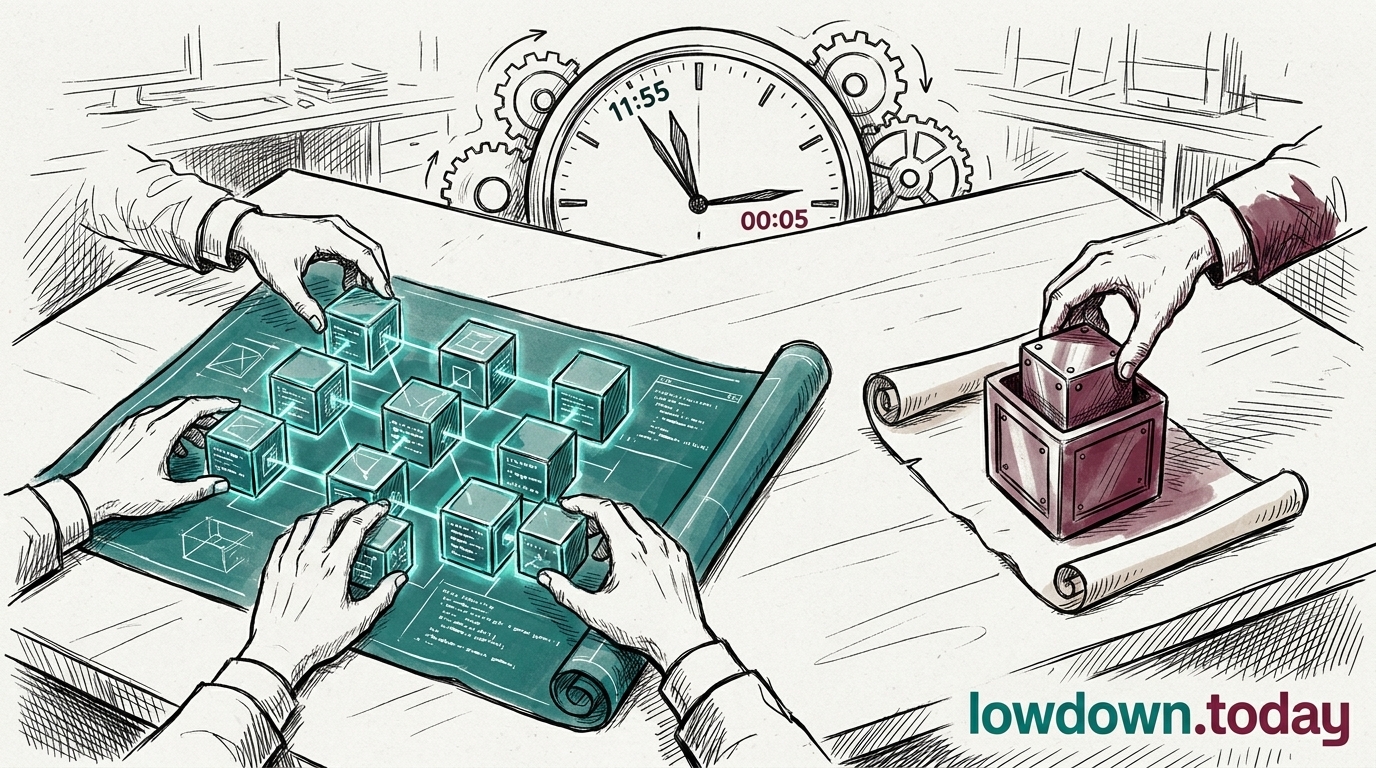
A tender with no compliant bid leaves the ministry negotiating with a single firm. Corvus is one of the programmes folded into Britain's £5bn drone and autonomy plan, which assumes a supplier base deep enough to compete on price, and it closed without a contest.

A separate £16m buy under Project Rapstone brings in 1,025 small drones from three suppliers. The largest share, 670 X10 drones, comes from Skydio, an American maker, through Marlborough Communications; Evolve Dynamics and Brigantes Consulting supply the rest. China sanctioned Skydio on 11 October 2024, cutting it off from Chinese battery cells⁠3, so most of Rapstone's drones come from a maker whose supply chain Beijing has already squeezed.


Deep Analysis

In plain English

The British Army has flown a surveillance drone called Watchkeeper since 2014. It is being replaced by the AR5, made by Tekever, a Portuguese company with factories in Britain. The Ministry of Defence first tried to run a contest between firms. No company put in a bid that met the rules, so the ministry negotiated with Tekever directly. The final contract can be worth up to £400 million, much more than the ministry first expected to pay. In a separate deal, the army is buying about a thousand small drones for its soldiers to carry.

Deep Analysis
Root Causes

Britain has few makers of army surveillance drones. Tekever had already built a position: £270 million of earlier separate ministry contracts and a 254,000 sq ft factory in Swindon. A rival entering late had to match an incumbent with a plant already in Britain.

A tender priced at £130m to £156m also left little room for firms to bid compliant offers for a long-endurance drone fleet over five years. When every bid fails, the rules let the buyer negotiate with one supplier, and the ministry did.

What could happen next?
  • Risk

    A sole-source price well above the estimate invites scrutiny of other programmes in the £5bn drone plan.

  • Consequence

    Tekever's Swindon plant becomes the British Army's main source of long-endurance surveillance drones for the rest of the decade.

First Reported In

Update #18 · Four EU states skip tenders on drone defence

UK Ministry of Defence· 1 Oct 2026
Read original →
Causes and effects
Different Perspectives
European Centre for International Political Economy
ECIPE found nine states gave about 97% of awarded cloud lots to home providers from 2018 to 2025, and every sovereignty-framed lot went to a domestic supplier. The think tank reads sovereignty clauses as a home-bias tool that narrows competition, with a 46% sole-bidder rate on a small sample.
Mistral AI
Mistral AI
Mistral opened a Munich industrial AI hub on 28 September with BMW and Siemens Energy work, and Germany's digital minister Karsten Wildberger praised it on the launch page. The French lab gains a German ministerial endorsement while its 21 October Nvidia partnership ties the work to US accelerators.
AWS European Sovereign Cloud
AWS will run its Brandenburg region for several hours on 24 October cut off from the AWS global backbone, with an EU-resident team. AWS says the test follows BSI's C3A criteria and will give regulators and customers verifiable evidence of separation.
Greenland government
Greenland signed a joint declaration with the EU and Denmark in September and received Virkkunen on 24 and 25 September. The Arctic Strategy now backs a cable linking Greenland directly to Europe, an alternative to Greenland Connect, which lands in Canada and Iceland.
Greek government
Greek government
Kyriakos Mitsotakis inaugurated DAEDALUS at Lavrion on 19 October, a €36m machine on Nvidia GH200 chips that anchors the PHAROS AI Factory. Athens paid 65% through Greece 2.0, making national recovery money the main funder of an EU AI Factory.
ASML
ASML
ASML reported record quarterly sales of €11.66bn and said planned supply for 2027 and 2028 will not fully meet demand. It plans about 30% more capacity in 2027, and some customers want to book for 2029 and 2030.

Written with AI from Lowdown's published reporting. Not individually reviewed by an editor. Editorial standards.