Skip to content
You can now search across every topic, entity and event.What's new
European Tech Sovereignty
8SEP

Urals stalls; the discount blows to $20

2 min read
15:06UTC

Urals held near $51.25 on 6 July while Brent firmed, blowing the Russian grade's discount out to about $20, well beyond the $10-15 band it kept through 2024-25.

TechnologyDeveloping
Key takeaway

Urals stalled near $51 as Brent firmed, widening the discount to about $20 and squeezing Russia's budget.

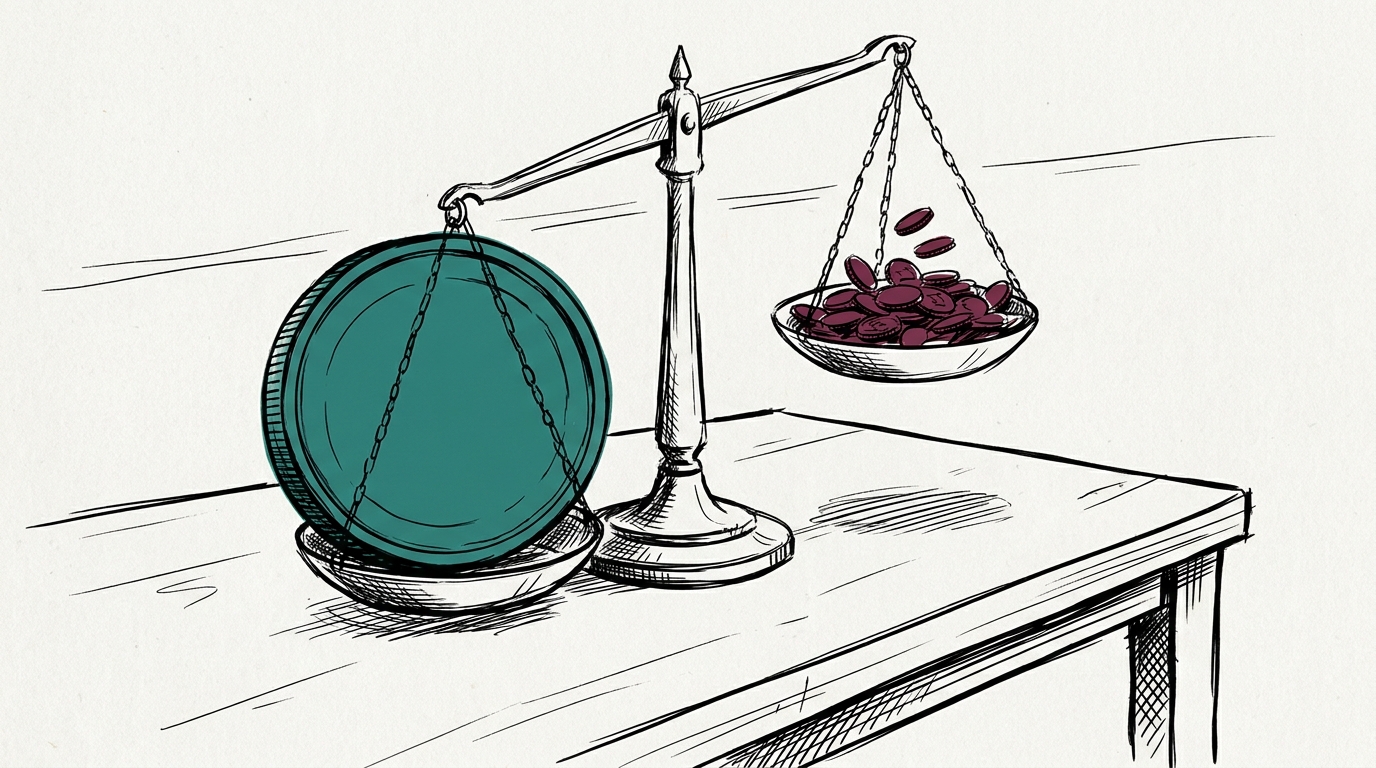
Urals, Russia's flagship crude export grade, sat at $51.25 on 6 July, barely moved from the roughly $50 it traded ten days earlier . Brent firmed over the same stretch on the OPEC+ decision and steadying Hormuz flows, so the Urals-Brent discount widened to about $20, beyond the $10-15 band the grade held through 2024-25. 1

Russia's 2026 federal budget still assumes $59 a barrel for its oil, and Urals has sat below that mark since late June. A discount that widens against a firming Brent deepens the fiscal shortfall even during a benchmark rally, because the Russian grade does not travel with it. Oil and gas revenue funds roughly a third of the federal budget, so the gap feeds straight into Moscow's finances.

Shadow-fleet cargoes already clear beneath Russia's fiscal floor, so the market, not any sanctions cap, is setting the near-term ceiling on Urals. That balance could shift within a week: EU ministers decide on 13 July how long to freeze the price cap on Russian oil, a ruling that resets how traders hedge Russian barrels.


Deep Analysis

In plain English

Urals is the main type of crude oil Russia sells abroad. On 6 July it traded at about $51.25 a barrel, almost unchanged from ten days earlier, while the world's benchmark oil price, Brent, rose. The gap between the two, called the discount, widened to about $20, wider than the $10-15 gap that had held for the past two years. Russia's government built its 2026 budget assuming oil would sell for $59 a barrel. With Urals well below that, Moscow is already spending from its reserve fund rather than saving from oil income, a squeeze tied more to the structural cost of selling oil outside the normal insurance and shipping system than to any single new sanction.

Deep Analysis
Root Causes

Russia's fiscal rule channels oil-tax revenue above a set cutoff price into the National Wealth Fund and draws from the fund when the price falls below it. With Urals near $51 against the $59 the 2026 budget assumes, the mechanism is already drawing down reserves rather than banking a surplus, an automatic drain distinct from any single sanctions action.

The discount also reflects a fixed insurance cost layer. Shadow-fleet vessels operating outside G7 protection-and-indemnity cover carry a structurally higher hull-risk premium that holds even in weeks, like 22-26 June, when no new OFAC designation landed.

What could happen next?
  • Risk

    A three-month EU cap freeze rather than one to January 2027 would reopen review in the autumn just as the discount tests $20, raising the odds of a policy shift compounding the fiscal squeeze on Moscow.

First Reported In

Update #14 · Brent-WTI blows out as the hike lands priced

Trading Economics· 6 Jul 2026
Read original
Different Perspectives
Poland
Poland
Poland leads a self-announced AI Gigafactory consortium with a EUR 100 million phase-one commitment, matched by Czechia and joined by Hungary at EUR 25 million. EuroHPC has confirmed no consortium for the call closing 12 November, so the bloc exists only in national announcements so far.
UK Government (DCMS)
Secretary of State Lisa Nandy told the Commons on 3 September she has inherited the sovereign AI brief from Liz Kendall, but gave no assessment, figure or date on frontier-model access. It is the first public claim of ownership since DSIT's abolition, without the substance the committee asked for.
ASML
ASML
ASML CEO Christophe Fouquet credited Intel Foundry, not a European fab, with shipping the first high-volume logic product made on High-NA EUV, the tool only ASML builds. Europe holds the chokepoint tool; the company that spent it into volume production first is American.
Luxembourg
Luxembourg
Luxembourg joined Mistral's Series D as a new investor on 8 September, the same government that co-funds EuroHPC's MeluXina-AI supercomputer. One small member state now funds the sovereign compute Mistral may need and holds equity in the company using it.
Samsung Electronics
Samsung Electronics
Samsung led Mistral's Series D on 8 September and the same day expanded its ASML collaboration on next-generation lithography. One Korean company now sits atop Europe's largest AI funding round and inside its most sensitive chip-tooling relationship.
Mistral AI
Mistral AI
Mistral closed a EUR 3 billion Series D above a EUR 21 billion valuation on 8 September, with Samsung leading and Luxembourg joining as a new state investor. The company markets itself as Europe's non-American AI option even as the round's lead capital comes from South Korea and two US private-equity firms.