Skip to content
You can now search across every topic, entity and event.What's new
European Tech Sovereignty
8SEP

Oil priced a reopening that never happened

3 min read
15:06UTC

Brent crude held near $79.95 on 19 June, down about a tenth on the week, as traders priced a Hormuz reopening that no physical cargo has yet made real.

TechnologyDeveloping
Key takeaway

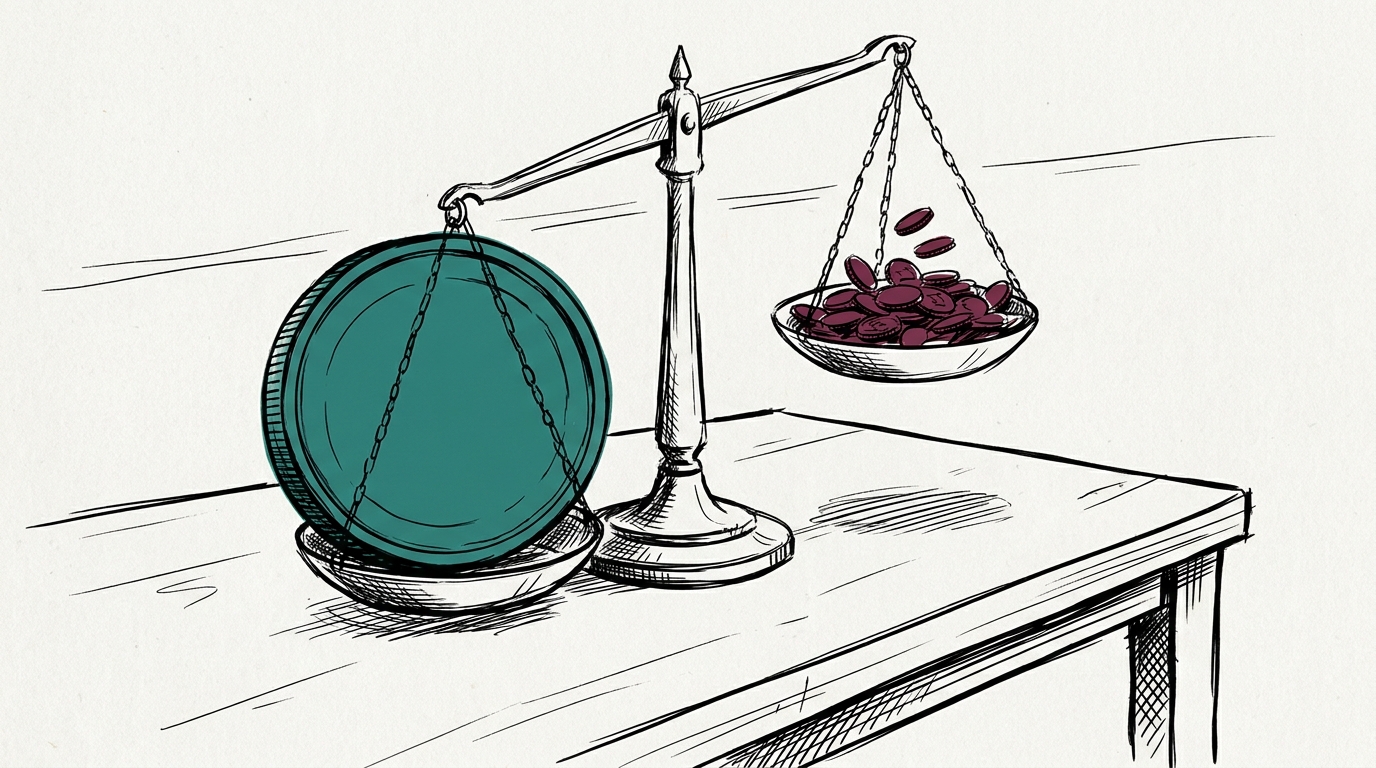
Brent near $80 is the market hoping a strait reopens, not supply actually returning.

Brent Crude, the global oil benchmark, settled near $78.66 on 18 June and edged to roughly $79.95 on 19 June, down about 10 per cent on the week from above $100 at the height of the strait crisis 1. The fall tracked CENTCOM's lifting of the naval blockade: futures markets priced the diplomatic reopening the moment the order landed, then partially reversed as the insurer and mine reality set in .

At about $80 the market was not pricing a full supply return. The pre-conflict baseline was nearer $70, and Brent held its premium above that precisely because no additional Iranian or Gulf cargo had physically sailed. A barrel that cannot leave the Gulf, because no underwriter will cover the tanker carrying it, is a barrel the market can hope for but not buy. Price and supply parted ways: the futures curve repriced a strait that minesweepers had not cleared.

The United Arab Emirates' state oil producer had already assessed that stranded Hormuz barrels might not clear until 2027 , a judgement that still stood against the week's optimism. For consumers, petrol prices now reflect a reopening that has not happened. A single mine strike or an insurer hold could reverse the week's fall and send the benchmark back up, because the supply it is betting on remains, for now, theoretical.


Deep Analysis

In plain English

Oil prices on international markets fell about 10% in the week ending 19 June, as traders priced in the US-Iran peace deal and the end of the naval blockade. Brent crude settled near $78.66 on 18 June and edged to $79.95 on 19 June. Before the war started, the same benchmark sat around $70 a barrel. Financial traders moved faster than tanker ships can. The deal is signed, but the Strait of Hormuz still has mines in the water and London insurers still refuse to cover ships trying to cross. The UAE's state oil company assessed that the strait might not carry full cargo flows until 2027. Prices are cheaper than at peak war, but stranded supply means the pre-war $70 level is still months away.

What could happen next?
  • Consequence

    Brent at approximately $80 reflects a partial diplomatic risk-premium reduction but not a physical supply recovery. The remaining $10 premium above pre-conflict levels will compress as mine clearance progresses and insurers re-enter, but not until physical flows confirm the reopening.

  • Risk

    If Phase 2 nuclear talks fail or Iran invokes the MOU annulment clause over Lebanon, the diplomatic risk premium reverses and Brent recovers toward the $90-100 range seen during peak conflict.

First Reported In

Update #132 · Trump lifted the blockade, not the strait

CNBC· 19 Jun 2026
Read original
Different Perspectives
Poland
Poland
Poland leads a self-announced AI Gigafactory consortium with a EUR 100 million phase-one commitment, matched by Czechia and joined by Hungary at EUR 25 million. EuroHPC has confirmed no consortium for the call closing 12 November, so the bloc exists only in national announcements so far.
UK Government (DCMS)
Secretary of State Lisa Nandy told the Commons on 3 September she has inherited the sovereign AI brief from Liz Kendall, but gave no assessment, figure or date on frontier-model access. It is the first public claim of ownership since DSIT's abolition, without the substance the committee asked for.
ASML
ASML
ASML CEO Christophe Fouquet credited Intel Foundry, not a European fab, with shipping the first high-volume logic product made on High-NA EUV, the tool only ASML builds. Europe holds the chokepoint tool; the company that spent it into volume production first is American.
Luxembourg
Luxembourg
Luxembourg joined Mistral's Series D as a new investor on 8 September, the same government that co-funds EuroHPC's MeluXina-AI supercomputer. One small member state now funds the sovereign compute Mistral may need and holds equity in the company using it.
Samsung Electronics
Samsung Electronics
Samsung led Mistral's Series D on 8 September and the same day expanded its ASML collaboration on next-generation lithography. One Korean company now sits atop Europe's largest AI funding round and inside its most sensitive chip-tooling relationship.
Mistral AI
Mistral AI
Mistral closed a EUR 3 billion Series D above a EUR 21 billion valuation on 8 September, with Samsung leading and Luxembourg joining as a new state investor. The company markets itself as Europe's non-American AI option even as the round's lead capital comes from South Korea and two US private-equity firms.