Skip to content
You can now search across every topic, entity and event.What's new
European Tech Sovereignty
8SEP

EU targets shadow fleet's service layer

2 min read
15:06UTC

The EU's draft 21st sanctions package would, for the first time, target the bunkering and ship-to-ship services behind Russia's shadow fleet and freeze the $44.10 oil price cap to January 2027.

TechnologyDeveloping
Key takeaway

The EU's 21st package would hit shadow-fleet support services and freeze the $44.10 cap, squeezing Urals without new OFAC action.

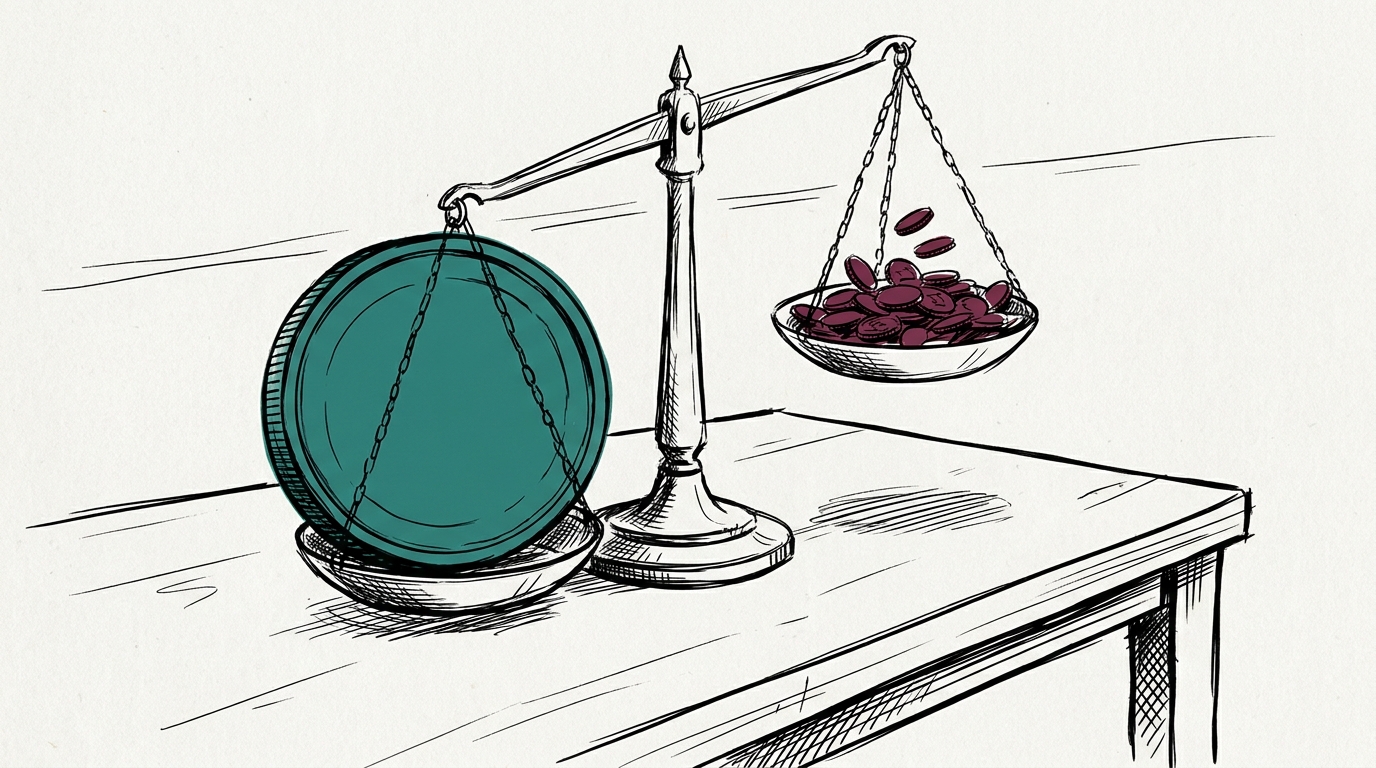
The European Commission's draft 21st sanctions package would, for the first time, target the service layer behind Russia's shadow fleet, the bunkering, ship-to-ship (STS) transfer and port services that keep sanctioned tankers moving, alongside about 30 more vessel listings 1. It also freezes the $44.10 price cap, the G7 and EU ceiling on the price at which Russian seaborne crude can be lawfully shipped using Western services, to January 2027, blocking the upward adjustment toward roughly $75 that a falling Brent would otherwise trigger .

The package still needs member-state unanimity and heads to a mid-July vote before the 15 July auto-lift. Its support-vessel target hits a gap earlier rounds left open: listing shadow vessels did little while their bunkering and STS providers stayed in business, so designating the service layer attacks the same logistics chain from the supply side .

For Russian-barrel economics, a frozen cap plus a squeezed service layer keeps downward pressure on Urals, Russia's main export grade, without a single new designation from OFAC, the US sanctions enforcer .

Deep Analysis

In plain English

Russia keeps exporting oil despite Western sanctions using a shadow fleet: a large group of tankers, mostly older vessels, that operate outside the normal Western-insured shipping system. Earlier EU sanctions packages listed specific shadow-fleet tankers, but that approach left a gap: the services that keep those tankers running (bunkering with fuel to keep them going, ship-to-ship transfers where crude is moved between vessels at sea to obscure its origin, and port services in friendly ports) remained undesignated and continued operating freely. The EU Commission's draft 21st package proposes plugging that gap by sanctioning the service providers themselves. It also proposes roughly 30 additional vessel listings. Separately, the package proposes freezing the Russia oil price cap at $44.10 per barrel until January 2027. Under the current formula, the cap would automatically adjust upward toward roughly $75 on 15 July 2027 as the six-month Urals crude average has risen. A freeze blocks that adjustment, keeping the ceiling lower and limiting Russia's oil revenue. The package still needs unanimous approval from all EU member states at a mid-July vote; it has not yet been adopted.

What could happen next?
  • Consequence

    If adopted before 15 July, the $44.10 price-cap freeze blocks the automatic adjustment toward $75, limiting Russia's oil revenue per barrel on any cargo using Western services to a level below Russia's $59 federal budget benchmark (ID:4565).

    Immediate · Assessed
  • Risk

    If EU member-state unanimity fails at the mid-July vote, the $44.10 cap auto-lifts toward $75, easing Russia's fiscal constraint and partially offsetting the revenue pressure that market price alone has been carrying (ID:4565).

    Short term · Reported
  • Precedent

    First-ever EU designation of shadow-fleet bunkering and STS service providers, if adopted, shifts the enforcement model from listing ships to targeting the logistics layer, following the North Korea sanctions escalation path.

    Medium term · Assessed
  • Risk

    Greek and Maltese shipping interests face direct commercial exposure to support-vessel designations; their governments' past resistance to maritime-services provisions creates the primary unanimity risk for the package's core innovation.

    Short term · Reported
First Reported In

Update #12 · ISAB Priolo dodges the cliff

Baker McKenzie· 30 Jun 2026
Read original
Different Perspectives
Poland
Poland
Poland leads a self-announced AI Gigafactory consortium with a EUR 100 million phase-one commitment, matched by Czechia and joined by Hungary at EUR 25 million. EuroHPC has confirmed no consortium for the call closing 12 November, so the bloc exists only in national announcements so far.
UK Government (DCMS)
Secretary of State Lisa Nandy told the Commons on 3 September she has inherited the sovereign AI brief from Liz Kendall, but gave no assessment, figure or date on frontier-model access. It is the first public claim of ownership since DSIT's abolition, without the substance the committee asked for.
ASML
ASML
ASML CEO Christophe Fouquet credited Intel Foundry, not a European fab, with shipping the first high-volume logic product made on High-NA EUV, the tool only ASML builds. Europe holds the chokepoint tool; the company that spent it into volume production first is American.
Luxembourg
Luxembourg
Luxembourg joined Mistral's Series D as a new investor on 8 September, the same government that co-funds EuroHPC's MeluXina-AI supercomputer. One small member state now funds the sovereign compute Mistral may need and holds equity in the company using it.
Samsung Electronics
Samsung Electronics
Samsung led Mistral's Series D on 8 September and the same day expanded its ASML collaboration on next-generation lithography. One Korean company now sits atop Europe's largest AI funding round and inside its most sensitive chip-tooling relationship.
Mistral AI
Mistral AI
Mistral closed a EUR 3 billion Series D above a EUR 21 billion valuation on 8 September, with Samsung leading and Luxembourg joining as a new state investor. The company markets itself as Europe's non-American AI option even as the round's lead capital comes from South Korea and two US private-equity firms.
