Skip to content
You can now search across every topic, entity and event.What's new
European Tech Sovereignty
8JUL

EU ownership rule meets its loophole

3 min read
09:50UTC

EuroHPC's guidance for the €4.12bn AI Gigafactories call keeps an EU-ownership rule but lets Cooperation-Agreement countries, Pax Silica members among them, bypass it.

TechnologyDeveloping
Key takeaway

A EuroHPC carve-out lets Pax Silica members bypass the EU-ownership rule on €4.12bn in compute funding.

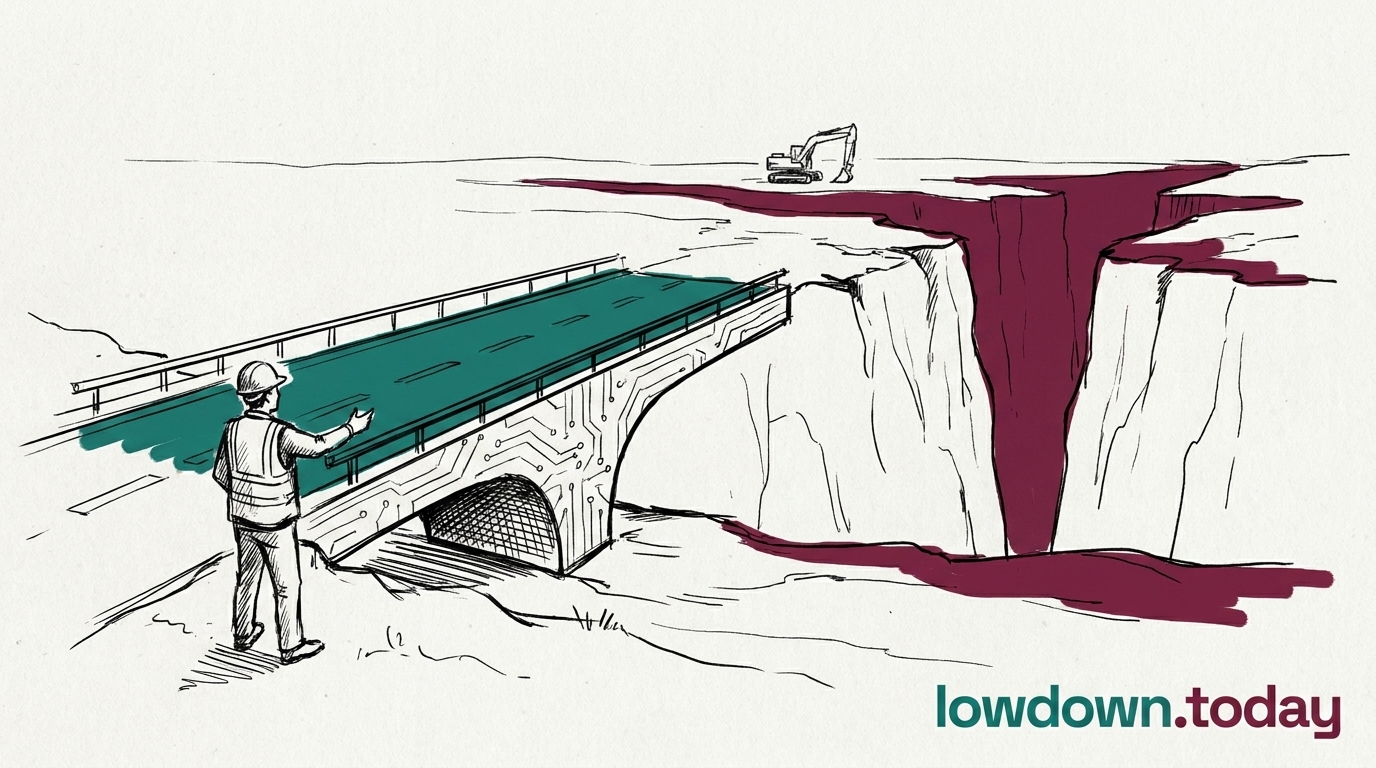
EuroHPC's published guidance for July's €4.12bn AI Gigafactories call requires the lead builder to be headquartered in the EU, then adds a carve-out: a third country holding an "AI Gigafactory Cooperation Agreement" with the EU can take part without that ownership test. EuroHPC is the EU's joint supercomputing body, and the gigafactories programme funds the large-scale compute the bloc wants to own outright.

The Commission confirmed the €4.12bn call in early June with EU ownership as its headline condition . EuroHPC's own guidance then opened the door that the rule was written to keep shut. Pax Silica membership is exactly the kind of agreement that qualifies, so a US-defined export-control system can reach inside an EU-funded compute programme without anyone touching the regulation. Whoever drafts the agreement terms, rather than the lawmakers who wrote the ownership rule, decides how binding the sovereignty test really is.

Members at the Washington summit are already naming the danger: they flagged Washington's case-by-case sign-off on access to OpenAI's GPT-5.6 as a kill switch over the very models the gigafactories are built to run. European cash and European ownership rules would then sit on top of an American licence to cut the supply off.

Deep Analysis

In plain English

The EU is spending €4.12bn to build giant AI computing centres, called AI Gigafactories, across Europe. The rules say the lead company building each one must be headquartered in the EU, so the money stays in European hands. But the published rules contain an exception: if a country has a special Cooperation Agreement with the EU, its companies can bypass the European headquarters requirement. Pax Silica, the US-run chip alliance that the EU just joined, is exactly the kind of agreement that qualifies. So an American company could lead an EU-funded gigafactory as long as its country is in Pax Silica. And because access to the AI models those gigafactories are built to run requires US case-by-case approval, European money could end up funding computing infrastructure that runs on an American on-off switch.

What could happen next?
  • Risk

    If Pax Silica members win AI Gigafactory contracts under the carve-out, US export-control terms on model access will flow into EU-publicly-funded infrastructure, making the kill-switch concern structurally embedded rather than contingent.

    Medium term · Reported
  • Consequence

    The carve-out undermines the EU-ownership signal the Commission intended the July call to send to European compute investors, reducing the policy clarity that would justify domestic capital committing to European AI infrastructure.

    Short term · Assessed
  • Precedent

    A Cooperation Agreement carve-out in a major EU funding programme establishes the mechanism by which trade-agreement terms can bypass European ownership requirements in strategic technology without treaty amendment.

    Long term · Assessed
First Reported In

Update #10 · Digital euro to trilogue; Senate bars CBDC

Electronics Weekly· 30 Jun 2026
Read original
Different Perspectives
United States (Google/Alphabet)
Alphabet lost its final Android appeal on 2 July with no further court to hear it, a result its Computer and Communications Industry Association allies frame as precedent, not deterrence, since the €4.1bn fine changed nothing about Google's Play Store terms across eight years of litigation.
UK Department for Science, Innovation and Technology
DSIT opened its £96m second Sovereign AI wave on 3 July, switching from April's equity stakes to fixed-price contracts because Britain has no domestic hyperscaler or Bpifrance-style lender to fund capacity another way. It is betting on buying outcomes it controls alone rather than joining an EU-wide framework.
German federal government
Berlin backed both German deliverables this week, Infineon's fab and Aleph Alpha's merger, but is finding one far harder to close than the other. It wants enforceable protective rights inside Cohere's cap table before the merger closes, a legal instrument the Bundeskartellamt has no filing to review yet.
European Commission
European Commission
The Commission banked a clean CJEU win on the eight-year Android case on 2 July, removing Google's last comparator argument before President von der Leyen rules on the far larger DMA self-preferencing fine due 27 July. Brussels treats Infineon's early Dresden delivery as proof the Chips Act mechanism works, at the node Europe already led.
Bruegel (EU industry sceptics)
Bruegel economist Mario Mariniello argued the EU sovereignty package mimics US and Chinese strategy while EU cloud providers hold roughly 15% of their home market; using nationality as a proxy for security without fixing the underlying capital and energy gaps that drive the dependency creates €86bn of migration cost without the security benefit it is sold as delivering.
France
France
France published a joint sovereignty definition with Germany at VivaTech and mobilised €13bn under Tibi Phase 3, placing SAP's partnership with Mistral as the working proof that a German enterprise-software giant running a French sovereign model inside public administration is what digital sovereignty looks like in practice.
