Skip to content
You can now search across every topic, entity and event.What's new
European Tech Sovereignty
8JUL

Cuba carve-out strands nine SDN cargoes

2 min read
09:50UTC

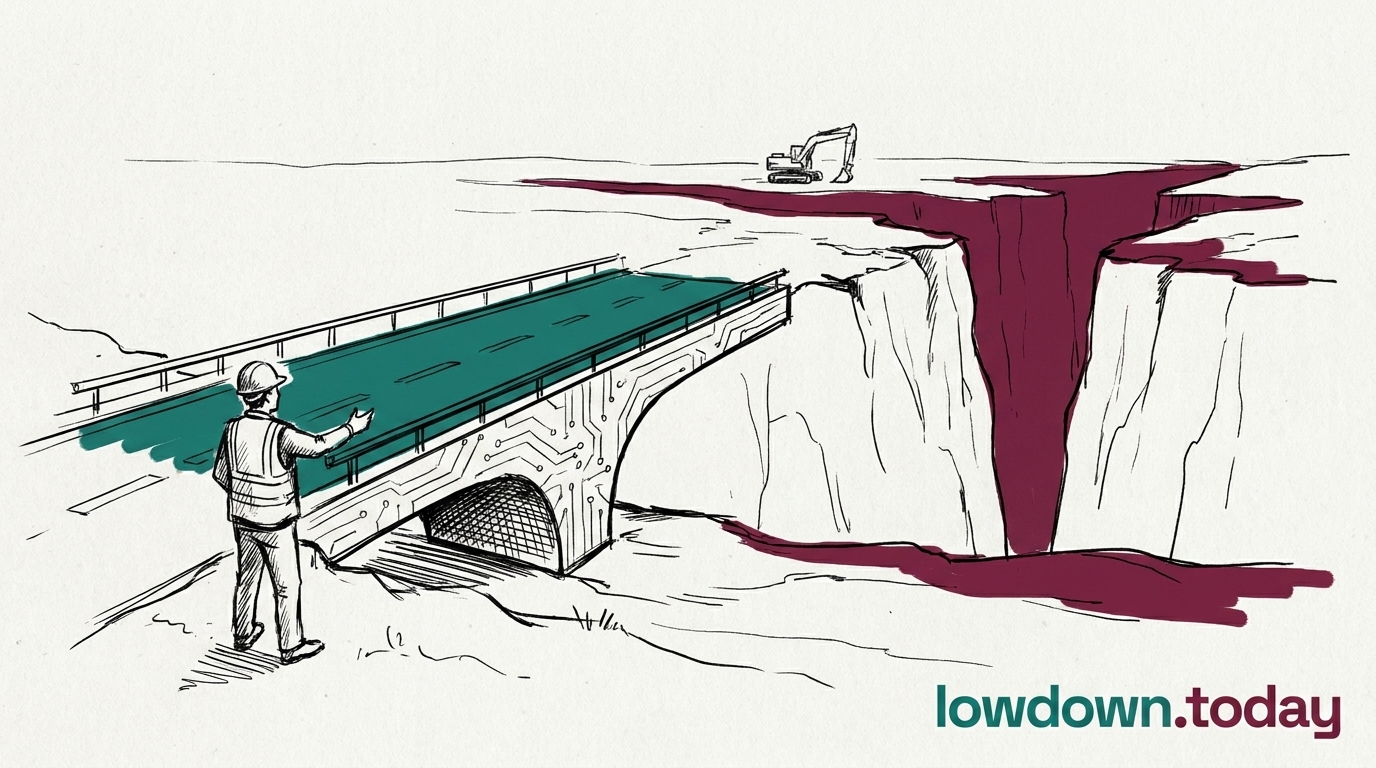
OFAC added nine Cuban officials to the SDN list on 18 May, one based in Cienfuegos, while GL 134C paragraph (b)(1) excludes Cuba outright, creating a cargo class that loses its waiver on a single Cuban touch.

TechnologyDeveloping
Key takeaway

A single Cuban counterparty voids GL 134C cover for the whole cargo, not a fraction of it.

OFAC added nine Cuban officials to the SDN list on Monday 18 May, the same action that issued GL 134C, with one of the nine based in Cienfuegos, the south-central Cuban port that hosts the island's primary refinery 1. Paragraph (b)(1) of the licence excludes Cuba outright, carrying forward the carve-out that already stood when GL 134B lapsed on 16 May .

In practice that creates a Cuba-tainted cargo class. Any pre-17-April Russian barrel that touched a Cuban intermediary between loading and delivery loses 134C cover entirely. A trader who priced a Primorsk loading as fully covered now has to re-screen the whole voyage chain, because one Cuban counterparty voids the waiver for the entire cargo, not a fraction of it.

There is no pro-rata haircut to hedge against a Cuban touch: a cargo is either clean or it is uninsurable under the licence, so the diligence burden sits on proving a negative across every ship-to-ship transfer and every chartering counterparty. The sanctions policy belongs to the Russia file; the cargo-classification cost it triggers lands squarely on the desks completing those cargoes.

Deep Analysis

In plain English

Cuba is completely left out of the GL 134C permit ; any Russian oil that passed through Cuban waters, a Cuban-linked ship, or a Cuban company loses its legal protection entirely. On the same day GL 134C was signed, US authorities added nine Cuban officials to a blacklist that prohibits anyone from doing business with them. One of those officials is based in Cienfuegos, the Cuban city where Cuba's main oil refinery sits. In practical terms, this means traders need to trace the full journey of every Russian oil cargo back to its loading port to check for any Cuban connection ; a small Cuban link anywhere in the chain voids the protection for the whole shipment.

Deep Analysis
Root Causes

Cuba's carve-out reflects a US domestic political calculus that predates the Russia sanctions: the Helms-Burton Act (codified 1996) and CAATSA (2017) both embed Cuba within the same executive order architecture as Iran and Russia.

The OFAC action on 18 May was administratively combining a Russia-sanctions waiver with a Cuba-sanctions enforcement action under a shared regulatory filing, signalling Treasury treating all three programmes as a unified adversarial-nations supply-chain enforcement mandate.

The Cienfuegos designation's timing alongside GL 134C suggests Treasury has evidence of specific Russian-Cuban crude routing activity at the Cienfuegos facility ; not a coincidental pairing of unrelated enforcement actions.

First Reported In

Update #2 · GL 134C reverses the cliff, Brent -$14

OFAC· 26 May 2026
Read original
Causes and effects
This Event
Cuba carve-out strands nine SDN cargoes
One Cuban counterparty voids GL 134C cover for the whole cargo, forcing traders to re-screen voyage chains they had priced as clean.
Different Perspectives
United States (Google/Alphabet)
Alphabet lost its final Android appeal on 2 July with no further court to hear it, a result its Computer and Communications Industry Association allies frame as precedent, not deterrence, since the €4.1bn fine changed nothing about Google's Play Store terms across eight years of litigation.
UK Department for Science, Innovation and Technology
DSIT opened its £96m second Sovereign AI wave on 3 July, switching from April's equity stakes to fixed-price contracts because Britain has no domestic hyperscaler or Bpifrance-style lender to fund capacity another way. It is betting on buying outcomes it controls alone rather than joining an EU-wide framework.
German federal government
Berlin backed both German deliverables this week, Infineon's fab and Aleph Alpha's merger, but is finding one far harder to close than the other. It wants enforceable protective rights inside Cohere's cap table before the merger closes, a legal instrument the Bundeskartellamt has no filing to review yet.
European Commission
European Commission
The Commission banked a clean CJEU win on the eight-year Android case on 2 July, removing Google's last comparator argument before President von der Leyen rules on the far larger DMA self-preferencing fine due 27 July. Brussels treats Infineon's early Dresden delivery as proof the Chips Act mechanism works, at the node Europe already led.
Bruegel (EU industry sceptics)
Bruegel economist Mario Mariniello argued the EU sovereignty package mimics US and Chinese strategy while EU cloud providers hold roughly 15% of their home market; using nationality as a proxy for security without fixing the underlying capital and energy gaps that drive the dependency creates €86bn of migration cost without the security benefit it is sold as delivering.
France
France
France published a joint sovereignty definition with Germany at VivaTech and mobilised €13bn under Tibi Phase 3, placing SAP's partnership with Mistral as the working proof that a German enterprise-software giant running a French sovereign model inside public administration is what digital sovereignty looks like in practice.
