Skip to content
Foundations rebuilt, and the first new thing is here: search across every topic, entity, and event.Try search
European Oil Markets
11JUN

Russian-flag shadow fleet share hits 21%

4 min read
08:58UTC

The KSE Institute's April 2026 Shadow Fleet Tracker recorded 194 Russian-port tanker movements in March as the Russian-flagged share of the shadow fleet jumped from 3 per cent to 21 per cent in nine months.

EconomicDeveloping
Key takeaway

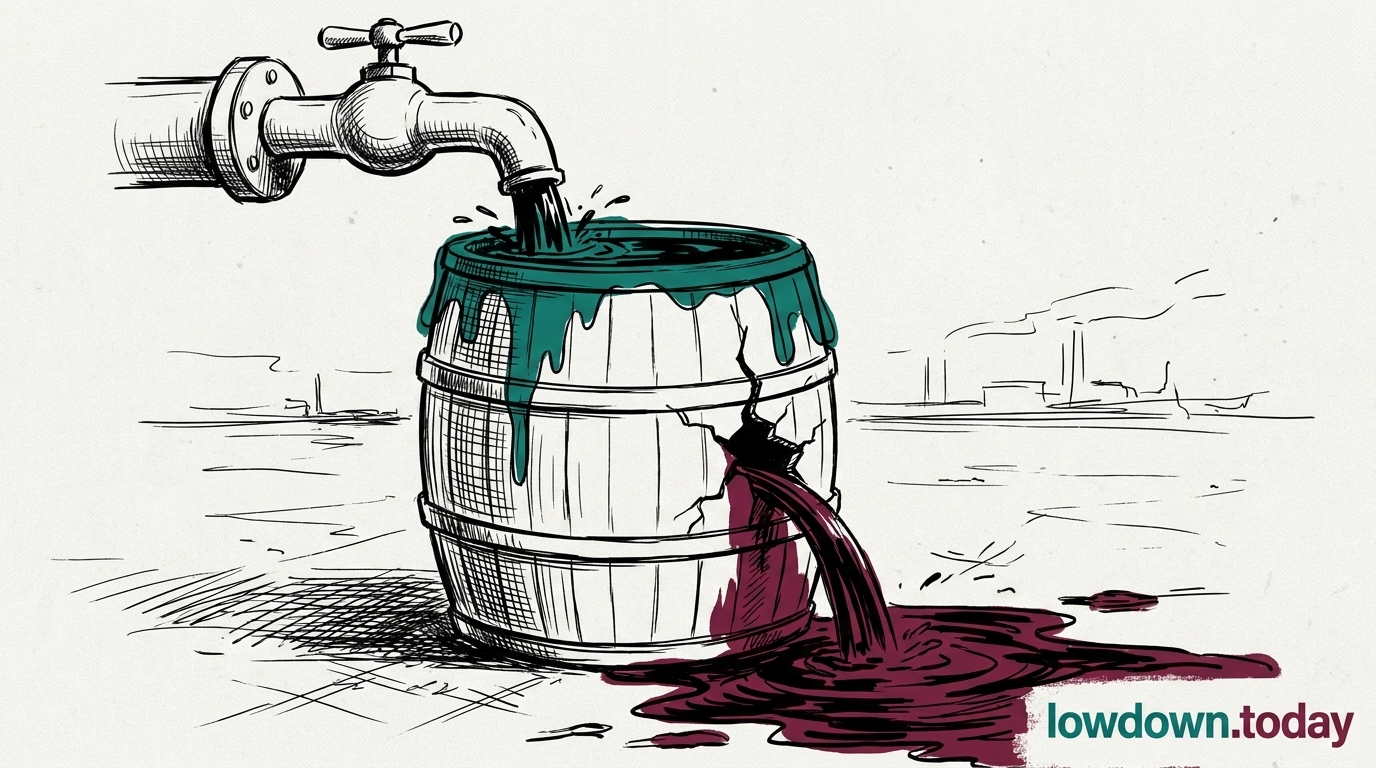
Re-flagging pulls a fifth of the shadow fleet out of Western jurisdiction, shifting enforcement to the buyer's bank.

The KSE Institute (Kyiv School of Economics, glossed once) April 2026 Russian Shadow Fleet Tracker recorded 194 shadow-fleet tanker movements from Russian ports or ship-to-ship transfers in March 2026 1. Pacific ports accounted for 44 per cent of flows (1.3 million barrels per day of crude), and Baltic ports accounted for 33 per cent (1.0 million barrels per day). Beneath those flows, KSE recorded a nine-month re-flagging surge that took the Russian-flag share from 3 per cent of shadow-fleet vessels to 21 per cent.

The flag-of-convenience pattern has reversed. Vessels that previously flew Liberian, Maltese, or Marshall Islands flags to access Western insurance and port-state-control protection are now flying Russian flags by choice. The mechanism is defensive: a Russian-flagged tanker is outside the reach of EU port inspections that could detain Liberian-flagged vessels under maritime services regulations, and outside the reach of US Treasury subpoenas that target Western P&I clubs covering the cargo.

EU port inspections lose the leverage they had under Liberian or Maltese flags; the only remaining enforcement vector is the cargo buyer's bank. That same vector was illuminated by the Adani $275 million OFAC settlement for any Asian buyer holding completion risk on Russian cargoes loaded under the lapsed GL 134B waiver .

The data explains why Urals at $76 per barrel can persist $28 above the G7 cap without triggering immediate enforcement. The shadow fleet's defensive re-flagging means the cap framework's stated mechanism (Western insurance withdrawal forcing distress sales) is no longer operative for 21 per cent of the fleet and is steadily losing reach on the rest. Cap enforcement now relies on commodity-chain prosecution at the buyer end, which is slower, costlier, and produces precedents one at a time rather than at portfolio scale.


Deep Analysis

In plain English

A 'shadow fleet' refers to the hundreds of oil tankers that Russia uses to export crude oil while avoiding Western sanctions. These ships typically lack Western insurance, avoid Western ports, and fly flags from small countries that do not enforce sanctions. In nine months, the share of shadow-fleet tankers flying the Russian flag itself jumped from 3% to 21%. Russian-flagged ships fall entirely outside Western legal and insurance systems, making them even harder to target with sanctions than ships registered in third countries. The KSE Institute in Kyiv tracks these movements to give sanctions enforcers a clearer picture of how Russia moves its oil.

Deep Analysis
Root Causes

The Russian-flagged fleet expansion is a direct operational response to the escalating EU vessel designation programme. With 632 vessels now designated under EU packages, effectively blocking Western P&I cover for listed hulls, Russia's tactical response is to move the most commercially critical vessels onto Russian registry, where they fall outside Western insurance jurisdiction entirely.

The Russian National Reinsurance Company (RNRC) provides the backstop cover, though its capital adequacy for catastrophic hull loss events remains a significant open question.

The Baltic sea route accounts for 33% of shadow-fleet crude flows (1.0mb/d) at the 21% Russian-flag rate, meaning the most strategically critical export corridor is now anchored to Russian-registry vessels, where Western enforcement leverage through insurance, classification, and P&I club membership is structurally absent.

What could happen next?
  • Consequence

    Western P&I enforcement leverage over 540,000 bpd of Russian crude flows has been structurally eliminated by the 3%-to-21% Russian-flag shift, reducing the practical effect of further Western vessel designation expansions.

    Immediate · 0.8
  • Risk

    Russian National Reinsurance Company's capital adequacy for a catastrophic hull loss on a Russian-flagged VLCC has not been independently verified; a major incident could expose the gap between RNRC nominal cover and actual payout capacity.

    Medium term · 0.6
  • Precedent

    Russia's successful domestic registry expansion will be studied by Iran, Venezuela, and other sanctioned producers as a replicable model for moving crude-transport assets outside Western insurance jurisdiction.

    Long term · 0.7
First Reported In

Update #1 · GL 134B out, Rotterdam dark, OPEC+ pending

Kyiv School of Economics· 18 May 2026
Read original
Causes and effects
This Event
Russian-flag shadow fleet share hits 21%
Defensive re-flagging pulls vessels further out of Western P&I reach and port-state-control jurisdiction, replacing Liberian and Maltese cover with sovereign Russian protection.
Different Perspectives
European Commission / EU energy regulators
The EU 21st sanctions package, announced 26 May, targets shadow-fleet tankers and banks but has not accelerated a resolution of the ISAB ownership question. A 27 June GL 131F lapse without OFAC issuing a transaction licence creates a supply-security problem for Med products that Brussels cannot solve unilaterally.
China state refiners
Chinese seaborne crude imports remain at a decade-low 6.78mbd as of May, with negative refining margins keeping state refiners on domestic stocks. Iranian Light moved to a discount to Brent, confirming the EFS compression reflects a demand hole rather than a reopened supply route.
Saudi Arabia / OPEC+ chair
Saudi Arabia ratified the third consecutive 188kbd July hike on 7 June at a Brent print over $10 below its $108-111 fiscal breakeven. Actual output runs near 70% of pre-conflict levels, so the quota increase is a signalling move rather than a physical-supply addition.
CFTC-tracked Brent managed-money desks
Managed-money Brent net position printed -57,280 contracts for the week to 2 June, a 109,000-contract swing into short from the prior +52,000 long; the book is crowded short into $8.43/bbl backwardation with a flat price that has already round-tripped to $92.69.
Med Aframax freight market
TD19 Med Aframax held near the WS228 level logged on 6 June with no new Ceyhan cargo confirmation arriving to soften it. The freight bid is pricing continued Med supply tightness, not a resolved backstop.
Italy / ISAB / Golden Power review
Energy minister signalled conditional Golden Power approval for Ludoil's ISAB acquisition on 4 June, clearing Rome's foreign-investment gate. An OFAC transaction licence has not followed, leaving the 320kbd Priolo Gargallo refinery inside the sanctions perimeter as 27 June approaches.