Skip to content
You can now search across every topic, entity and event.What's new
European Oil Markets
4JUN

Trump extends grid deadline to 6 April

2 min read
10:20UTC
EconomicDeveloping

President Trump extended the deadline for strikes on Iran's power grid to 6 April, the third such extension since his original 48-hour ultimatum, according to Bloomberg. 1 Trump cited three reasons: an Iranian government request, 10 oil tankers allowed through Hormuz as a 'present,' and progress in Pakistan-mediated indirect talks. The original deadline of 25 March was extended once before reaching the current April 6 date.

The tanker claim requires scrutiny. The vessels Trump described as an Iranian diplomatic gesture appear to be Pakistani-flagged ships already in the 'friendly nation' category that Iran established under its own vetting system weeks earlier . Iran has neither confirmed nor denied granting any special concession to Trump. Earlier, Iran had declared Hormuz closed to US-linked vessels while allowing transit to countries including India, Pakistan, Iraq, Malaysia, and China . Pakistani-flagged ships transiting was not a new Iranian concession; it was Iran's existing policy applied to Pakistan's existing fleet.

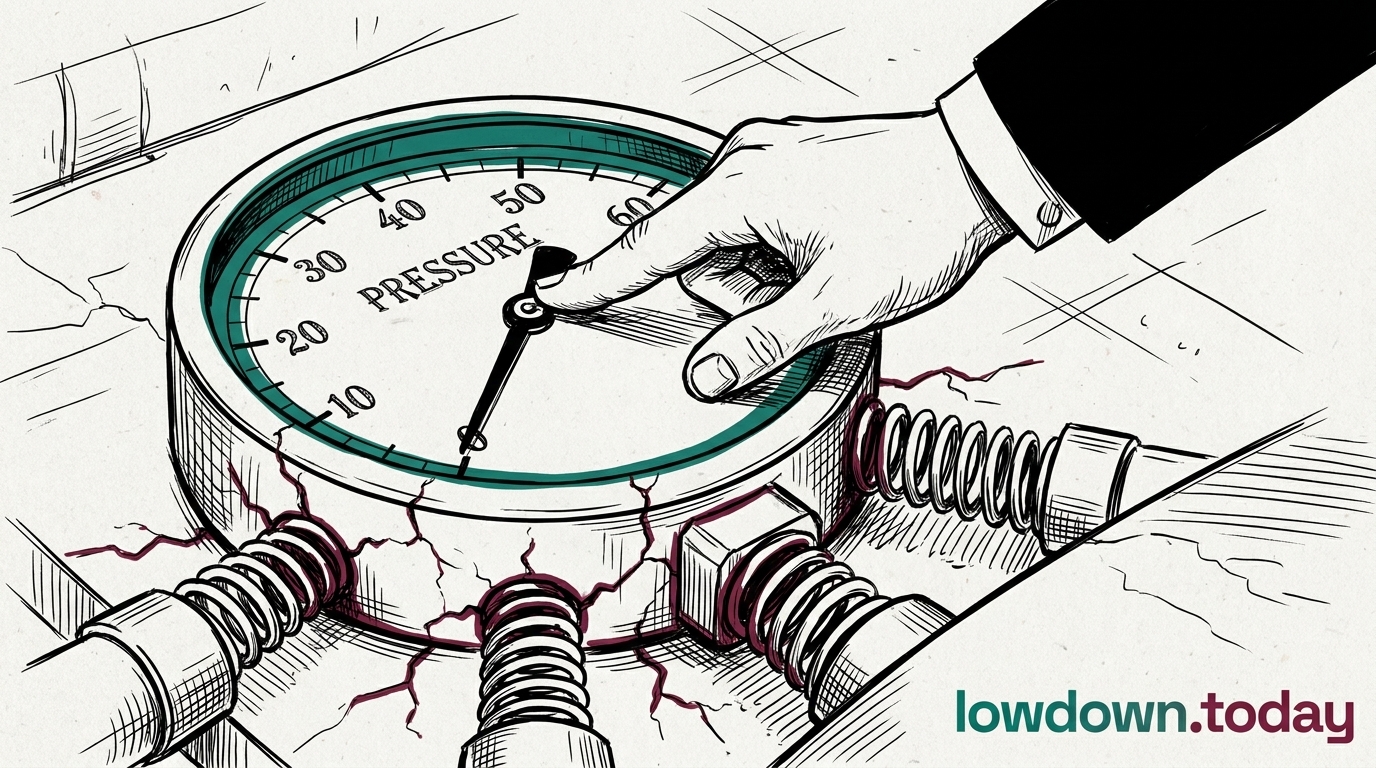
After three postponements in five days, Iran has learned that deadlines are suggestions. The credibility of the threat deteriorates with each extension because the pattern has been demonstrated: Trump sets a deadline, claims an Iranian gesture whether or not Iran acknowledges making one, and extends. Markets have largely repriced this pattern: Brent Crude fell 10.9% on the first talks announcement but has since stabilised as each deadline passes without result. The April 6 deadline arrives against a backdrop of Bushehr nuclear construction suspended , the Philippines in national energy emergency , and US gasoline at $3.98 per gallon .

Deep Analysis

In plain English

Trump set a deadline to bomb Iran's power stations if it did not reopen the Strait of Hormuz. That deadline passed. He set a new one. That one passed too. Now there is a third deadline on 6 April. Each time he has credited Iran with making some kind of gesture, but Iran has not confirmed making any. The problem is that the more times you set a deadline and do not follow through, the less seriously anyone takes the next deadline. Iran has now seen three deadlines come and go, which gives it good reason to believe 6 April will also pass without the strike.

Deep Analysis
Root Causes

The structural dilemma is that power grid strikes would trigger Iranian retaliatory strikes on Gulf desalination and energy infrastructure, as explicitly threatened by the Khatam al-Anbiya Central Headquarters in March.

The administration cannot follow through without accepting consequences it is not positioned to absorb. But each extension teaches Iran that the threat has no teeth.

First Reported In

Update #49 · Hormuz toll into law; Tangsiri killed

NPR / Houston Public Media· 27 Mar 2026
Read original
Different Perspectives
Kuwait
Kuwait
Kuwait absorbed the Iranian strike that knocked generating units offline at a combined power-and-desalination plant on 17 July, the event that finally moved freight and insurance in lockstep with Brent. The strike hit essential civilian infrastructure, not a trading desk's benchmark.
Asian buyers (Singapore)
Singapore's middle distillates rose 12% month-to-date to 8.91m barrels and fuel oil passed 19m barrels on a 105% net-import surge, buyers retaining barrels as the East-West arbitrage window narrows. Cargoes are being stockpiled ahead of further Hormuz-driven freight repricing rather than released west.
Austria (Coreper holdout)
Vienna is blocking the same package over roughly EUR 2bn of frozen Russian assets earmarked for Raiffeisen, a domestic banking dispute with no connection to the oil cap racing toward its 23 July expiry. The linkage forces the whole package to wait on a bilateral compensation fight.
Greece (Coreper holdout)
Athens is holding the 21st sanctions package at the 22 July Coreper vote over Russian LNG re-export rights, a condition unrelated to the oil price cap itself, leaving the $44.10 freeze one day from expiry without a deal. Greece's own tanker registry gives it a direct stake in how any shadow-fleet measures are drafted.
Marine underwriters (Gulf war-risk)
Hull war-risk cover for Hormuz transits widened to a 3-10% band on 17 July with 5% the emerging norm, up from a 3-4% baseline set in late June, the first repricing in six weeks to track a flat-price move rather than lag it. Cover resets on actuarial evidence of loss, not on diplomatic or price signals.
Money managers (CFTC-tracked)
The CFTC's week-to-14-July snapshot, released 17 July, showed WTI managed-money net long collapsing 69% to 19,783 contracts and a standalone 60,141-contract net short on Brent Last Day (NYMEX). Both readings predate the Kuwait strike and the 20 July escalation, so any covering since is not yet visible in public data.
