Skip to content
You can now search across every topic, entity and event.What's new
European Oil Markets
4JUN

Iranian rial erases its Rubio bounce

3 min read
10:20UTC

The rial firmed 1.7% to 1,716,000 per dollar on Rubio's 2 June testimony, but the gain was gone by the next close; it sits at 1,736,000 on 4 June, near its record low.

EconomicDeveloping
Key takeaway

The rial's testimony-driven rally vanished within a day, leaving it near its record low against the dollar.

The Iranian rial firmed 1.7% to 1,716,000 per dollar intraday on Marco Rubio's 2 June testimony , but that print did not survive the session. By the 3 June close it had retraced to 1,738,000, and it sits at 1,736,000 on 4 June 1. The rial is Iran's currency, and on the street market it has shed roughly 43% since the conflict began in February.

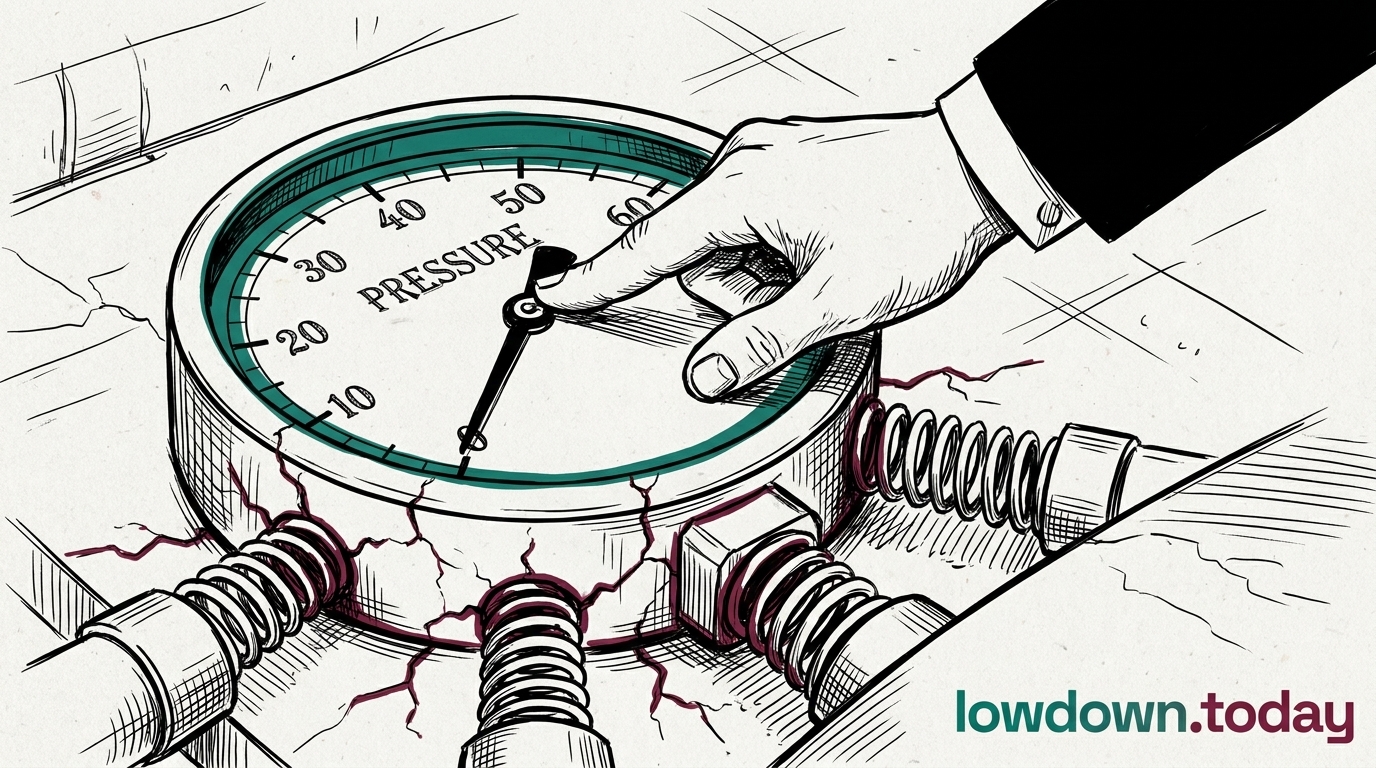
The Rubio bounce is gone, leaving the currency about 1.5% above its 1 June record low of 1,746,000 . The pattern mirrors the wider split running through 4 June: spoken signals move Iranian assets briefly, then fade because no paper follows. Rubio's Hormuz-first testimony lifted the rial for part of one trading day; nothing in it changed the sanctions regime or the war that is bleeding the currency.

A genuine, signed settlement would reset the rial for months, not minutes, which is what the brief rally underlines. Lloyd's of London makes the same point on the insurance side: its Joint War Committee needs an official UN or government certification letter, not a Senate hearing, before it touches its Hormuz cover, and it has stayed put.


Deep Analysis

In plain English

Iran's currency, the rial, has lost roughly 43% of its value against the dollar since the conflict began in February 2026. On 2 June, when the US Secretary of State Marco Rubio gave a Senate testimony suggesting talks were progressing, the rial briefly improved by about 1.7%, which is unusually large for a single day. But by the next day the gain had entirely reversed. The rial is being traded on Tehran's open currency market by ordinary citizens and businesses who desperately want dollars. The brief bounce happened because Rubio's words suggested a deal might be near. The reversal happened because the market quickly decided that words from a diplomat are not the same as a signed agreement. Without actual sanctions relief, which requires a full deal to be signed and officially certified, the rial has nothing structural supporting it.

First Reported In

Update #117 · Iran's drone finds Kuwait's arrivals hall

Hengaw· 4 Jun 2026
Read original
Different Perspectives
Kuwait
Kuwait
Kuwait absorbed the Iranian strike that knocked generating units offline at a combined power-and-desalination plant on 17 July, the event that finally moved freight and insurance in lockstep with Brent. The strike hit essential civilian infrastructure, not a trading desk's benchmark.
Asian buyers (Singapore)
Singapore's middle distillates rose 12% month-to-date to 8.91m barrels and fuel oil passed 19m barrels on a 105% net-import surge, buyers retaining barrels as the East-West arbitrage window narrows. Cargoes are being stockpiled ahead of further Hormuz-driven freight repricing rather than released west.
Austria (Coreper holdout)
Vienna is blocking the same package over roughly EUR 2bn of frozen Russian assets earmarked for Raiffeisen, a domestic banking dispute with no connection to the oil cap racing toward its 23 July expiry. The linkage forces the whole package to wait on a bilateral compensation fight.
Greece (Coreper holdout)
Athens is holding the 21st sanctions package at the 22 July Coreper vote over Russian LNG re-export rights, a condition unrelated to the oil price cap itself, leaving the $44.10 freeze one day from expiry without a deal. Greece's own tanker registry gives it a direct stake in how any shadow-fleet measures are drafted.
Marine underwriters (Gulf war-risk)
Hull war-risk cover for Hormuz transits widened to a 3-10% band on 17 July with 5% the emerging norm, up from a 3-4% baseline set in late June, the first repricing in six weeks to track a flat-price move rather than lag it. Cover resets on actuarial evidence of loss, not on diplomatic or price signals.
Money managers (CFTC-tracked)
The CFTC's week-to-14-July snapshot, released 17 July, showed WTI managed-money net long collapsing 69% to 19,783 contracts and a standalone 60,141-contract net short on Brent Last Day (NYMEX). Both readings predate the Kuwait strike and the 20 July escalation, so any covering since is not yet visible in public data.