Skip to content
You can now search across every topic, entity and event.What's new
European Oil Markets
29MAY

EU Council opens Ukraine accession talks

2 min read
14:36UTC

EU Council conclusions on 18 June opened Ukraine's accession negotiations, called for a 21st sanctions package and confirmed the first disbursement of the €90 billion loan.

EconomicDeveloping
Key takeaway

Brussels answered Russia's peace offer by opening accession talks and tightening sanctions.

The European Union (EU) Council adopted conclusions on Ukraine on 18 June, opening the accession Intergovernmental Conference (the formal membership-negotiation track, the IGC), calling for a 21st sanctions package, and confirming the first disbursement of the €90 billion loan 1. The IGC is the body through which a candidate state negotiates the legal terms of joining; opening it moves Ukraine from applicant to active negotiator.

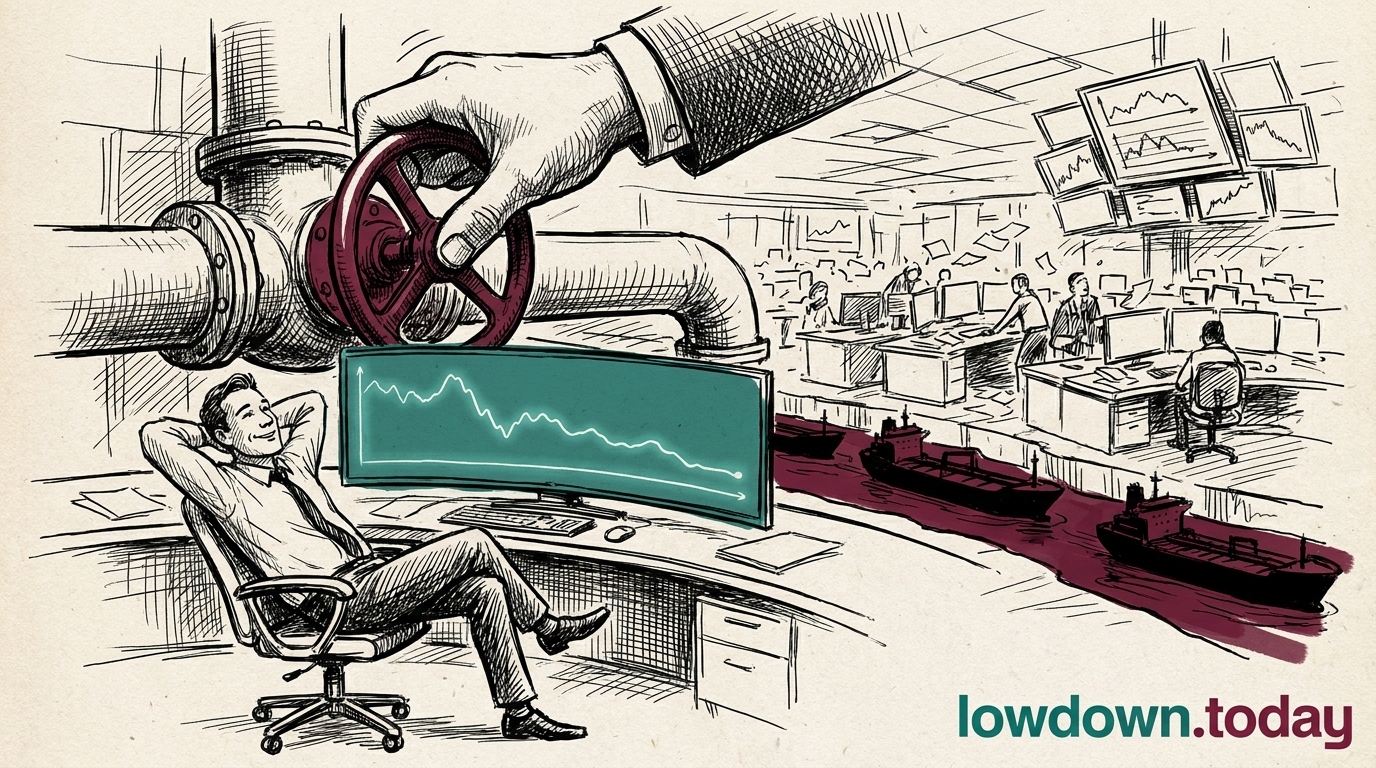
The conclusions called for a "whole of route" approach to Russia's shadow fleet, the ageing tankers Moscow uses to move crude outside Western insurance and inspection, and that phrasing is where the structural bite sits. Targeting the route rather than individual vessels aims at the chartering, port-call and insurance links the fleet depends on, the chokepoints that are harder to re-flag around than any single ship. That is a different instrument from a price cap, and a harder one to dodge.

The timing is the answer to Moscow's mediation offer . On the day Russia proposed the EU as a referee, the EU was changing the scoreboard: more sanctions, an open accession track, and the long-delayed first loan tranche finally cleared to disburse . Brussels is not picking up the whistle Russia handed it.

Deep Analysis

In plain English

The European Union held a summit on 18 June and agreed to several things at once: formally opening the legal process through which Ukraine could one day become an EU member, calling for a new round of sanctions against Russia, and confirming that €3.2 billion of a €90 billion loan to Ukraine would be paid out at a conference in Gdansk, Poland, on 25-26 June. Poland spent 10 years in accession talks before joining the EU in 2004; Romania and Bulgaria required 12. Ukraine's wartime status does not compress those timelines, which require harmonising roughly 35 policy chapters with EU law. Opening the formal negotiation track is a concrete political commitment from all 27 EU member states that locks in legal momentum the EU's own treaty rules make procedurally difficult to reverse.

What could happen next?
  • Consequence

    Opening Ukraine's accession Intergovernmental Conference creates institutional momentum within EU legal architecture that is procedurally difficult to reverse, even if political will weakens.

  • Opportunity

    The €3.2 billion Gdansk disbursement, combined with the broader €90 billion facility, provides Ukraine with substantial budget support that reduces pressure for near-term territorial concessions.

First Reported In

Update #21 · Ukraine's drones reach Russia's petrol pumps

Kyiv Independent· 24 Jun 2026
Read original
Different Perspectives
Indian refiners
Indian refiners
Indian refiners kept lifting discounted Urals as the India/Baltic price split widened past $9-10 a barrel, a gap that only grows as GL X1's Iranian wind-down cuts an alternative discounted grade off the market by 17 July. Cheaper Russian feedstock is being locked in while it lasts.
Chinese refiners
Chinese refiners
Chinese refiners gain leverage as the Urals-Brent discount widens, since Beijing's state buyers already source discounted Russian barrels near the fiscal floor unaffected by Western insurance costs. A wider discount, if it holds past 23 July, lets them lock in cheaper term contracts regardless of the cap's outcome.
US money managers (CFTC-tracked)
Managed money trimmed WTI net length into the rally, positioning that reflects doubt the Hormuz premium survives without freight or war-risk confirmation. The Brent-WTI spread widening almost entirely on the Brent leg supports that scepticism about a broad-based repricing.
OPEC+ (Saudi-led subgroup)
Saudi Arabia is defending market share through a fourth straight 188kbd August hike even as OPEC's own July MOMR cut 2026 demand growth for the fourth consecutive month. At a $108-111 fiscal breakeven, every added barrel costs Riyadh revenue it cannot recoup, so the hike reads as a positioning signal, not a demand bet.
Greek shipping registries
Greece, backed by Cyprus and Malta, is pushing a three-month cap-freeze compromise against the Commission's freeze to January 2027 ahead of the 23 July vote. Athens' and Valletta's combined tanker registrations mean a shorter review gives their insurers more frequent chances to reprice risk on Russian cargoes.
Russia (Deputy PM Alexander Novak)
Novak extended the diesel export restriction to producers on 8 July, the first producer-binding curb of the war, protecting the domestic pump price ahead of any refinery repair timeline. Urals still trades below Russia's $59 budget floor even as Brent gained, so the ban trades export revenue for fiscal stability at home.
