Skip to content
You can now search across every topic, entity and event.What's new
European Oil Markets
31JUL

US Iran war cost hits $29bn on 12 May

3 min read
09:33UTC

Bloomberg and CBS News reported on 12 May that the US war against Iran has cost $29 billion, up $4 billion from the $25 billion figure the Pentagon briefed to Congress two weeks earlier. None of the spending has a signed presidential instrument behind it.

EconomicDeveloping
Key takeaway

Bloomberg and CBS put the US Iran war cost at $29bn on 12 May, $4bn above the Pentagon's figure.

Bloomberg and CBS News reported on 12 May 2026 that the US war cost against Iran has reached $29 billion, up $4 billion from the $25 billion figure the Pentagon briefed to Congress approximately a fortnight earlier 1. The figure landed on the same day Pete Hegseth told Senate Appropriations that Article 2 covers Iran strikes and no AUMF is required, a juxtaposition that puts $4 billion every two weeks alongside zero signed presidential instruments.

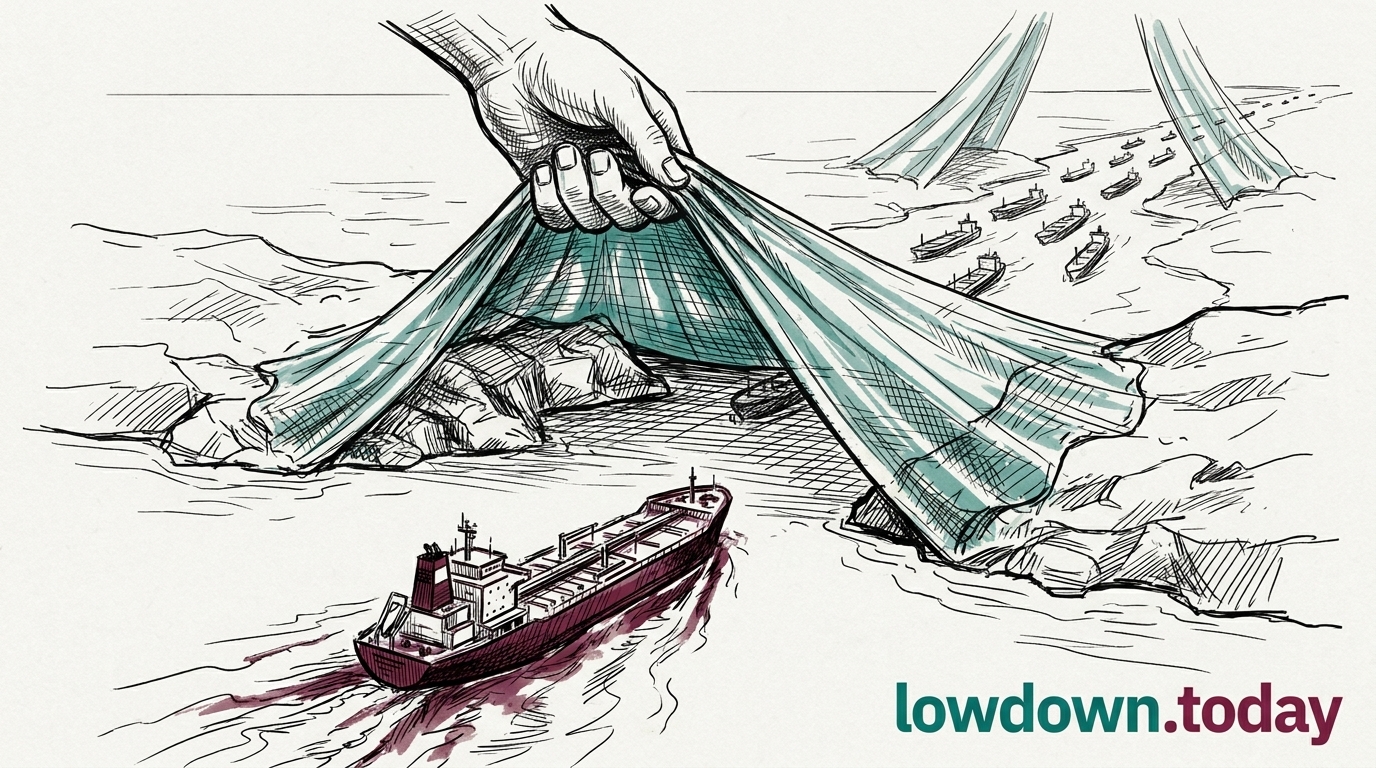
$4 billion fortnightly is the build cost of a Virginia-class submarine every two weeks, sustained for 75 days without a vote, a finding, or a signed executive order. The operational layer behind the burn rate is CENTCOM's blockade, which had logged 61 cumulative vessel redirections and four disabled vessels by 10 May . The constitutional layer is now Article 2 alone. Trump's contradictory 8 May Truth Social posts and his 11 May Oval Office military-options list are the rhetorical surface of the same unsigned arithmetic.

Senate Appropriations becomes the only operating venue for legislative pressure on Iran policy because, under the administration's stated reading, appropriators can defund but cannot deauthorise. Murkowski's unfiled AUMF sits between a $4 billion fortnightly burn rate the appropriators can in principle constrain and a doctrine telling them they cannot deauthorise it.


Deep Analysis

In plain English

The United States has spent $29 billion fighting in Iran since the war began on 28 February. Bloomberg and CBS News reported that figure on 12 May. To put it in perspective: the cost of building a nuclear submarine is roughly $4 billion, and the US is spending that amount every two weeks on this conflict. When governments go to war, they normally pass special legislation, called an Authorisation for Use of Military Force, that both approves the war and sets a budget. In this case, Congress has passed no such authorisation. The money is being spent under normal Pentagon budget authority, which the Senate Appropriations Committee oversees. That committee, the one that writes the military's annual budget, is now the main place in Congress where any attempt to question or limit the war can actually happen. The committee cannot formally vote to end the war without the authorisation it was denied, but it can refuse to approve new war spending.

First Reported In

Update #96 · Hegseth: no AUMF needed. Trump flies east

Foreign Policy Journal· 13 May 2026
Read original
Causes and effects
This Event
US Iran war cost hits $29bn on 12 May
A $4 billion fortnightly burn rate with no signed authorisation behind it gives appropriators the leverage that authorisers no longer have under Hegseth's Article 2 reading.
Different Perspectives
Sanctions compliance officer reviewing a Lukoil International GmbH bid
OFAC's amended FAQ 1224 gives a compliance desk its first published standard: full severance from Lukoil and a US-jurisdiction blocked account for sale proceeds. The conditions name neither ISAB nor Italy, so a Priolo Gargallo-linked bid answers a different question than a Neftochim Burgas or Petrotel Ploiesti one.
Managed-money funds on Brent Last Day
CFTC data for the week to 21 July showed managed money flipping 74,400 contracts to a net long of 15,665 against 1,410 short on the Brent Last Day contract, code 06765T. A fund that held that short through July has now covered it, and the spent short base raises the bar for the next leg higher.
Saudi crude exporters
Saudi-linked tanker transits through Bab el-Mandeb fell to about 7.5 a day after the 24 July underwriting withdrawal, pushing more barrels onto the longer route round the Cape or through the Yanbu terminal. Every diverted barrel ties up a ship for longer, and a fleet that turns slower charges more.
Tanker owners on the Bab el-Mandeb route
Lloyd's-market syndicates withdrew war-risk cover from Saudi-linked hulls on 24 July, leaving owners of that class of vessel to sail Bab el-Mandeb uninsured or not at all. Tanker transits on the route fell to roughly 7.5 a day, and cover, once withdrawn, does not return on a shipowner's timetable.
Eni
Eni
Eni's board approved second-quarter results on 29 July, swinging refining EBIT to a EUR0.08bn profit from a year-earlier loss even as group profit doubled, and named Red Sea freight cost as a cap on that improvement. A refiner absorbing higher shipping costs on Saudi-linked crude while its numbers improve treats the freight line as a drag, not a crisis.
Asian buyers (India, Japan, China, South Korea)
Asian refiners are absorbing 62% of Yanbu's 3.75m b/d flow, the bulk of Saudi Arabia's rerouted crude now clearing east rather than into the Atlantic basin. That destination split leaves Asian buyers more exposed to any single Yanbu-specific disruption than under the kingdom's normal multi-terminal export pattern.



