Skip to content
You can now search across every topic, entity and event.What's new
European Oil Markets
31JUL

Iran rejects US plan, sets five terms

2 min read
09:33UTC

Tehran's five conditions amount to a demand for unconditional victory; the gap with Washington's 15-point plan is structural, not tactical.

EconomicAssessed
Key takeaway

Neither side's peace terms overlap, making diplomatic resolution impossible without one side fundamentally changing its war aims.

Abbas Araghchi, Iran's Foreign Minister, dismissed Washington's 15-point ceasefire plan as "extremely maximalist and unreasonable" on Tuesday 1. Hours later, Tehran published five counter-conditions through Press TV: a complete halt to US and Israeli attacks, war reparations, international recognition of Iran's sovereignty over the Strait of Hormuz, protection of Hezbollah and allied militias in Iraq, and fulfilment of pre-war Geneva demands. Araghchi told state media: "At present, our policy is the continuation of resistance" 2.

The 15-point plan reached Tehran via Pakistan . Israel's Channel 12 reported its contents: dismantling Iran's nuclear programme, limiting its ballistic missile arsenal, abandoning regional proxy networks, and conditionally reopening Hormuz 3. Donald Trump said Washington is "very close to meeting the core objectives of the operation."

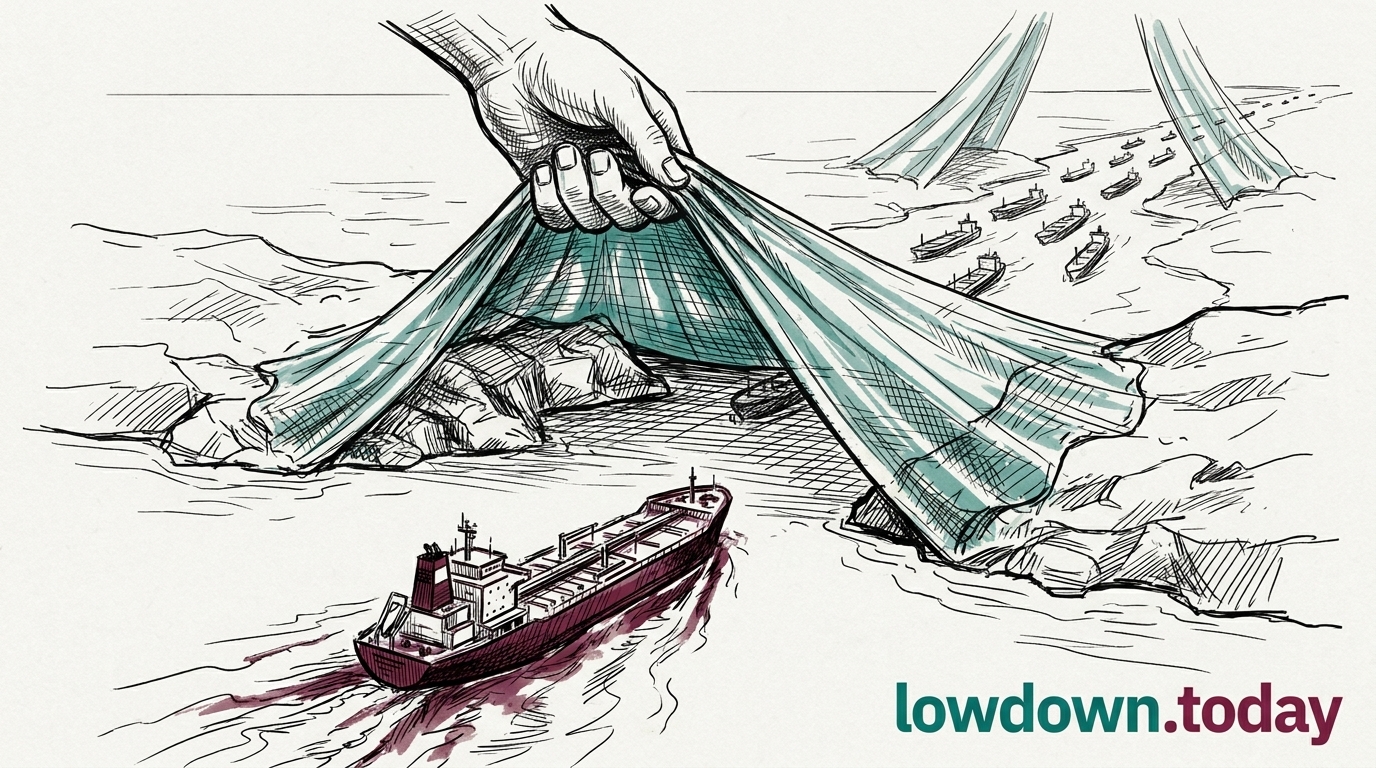
Iran's counter demands formal sovereignty over the strait where the Islamic Revolutionary Guard Corps (IRGC) already runs a $2 million per-vessel toll system . Washington asks Tehran to surrender its nuclear capacity. Tehran asks Washington to recognise its authority over the waterway that carries one-fifth of the world's oil.

Iran insists on Vice President Vance as sole interlocutor , rejecting both Steve Witkoff and Jared Kushner 4. The Trump administration says all four officials are authorised. Neither side has agreed on who sits at the table.


Deep Analysis

In plain English

Iran and the US have each published their wish list for ending the war. Iran wants the US to recognise its right to control the shipping lane that carries a fifth of the world's oil. The US wants Iran to give up its nuclear programme and its militias. If you listed both sides' demands, not a single item would appear on both lists.

Deep Analysis
Root Causes

Neither side entered the war with a theory of acceptable peace.

Escalation

Escalating. Both sides' published positions are maximalist. Military preparations advance faster than diplomacy.

What could happen next?
  • Consequence

    Islamabad talks may collapse before starting if neither side concedes on format

  • Risk

    Oil markets pricing non-existent diplomacy; correction upward likely

First Reported In

Update #48 · Iran rejects ceasefire; Kharg fortified

Middle East Eye· 26 Mar 2026
Read original
Different Perspectives
Sanctions compliance officer reviewing a Lukoil International GmbH bid
OFAC's amended FAQ 1224 gives a compliance desk its first published standard: full severance from Lukoil and a US-jurisdiction blocked account for sale proceeds. The conditions name neither ISAB nor Italy, so a Priolo Gargallo-linked bid answers a different question than a Neftochim Burgas or Petrotel Ploiesti one.
Managed-money funds on Brent Last Day
CFTC data for the week to 21 July showed managed money flipping 74,400 contracts to a net long of 15,665 against 1,410 short on the Brent Last Day contract, code 06765T. A fund that held that short through July has now covered it, and the spent short base raises the bar for the next leg higher.
Saudi crude exporters
Saudi-linked tanker transits through Bab el-Mandeb fell to about 7.5 a day after the 24 July underwriting withdrawal, pushing more barrels onto the longer route round the Cape or through the Yanbu terminal. Every diverted barrel ties up a ship for longer, and a fleet that turns slower charges more.
Tanker owners on the Bab el-Mandeb route
Lloyd's-market syndicates withdrew war-risk cover from Saudi-linked hulls on 24 July, leaving owners of that class of vessel to sail Bab el-Mandeb uninsured or not at all. Tanker transits on the route fell to roughly 7.5 a day, and cover, once withdrawn, does not return on a shipowner's timetable.
Eni
Eni
Eni's board approved second-quarter results on 29 July, swinging refining EBIT to a EUR0.08bn profit from a year-earlier loss even as group profit doubled, and named Red Sea freight cost as a cap on that improvement. A refiner absorbing higher shipping costs on Saudi-linked crude while its numbers improve treats the freight line as a drag, not a crisis.
Asian buyers (India, Japan, China, South Korea)
Asian refiners are absorbing 62% of Yanbu's 3.75m b/d flow, the bulk of Saudi Arabia's rerouted crude now clearing east rather than into the Atlantic basin. That destination split leaves Asian buyers more exposed to any single Yanbu-specific disruption than under the kingdom's normal multi-terminal export pattern.



