Skip to content
You can now search across every topic, entity and event.What's new
European Oil Markets
16JUL

Trump orders a DOJ oil-gouging probe

2 min read
09:39UTC

Trump ordered a Justice Department probe into oil-company gouging on 24 June, accusing firms of not cutting pump prices as Brent crude slid to $76.14.

EconomicDeveloping
Key takeaway

Brent fell to $76.14 on a partial Hormuz recovery, and Trump blamed refiners for pump prices that have not followed.

Donald Trump ordered a Justice Department probe into oil-company "gouging" on 24 June, accusing firms of not cutting pump prices as Brent crude slid to $76.14, down from $77.08 the day before 1. Brent is the benchmark that sets the price of roughly two-thirds of internationally traded oil, so its direction feeds quickly into petrol prices and the politics around them.

The decline extends the slide that began as Trump's peak Hormuz threats were priced out at $77.54 on 22 June . What the market is reading is the gradual return of tanker traffic following General License X and the IMO evacuation, with UAE oil exports rebounding to about 85 per cent of pre-conflict levels 2.

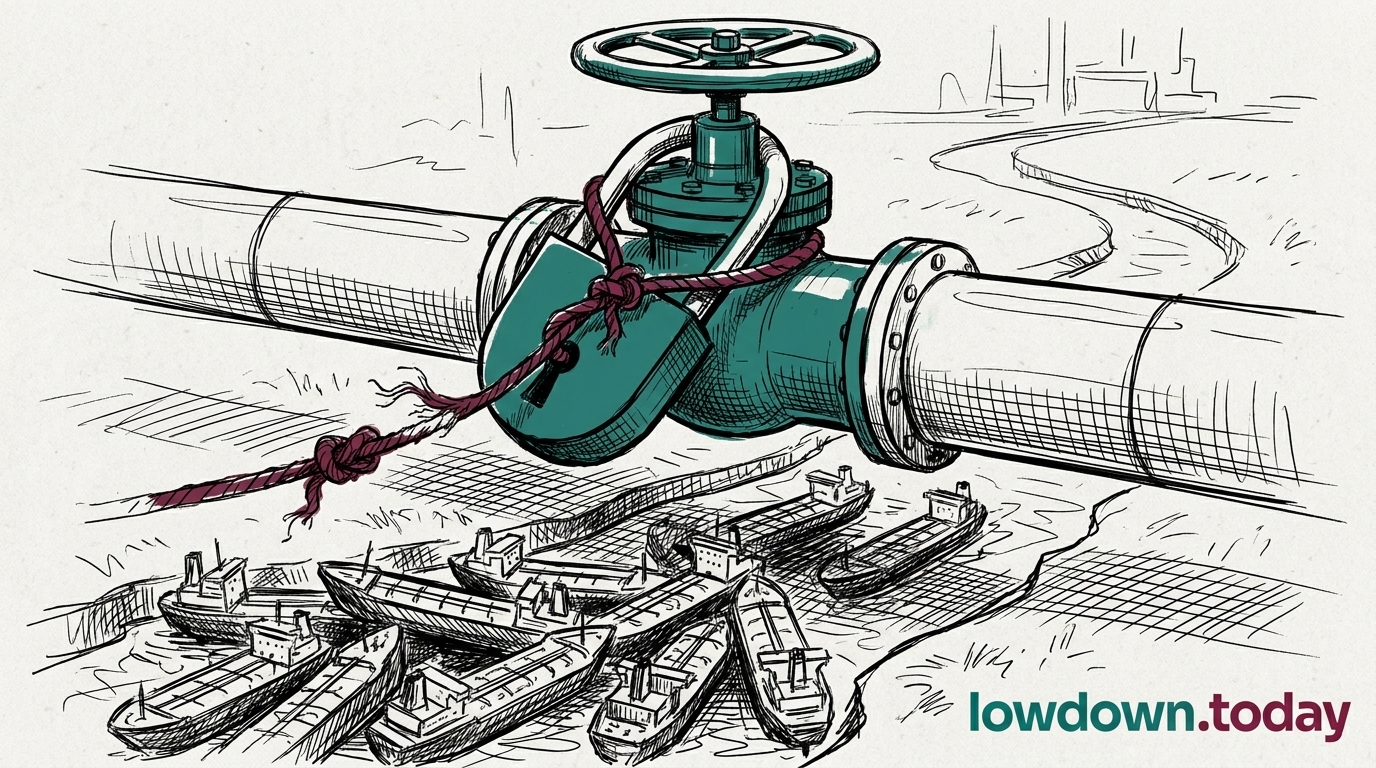
The pricing runs ahead of the physical reality. Mines remain in the navigable channels and P&I war-risk cover is still withdrawn, so the strait is recovering for rescue and selective trade rather than reopening in full. Trump's gouging probe blames refiners for a gap between falling crude and steady pump prices that the incomplete reopening, not corporate conduct, largely explains.


Deep Analysis

In plain English

On 24 June, the price of Brent crude oil; the global benchmark used to set energy costs worldwide; fell to $76.14 per barrel. That is down from $77.08 the previous day and roughly 36% below its peak during the worst of the conflict. The UAE has largely restored its oil exports to about 85% of what they were before the fighting. President Trump ordered the US Justice Department to investigate oil companies for 'gouging'; charging customers too much at the pump even as wholesale prices fell. Brent's decline reflects growing confidence that more tankers are moving through the Strait of Hormuz, though the strait is not fully open: mines still need to be cleared and shipping insurance has not fully returned.

First Reported In

Update #137 · Iran and Oman claim the strait; US says no

Trading Economics· 24 Jun 2026
Read original
Different Perspectives
Indian refiners
Indian refiners
Indian refiners kept lifting discounted Urals as the India/Baltic price split widened past $9-10 a barrel, a gap that only grows as GL X1's Iranian wind-down cuts an alternative discounted grade off the market by 17 July. Cheaper Russian feedstock is being locked in while it lasts.
Chinese refiners
Chinese refiners
Chinese refiners gain leverage as the Urals-Brent discount widens, since Beijing's state buyers already source discounted Russian barrels near the fiscal floor unaffected by Western insurance costs. A wider discount, if it holds past 23 July, lets them lock in cheaper term contracts regardless of the cap's outcome.
US money managers (CFTC-tracked)
Managed money trimmed WTI net length into the rally, positioning that reflects doubt the Hormuz premium survives without freight or war-risk confirmation. The Brent-WTI spread widening almost entirely on the Brent leg supports that scepticism about a broad-based repricing.
OPEC+ (Saudi-led subgroup)
Saudi Arabia is defending market share through a fourth straight 188kbd August hike even as OPEC's own July MOMR cut 2026 demand growth for the fourth consecutive month. At a $108-111 fiscal breakeven, every added barrel costs Riyadh revenue it cannot recoup, so the hike reads as a positioning signal, not a demand bet.
Greek shipping registries
Greece, backed by Cyprus and Malta, is pushing a three-month cap-freeze compromise against the Commission's freeze to January 2027 ahead of the 23 July vote. Athens' and Valletta's combined tanker registrations mean a shorter review gives their insurers more frequent chances to reprice risk on Russian cargoes.
Russia (Deputy PM Alexander Novak)
Novak extended the diesel export restriction to producers on 8 July, the first producer-binding curb of the war, protecting the domestic pump price ahead of any refinery repair timeline. Urals still trades below Russia's $59 budget floor even as Brent gained, so the ban trades export revenue for fiscal stability at home.