Skip to content
You can now search across every topic, entity and event.What's new
European Oil Markets
16JUL

Iran says it struck the Omani route

1 min read
09:39UTC

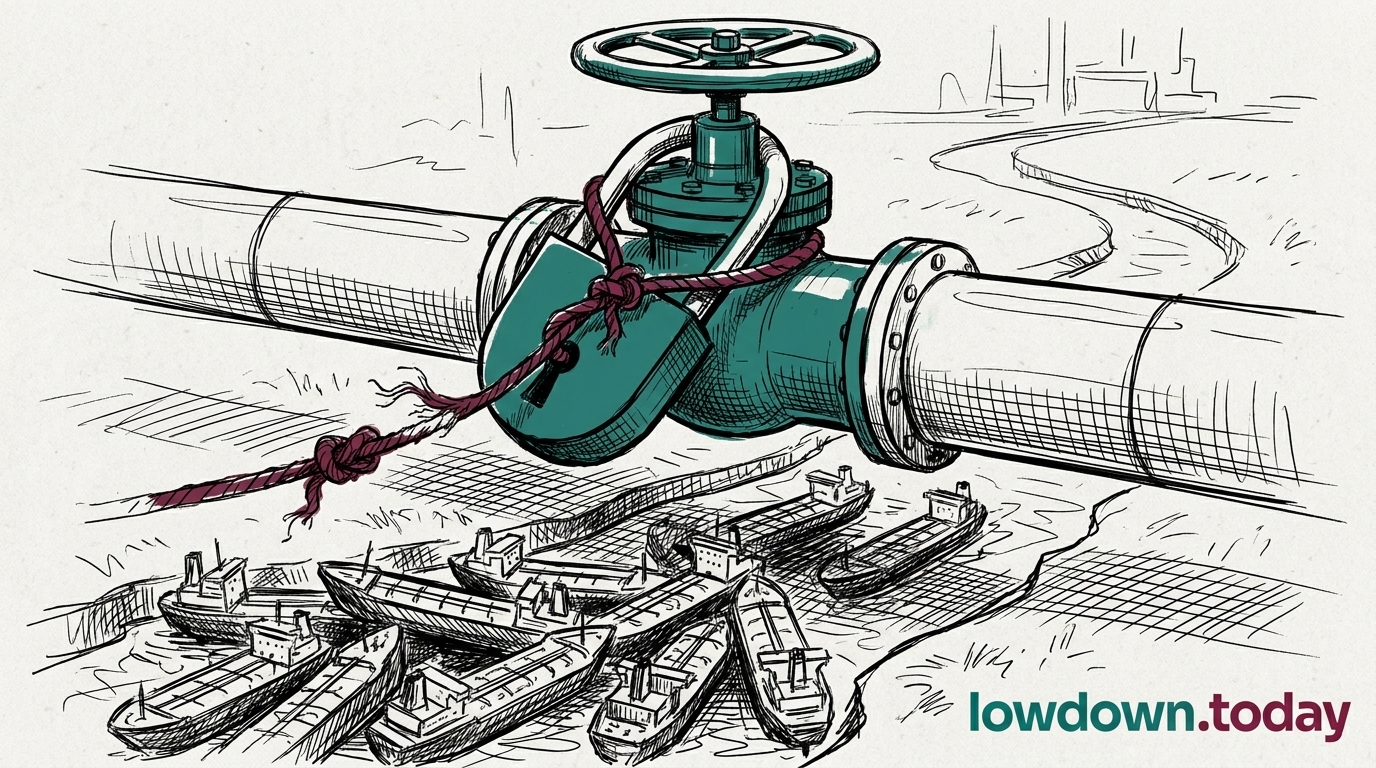
Iranian state broadcaster IRIB said the tanker was struck for using the 'Omani route' after repeated warnings, and separately claimed the vessel had 'US Navy support', a justification no other source corroborates.

EconomicDeveloping
Key takeaway

Iranian state media framed the strike as punishment for using the Omani transit route.

Islamic Republic of Iran Broadcasting (IRIB), Iran's state broadcaster, said Al Rekayyat was struck for using the 'Omani route' after 'repeated warnings', and IRGC radio told vessels its missiles and drones were 'ready to fire' 1. State media separately claimed the ship had 'US Navy support'. No independent source corroborates that, and it should be read as Tehran's framing rather than established fact 2.

Iran branded Oman's transit-fee plan compulsory on 30 June while Muscat called it voluntary , and the corps had called the Oman-backed corridor unacceptable in the days before that. A US official confirmed the attack to Axios 3. What the broadcast adds is intent: by naming a rule and citing prior warnings, IRIB casts the strike as deliberate enforcement, which is the reading Tehran wants on the record whether or not the order came from the top.


Deep Analysis

In plain English

Iran's state broadcaster, IRIB, said the tanker was attacked because it used a shipping route Iran had warned ships to avoid, and separately claimed, without any outside proof, that the ship had US Navy backing. When only one side's media makes a claim and nobody else can confirm it, readers should treat it as that government's version of events, not as an established fact.

Deep Analysis
Root Causes

IRIB's justification rests on a category, 'hostile-linked vessels', that Iran's 2024 domestic maritime law leaves largely undefined, giving Tehran wide discretion to retroactively fit almost any struck vessel into the category after the fact.

No neutral verification mechanism exists to test IRIB's 'US Navy support' claim, so the assertion stands or falls entirely on Iranian state media's own credibility, which international reporting has not corroborated in this case.

What could happen next?
  • Risk

    An undefined 'hostile-linked' legal category gives Tehran room to justify future strikes without a consistent public standard for which vessels qualify.

First Reported In

Update #148 · Iran shoots the Hormuz route it rejected

The National· 7 Jul 2026
Read original
Different Perspectives
Indian refiners
Indian refiners
Indian refiners kept lifting discounted Urals as the India/Baltic price split widened past $9-10 a barrel, a gap that only grows as GL X1's Iranian wind-down cuts an alternative discounted grade off the market by 17 July. Cheaper Russian feedstock is being locked in while it lasts.
Chinese refiners
Chinese refiners
Chinese refiners gain leverage as the Urals-Brent discount widens, since Beijing's state buyers already source discounted Russian barrels near the fiscal floor unaffected by Western insurance costs. A wider discount, if it holds past 23 July, lets them lock in cheaper term contracts regardless of the cap's outcome.
US money managers (CFTC-tracked)
Managed money trimmed WTI net length into the rally, positioning that reflects doubt the Hormuz premium survives without freight or war-risk confirmation. The Brent-WTI spread widening almost entirely on the Brent leg supports that scepticism about a broad-based repricing.
OPEC+ (Saudi-led subgroup)
Saudi Arabia is defending market share through a fourth straight 188kbd August hike even as OPEC's own July MOMR cut 2026 demand growth for the fourth consecutive month. At a $108-111 fiscal breakeven, every added barrel costs Riyadh revenue it cannot recoup, so the hike reads as a positioning signal, not a demand bet.
Greek shipping registries
Greece, backed by Cyprus and Malta, is pushing a three-month cap-freeze compromise against the Commission's freeze to January 2027 ahead of the 23 July vote. Athens' and Valletta's combined tanker registrations mean a shorter review gives their insurers more frequent chances to reprice risk on Russian cargoes.
Russia (Deputy PM Alexander Novak)
Novak extended the diesel export restriction to producers on 8 July, the first producer-binding curb of the war, protecting the domestic pump price ahead of any refinery repair timeline. Urals still trades below Russia's $59 budget floor even as Brent gained, so the ban trades export revenue for fiscal stability at home.