Skip to content
You can now search across every topic, entity and event.What's new
European Oil Markets
16JUL

A petrol rise, and a powder keg warning

2 min read
09:39UTC

An Iranian MP on the Majlis Economic Committee warned that raising petrol prices now would be a spark in a powder keg. Food and drink inflation is running at 128.1%.

EconomicDeveloping
Key takeaway

Iran's fuel subsidy is unaffordable and its removal is, on the committee's own account, dangerous.

Member of parliament Hossein Samsami of the Majlis Economic Committee warned on Monday 17 August that a petrol price rise under present conditions would be "a spark in a powder keg" 12. The Majlis is Iran's parliament, and its economic committee scrutinises budget and subsidy policy, so the warning comes from inside the body that would have to approve any change.

The numbers behind it are published by the government itself. Point-to-point inflation, the measure Iran reports against the same month a year earlier, ran at 87.9% for the Iranian month of Tir, which ended on 22 July, with food and drink inflation at 128.1%, reported by Dawn citing the Iranian Labour News Agency and the Statistical Centre of Iran 3. Iran's minimum wage runs at about 25 million tomans a month, or roughly 250 million rials, because one toman is ten rials and Iranian sources quote both 4. That wage is being spent into food prices that have more than doubled in a year.

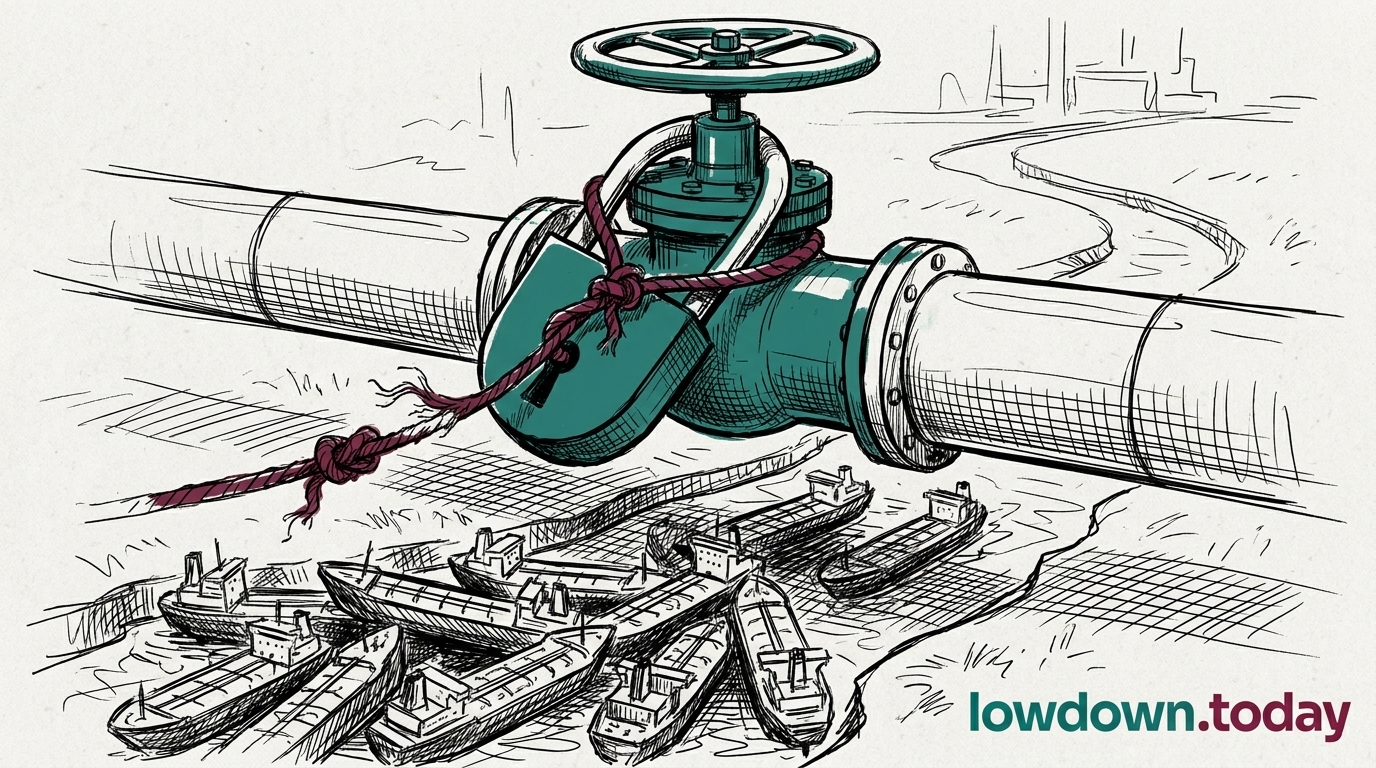
Kerman province announced a refinery-rate petrol rise on 12 August and cancelled it inside a day , so Samsami is describing a decision the state has already flinched from once. Petrol in Iran is sold far below the cost of producing it, which makes the subsidy a growing hole in the budget and the price rise the obvious repair; what stalls the repair is the political cost, and Kerman measured that cost in a single day. The central bank's contribution in the same month was to open Iran's first foreign-currency investment fund , which serves the people who hold currency rather than the people queueing for coupons.

Washington's shortage this week acquired a contract, a term and a delivery rate. Tehran's arrives in a household's grocery bill, and no procurement decision reaches it.


Deep Analysis

In plain English

Hossein Samsami sits on the economic committee of Iran's parliament. He warned that raising petrol prices now, while the economy is already under strain, could set off unrest. Iran keeps petrol artificially cheap through subsidies it can no longer easily afford. Raising the price would save the government money but risks the kind of public anger that turned deadly the last time it tried, in 2019.

Deep Analysis
Root Causes

Petrol in Iran remains priced far below production cost, a subsidy funded from the same budget squeezed by sanctions on oil exports; the shortfall must be covered by other spending or by inflation, not by the price of petrol itself.

Samsami's committee sits inside the Majlis's economic bloc, which has to weigh the subsidy's fiscal cost against the 2019 precedent, a constraint that leaves no politically safe option rather than a hidden one.

First Reported In

Update #174 · A $22.9bn missile order, and a hunger row

Iran International· 23 Aug 2026
Read original
Causes and effects
This Event
A petrol rise, and a powder keg warning
Tehran has to choose between an unfunded fuel subsidy and a price rise its own economic committee says could trigger unrest.
Different Perspectives
Gulf oil producer
Gulf oil producer
Secured OPEC's confirmed 188,000 b/d September increment with the next meeting set for 6 September, but the Secretariat's own 2 August release says nothing about the fourth quarter. Output guidance beyond September remains undisclosed even as delegate sourcing keeps filling that gap.
Money manager positioned in WTI
Added 21,402 lots to a 108,307 net long in NYMEX WTI in the week to 28 July, against just 1,485 added to Brent's 15,740, a roughly fourteen-to-one split. Conviction sits in the American benchmark even as the European diesel story sets the record.
Indian refiner buying Urals
Bought Russian crude at a discount that narrowed to $1-2 a barrel in the week to 29 July from over $10, as Hormuz risk pushed it toward Urals. If that risk eases with the strike now called off, the discount it is currently enjoying could re-widen just as fast.
Russian diesel exporter
Novak tied any lifting of the diesel export ban, due to lapse 31 July, to an unspecified market recovery with no date, and pushed the gasoline ban to end-2026. An open-ended constraint suits an exporter benefiting from the record European crack it feeds.
War-risk underwriter
Withdrew war-risk cover for Saudi-linked hulls on 24 July and has not reinstated it, holding Bab el-Mandeb tanker transits near 7.5 a day. A cancelled strike does not by itself trigger the committee review needed to re-accept the class.
Northwest European refiner
Sources only 17% of diesel imports from Saudi Red Sea ports against the Mediterranean's 24%, so the ARA crack at $85.86 trails the Med print by $5.81. Lower Red Sea exposure is cushioning it against the rerouting cost, not eliminating it.