Skip to content
You can now search across every topic, entity and event.What's new
European Oil Markets
13JUL

Schwarz triangle closes at $20bn merger

3 min read
10:34UTC

Cohere and Aleph Alpha confirmed their merger on Friday 24 April at a $20 billion valuation; Germany's Schwarz Group anchored Cohere's Series E with $600 million, joining a sovereign cloud subsidiary it already owns.

EconomicDeveloping
Key takeaway

Schwarz Group's $600m Cohere stake completes a German cloud-model-customer triangle no rival European combine has.

Cohere and Aleph Alpha announced their merger on Friday 24 April at a combined valuation of $20 billion, with Germany's Schwarz Group putting $600 million into Cohere's Series E as anchor investor 1. The talks had been reported as advanced two weeks earlier . Schwarz, owner of Lidl and Kaufland, also owns STACKIT, the SEAL-3 awardee in The Commission's €180m sovereign cloud framework, and held a strategic stake in Aleph Alpha before the merger.

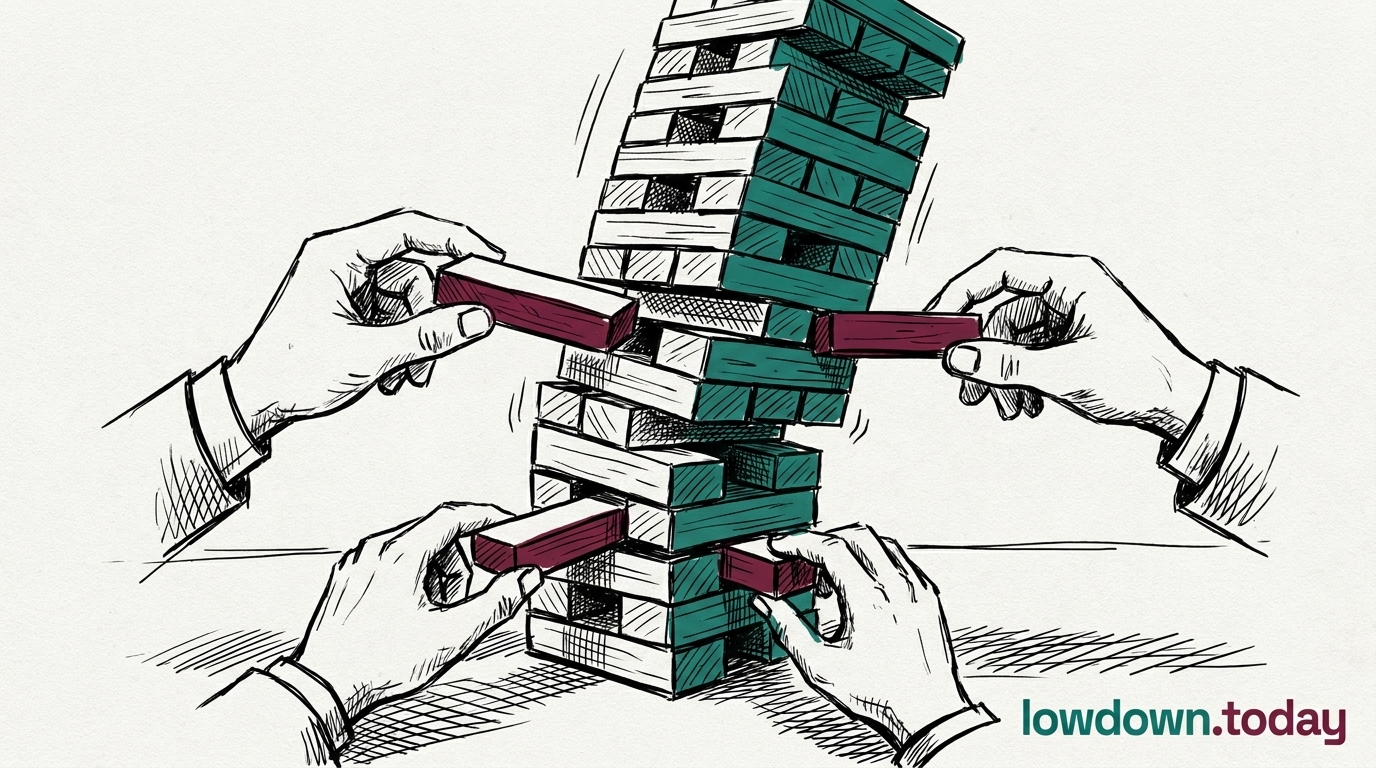
The combination closes a loop no other European private actor can. STACKIT runs the cloud. The merged Cohere-Aleph entity supplies the model. Lidl and Kaufland, which between them turned over more than €175 billion last year, are the captive enterprise customer the merged entity needs to scale on European compute rather than US hyperscalers. The Sovereign Tech Europe conference had no European AI model company on its speaker list ; the European AI model company was being assembled off-stage that week.

Berlin's publicly stated conditions on the merger, that development services remain in Germany and infrastructure deployment stay sovereign, do operational work the conference's panellists did not. If enforced as deal terms, they push the merged entity onto STACKIT, closing the triangle. Both companies sit below the €500 million EU turnover threshold for automatic Commission review, but the competition directorate signalled in 2025 that AI-sector consolidation would face Digital Markets Act amendment scrutiny regardless. Bundeskartellamt filing has not been confirmed; Canadian Competition Bureau clearance is also required, and the deal is expected to close in the second half of 2026 2.


Deep Analysis

In plain English

Aleph Alpha is a German artificial intelligence company founded in 2019, and Cohere is a Canadian AI company that builds tools for businesses to add AI capabilities to their software. Both compete against much larger US companies like OpenAI and Google. On 24 April 2026, the two companies announced they would merge, creating a single company valued at $20 billion. Schwarz Group, the German company that owns Lidl and Kaufland supermarkets, put in $600 million as a major investor. The idea is to create a large enough European AI company to compete with American giants, using Schwarz's shopper data to train better AI models. Before the deal can complete, regulators in Germany and Canada both need to approve it.

Deep Analysis
Root Causes

Aleph Alpha's inability to scale independently traces to a structural funding gap in European venture markets. European institutional investors allocate roughly 0.4% of assets under management to venture capital, against 1.2% in the United States (EIB, 2025 Investment Report). European AI labs hit a growth ceiling at Series B or C that North American competitors do not face until Series E or F.

Cohere needs EU market access. Selling enterprise AI into European regulated industries, particularly banking and defence, requires demonstrated EU-law compliance and a physical EU presence with EU staff. Aleph Alpha's existing contracts with the German Bundeswehr and the Baden-Württemberg state administration provide that foothold at a lower cost than building it from Toronto.

Schwarz Group's $600m is a strategic, not passive, commitment. Schwarz has been building its own private cloud infrastructure (StackIT) and has publicly stated a goal of reducing AWS and Azure dependence by 2027. Cohere's model-serving capability directly serves that goal.

What could happen next?
  • Consequence

    Bundeskartellamt clearance conditions will set a precedent for how German competition law treats data-sharing arrangements within AI mergers, affecting subsequent deals in the sector.

    Medium term · 0.74
  • Risk

    If the Canadian Competition Bureau imposes IP-ring-fencing conditions, the merged entity's ability to train on combined European and North American datasets is legally constrained, reducing the commercial rationale for the deal.

    Short term · 0.67
  • Opportunity

    A $20bn European AI entity with validated revenue from regulated-industry contracts (defence, banking, healthcare) may unlock institutional investor appetite for follow-on European AI rounds that the sector has lacked since 2023.

    Medium term · 0.71
First Reported In

Update #4 · CISPE moves first; Brussels misses again

Handelsblatt· 7 May 2026
Read original
Different Perspectives
Indian refiners
Indian refiners
Indian refiners kept lifting discounted Urals as the India/Baltic price split widened past $9-10 a barrel, a gap that only grows as GL X1's Iranian wind-down cuts an alternative discounted grade off the market by 17 July. Cheaper Russian feedstock is being locked in while it lasts.
Chinese refiners
Chinese refiners
Chinese refiners gain leverage as the Urals-Brent discount widens, since Beijing's state buyers already source discounted Russian barrels near the fiscal floor unaffected by Western insurance costs. A wider discount, if it holds past 23 July, lets them lock in cheaper term contracts regardless of the cap's outcome.
US money managers (CFTC-tracked)
Managed money trimmed WTI net length into the rally, positioning that reflects doubt the Hormuz premium survives without freight or war-risk confirmation. The Brent-WTI spread widening almost entirely on the Brent leg supports that scepticism about a broad-based repricing.
OPEC+ (Saudi-led subgroup)
Saudi Arabia is defending market share through a fourth straight 188kbd August hike even as OPEC's own July MOMR cut 2026 demand growth for the fourth consecutive month. At a $108-111 fiscal breakeven, every added barrel costs Riyadh revenue it cannot recoup, so the hike reads as a positioning signal, not a demand bet.
Greek shipping registries
Greece, backed by Cyprus and Malta, is pushing a three-month cap-freeze compromise against the Commission's freeze to January 2027 ahead of the 23 July vote. Athens' and Valletta's combined tanker registrations mean a shorter review gives their insurers more frequent chances to reprice risk on Russian cargoes.
Russia (Deputy PM Alexander Novak)
Novak extended the diesel export restriction to producers on 8 July, the first producer-binding curb of the war, protecting the domestic pump price ahead of any refinery repair timeline. Urals still trades below Russia's $59 budget floor even as Brent gained, so the ban trades export revenue for fiscal stability at home.



