Skip to content
You can now search across every topic, entity and event.What's new
European Oil Markets
30JUN

Trump extends grid deadline to 6 April

2 min read
17:30UTC
EconomicDeveloping

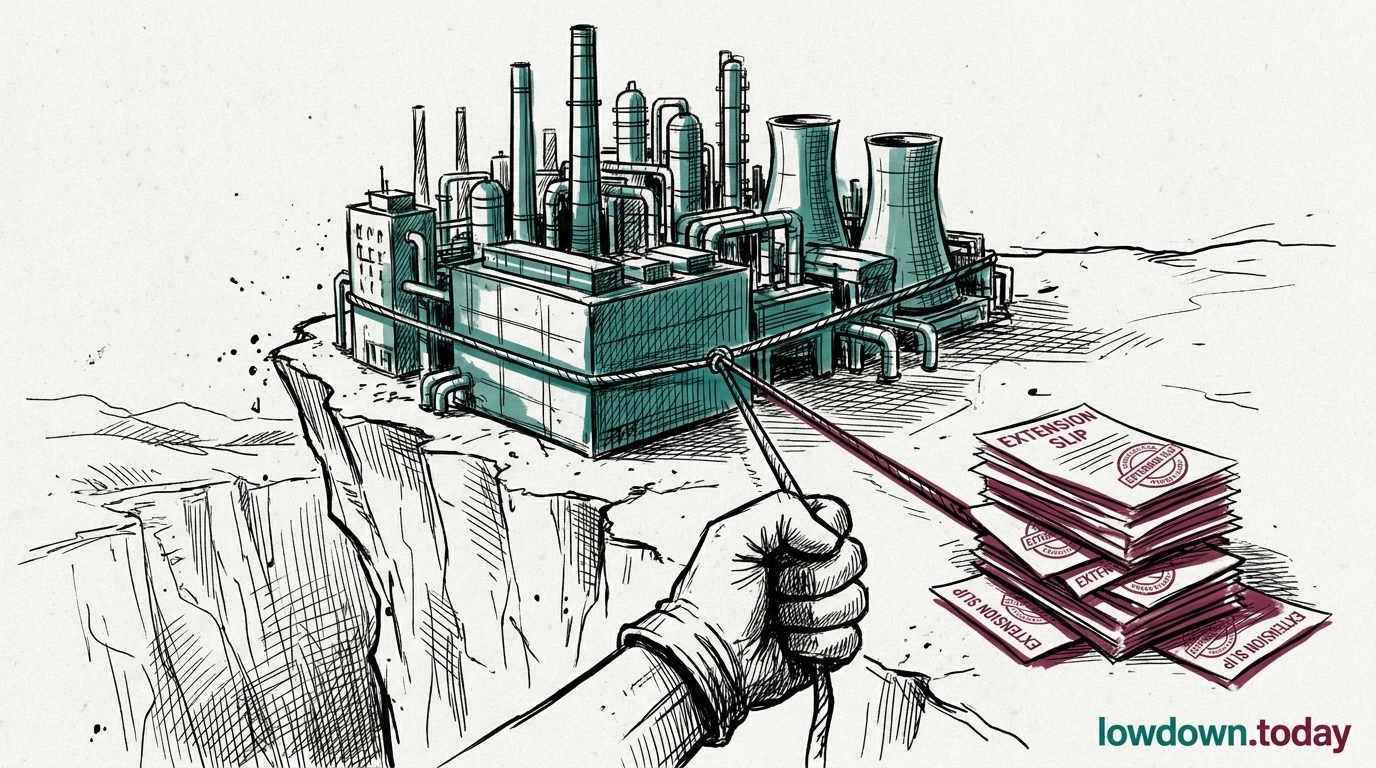
President Trump extended the deadline for strikes on Iran's power grid to 6 April, the third such extension since his original 48-hour ultimatum, according to Bloomberg. 1 Trump cited three reasons: an Iranian government request, 10 oil tankers allowed through Hormuz as a 'present,' and progress in Pakistan-mediated indirect talks. The original deadline of 25 March was extended once before reaching the current April 6 date.

The tanker claim requires scrutiny. The vessels Trump described as an Iranian diplomatic gesture appear to be Pakistani-flagged ships already in the 'friendly nation' category that Iran established under its own vetting system weeks earlier . Iran has neither confirmed nor denied granting any special concession to Trump. Earlier, Iran had declared Hormuz closed to US-linked vessels while allowing transit to countries including India, Pakistan, Iraq, Malaysia, and China . Pakistani-flagged ships transiting was not a new Iranian concession; it was Iran's existing policy applied to Pakistan's existing fleet.

After three postponements in five days, Iran has learned that deadlines are suggestions. The credibility of the threat deteriorates with each extension because the pattern has been demonstrated: Trump sets a deadline, claims an Iranian gesture whether or not Iran acknowledges making one, and extends. Markets have largely repriced this pattern: Brent Crude fell 10.9% on the first talks announcement but has since stabilised as each deadline passes without result. The April 6 deadline arrives against a backdrop of Bushehr nuclear construction suspended , the Philippines in national energy emergency , and US gasoline at $3.98 per gallon .

Deep Analysis

In plain English

Trump set a deadline to bomb Iran's power stations if it did not reopen the Strait of Hormuz. That deadline passed. He set a new one. That one passed too. Now there is a third deadline on 6 April. Each time he has credited Iran with making some kind of gesture, but Iran has not confirmed making any. The problem is that the more times you set a deadline and do not follow through, the less seriously anyone takes the next deadline. Iran has now seen three deadlines come and go, which gives it good reason to believe 6 April will also pass without the strike.

Deep Analysis
Root Causes

The structural dilemma is that power grid strikes would trigger Iranian retaliatory strikes on Gulf desalination and energy infrastructure, as explicitly threatened by the Khatam al-Anbiya Central Headquarters in March.

The administration cannot follow through without accepting consequences it is not positioned to absorb. But each extension teaches Iran that the threat has no teeth.

First Reported In

Update #49 · Hormuz toll into law; Tangsiri killed

NPR / Houston Public Media· 27 Mar 2026
Read original
Different Perspectives
Greek shipping registries
Flag states dominating the tanker fleet await the EU's 15 July cap-freeze vote. A formula unlock toward $75 would loosen the ceiling squeezing insurance and crewing costs on their registered hulls.
US money managers
US money managers
NYMEX WTI managed-money net long fell 23% to +64,041 in the week to 7 July, trimming length into the rally on doubt the Hormuz premium survives without freight or war-risk confirmation.
European refiners (ARA)
ARA refiners are capturing an $80/bbl US diesel crack as Russian gasoil loadings collapsed to 234kbd before Novak's 31 July export ban even bites, widening the arbitrage straight into refining margins.
OPEC+
OPEC+
The seven-member group confirmed a fourth consecutive 188kbd August hike on 5 July, defending market share even though Saudi Arabia's $108-111/bbl breakeven means every added barrel costs Riyadh revenue it cannot recoup.
Indian refiners
Indian refiners
Refiners kept lifting discounted Urals as the India/Baltic split widened past $9-10 a barrel on 7 July. A wider Urals-Brent gap means cheaper feedstock locked in against Baltic buyers.
Russia
Russia
Urals traded $48.95-55.12 on 12-13 July, below Moscow's $59 budget floor even as Brent gained $6. Oil and gas fund roughly 30% of federal revenue, and Novak's diesel export ban is rationing a shrinking export base.
