Skip to content
You can now search across every topic, entity and event.What's new
European Oil Markets
22JUN

Iraq reopens its last Iran crossing

1 min read
09:55UTC

Iraq completed the staged reopening of its three Iranian border crossings on Thursday 17 September, finishing with al-Sheeb in Maysan province. No group has been formally named over the drone launches from the same province.

EconomicAssessed
Key takeaway

Baghdad reopened the Maysan crossing while the drone inquiry there has still named nobody.

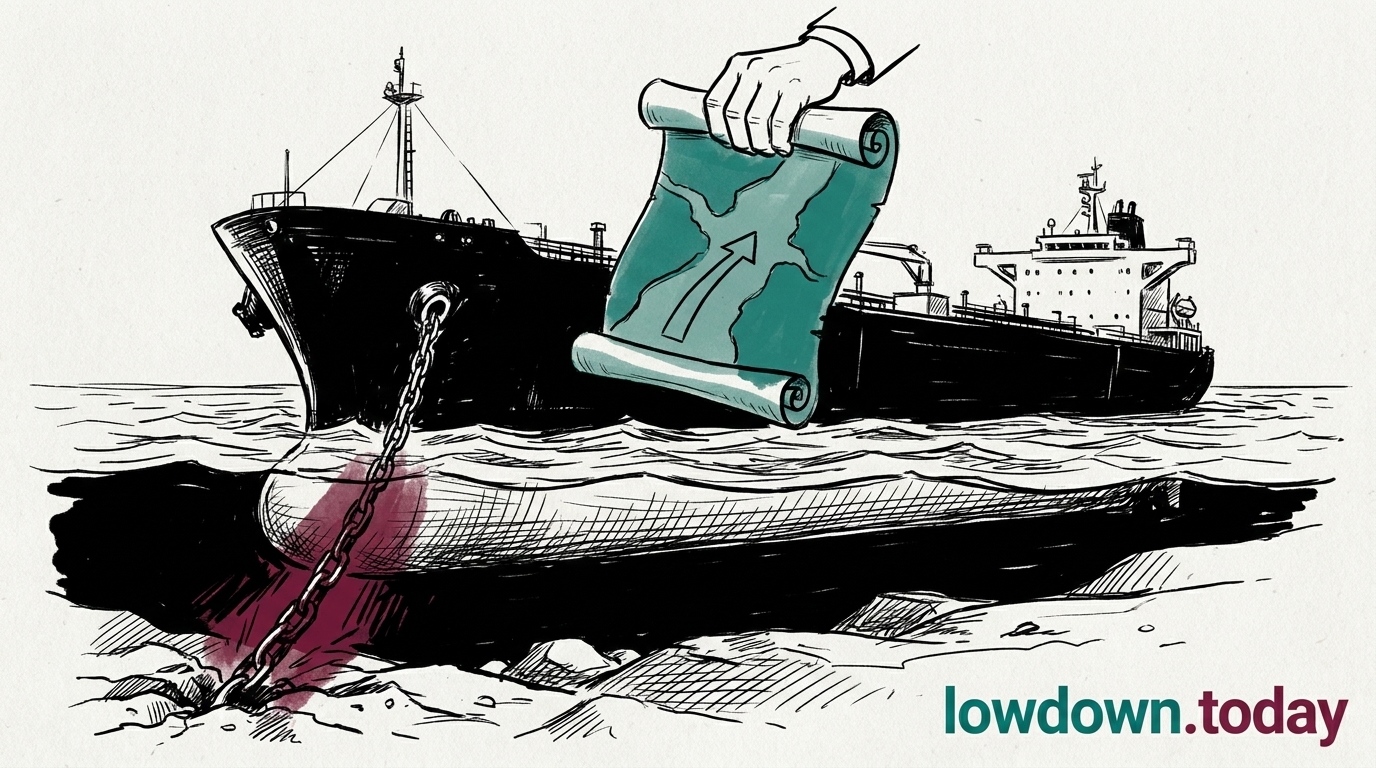
Iraq completed the staged reopening of its three Iranian border crossings on Thursday 17 September, finishing with al-Sheeb in Maysan province 1. The Security Media Cell had published the phased schedule on 13 September , and it has now run to completion without interruption.

The same province is where the drone launches originated, and no Iraqi government statement or wire report reached this week has named a group over them. An Iraq-Iran joint inquiry into the launch platforms continues and has published no finding. That silence is the operative fact rather than a gap in the reporting: as long as no state-attributable actor is formally named, no government in the region is obliged to respond to one, and the crossings can reopen on a commercial timetable instead of a security one.

Traffic through al-Sheeb matters chiefly to the towns on either side of it, but the sequencing tells you what Baghdad thinks the risk is. A government expecting an attribution that forces its hand does not finish reopening a border in the province the drones flew from.


Deep Analysis

In plain English

Iraq closed three border crossings with Iran, at Shalamcheh, al-Sheeb and Mandali, after investigators traced the drones that struck Saudi Arabia's East-West pipeline to launch sites in Iraq's Maysan province, which borders Iran. Iraq has now finished reopening all three, in stages, finishing with al-Sheeb, the crossing closest to the investigation site, on 17 September. The staged reopening let Iraq run security and technical checks at each crossing before letting trade and travel resume, rather than reopening everything at once and risking another incident.

Deep Analysis
Root Causes

Iraq's Security Media Cell staged the reopening deliberately rather than reopening all three crossings at once: passenger traffic at al-Sheeb and Shalamcheh resumed first on 13 September, Shalamcheh's commercial traffic followed a day later, Mandali came next, and al-Sheeb's commercial traffic, the crossing nearest the Maysan launch sites investigators traced the Saudi pipeline drones to, was held back until last on 17 September.

That sequencing reflects where the security review actually originated: al-Sheeb sits closest to the governorate under investigation, so it needed the longest technical and administrative clearance before Baghdad judged it safe to fully reopen for commercial traffic.

First Reported In

Update #179 · Russia and China kill Iran's UN monitor

The Hans India· 21 Sept 2026
Read original
Causes and effects
This Event
Iraq reopens its last Iran crossing
Baghdad reopened the border in the same province whose drone launches remain formally unattributed, which is what keeps the escalation contained.
Different Perspectives
Gulf oil producer
Gulf oil producer
Secured OPEC's confirmed 188,000 b/d September increment with the next meeting set for 6 September, but the Secretariat's own 2 August release says nothing about the fourth quarter. Output guidance beyond September remains undisclosed even as delegate sourcing keeps filling that gap.
Money manager positioned in WTI
Added 21,402 lots to a 108,307 net long in NYMEX WTI in the week to 28 July, against just 1,485 added to Brent's 15,740, a roughly fourteen-to-one split. Conviction sits in the American benchmark even as the European diesel story sets the record.
Indian refiner buying Urals
Bought Russian crude at a discount that narrowed to $1-2 a barrel in the week to 29 July from over $10, as Hormuz risk pushed it toward Urals. If that risk eases with the strike now called off, the discount it is currently enjoying could re-widen just as fast.
Russian diesel exporter
Novak tied any lifting of the diesel export ban, due to lapse 31 July, to an unspecified market recovery with no date, and pushed the gasoline ban to end-2026. An open-ended constraint suits an exporter benefiting from the record European crack it feeds.
War-risk underwriter
Withdrew war-risk cover for Saudi-linked hulls on 24 July and has not reinstated it, holding Bab el-Mandeb tanker transits near 7.5 a day. A cancelled strike does not by itself trigger the committee review needed to re-accept the class.
Northwest European refiner
Sources only 17% of diesel imports from Saudi Red Sea ports against the Mediterranean's 24%, so the ARA crack at $85.86 trails the Med print by $5.81. Lower Red Sea exposure is cushioning it against the rerouting cost, not eliminating it.



