Skip to content
You can now search across every topic, entity and event.What's new
European Energy Markets
8MAY

Yara curtailed 25% of European output

4 min read
11:12UTC

Yara International ran its European fertiliser fleet at 75% of capacity through March 2026, curtailing roughly 25% of European production, with gas accounting for around 80% of variable costs and TTF at EUR 43-47 below the EUR 70 threshold that triggered the 2022 chemical-sector exit.

EconomicDeveloping
Key takeaway

TTF at EUR 47 destroys industrial demand that EUR 70 destroyed in 2022; the threshold has migrated down.

Yara International, the world's largest mineral fertiliser producer, ran its European fleet at 75% of capacity through March 2026, curtailing roughly 25% of European production as gas accounted for around 80% of variable costs 1. Yara is a Norwegian-headquartered fertiliser company with European plants exposed directly to TTF on the marginal molecule; its disclosure was filed alongside the BASF Q1 reporting window.

Cefic data covered earlier in this topic put European chemicals capacity contraction at roughly 9% between 2022 and 2025, with around 20,000 jobs lost; Cefic is the European Chemical Industry Council, the trade body that tracks sector capacity and employment. Yara's 25% March curtailment is the live quarterly read on that running tally. TTF at EUR 43-47 through the curtailment period sat below the EUR 70 ceiling that triggered the 2022 chemical-sector exit, confirming the damage threshold has migrated downward.

Sodir's March print at 10.8 bcm and 349.3 mcm/day showed Norwegian supply tightening , and the broader storage deficit at 35.4% compounds the cost pressure on European industrials. Long-term gas contract premia shifted Europe's structural cost base above competing jurisdictions during 2022-23; Asian and US chemical capacity built into that gap, and the European fleet now competes against younger plants with a structural gas-cost disadvantage that prevailing TTF does not close.

The European nitrogen fertiliser supply tightens into the spring planting window; import dependence on Russian and Trinidadian product rises through Q2. The industries that survived 2022 are still shedding capacity at lower gas prices than the ones that triggered the original exits, which moves the threshold structurally lower for the next round of closure decisions.


Deep Analysis

In plain English

Yara is the world's largest producer of mineral fertilisers, used by farmers to grow crops. Most of Yara's European production uses natural gas as a raw material, which accounts for about 80% of the cost of producing fertiliser in Europe. When gas prices rise, Yara's production becomes more expensive. In the first quarter of 2026, gas prices in Europe were between EUR 43 and 47 per unit. That is high enough to make about 25% of Yara's European plants uneconomical to run. So Yara cut production by a quarter. Instead, European farmers will rely more on fertiliser imported from North Africa, Russia, and the Caribbean, where gas is cheaper. This matters because if European fertiliser production keeps shrinking, Europe becomes more dependent on imports for food production, which carries its own supply-chain risks.

What could happen next?
  • Risk

    If TTF holds at EUR 47+ through the spring planting window, European nitrogen fertiliser imports from Russia and North Africa increase, raising food supply-chain dependence on geopolitically sensitive sources.

  • Consequence

    The EUR 70 curtailment threshold of 2022 has migrated to EUR 47 in 2026 as the surviving fleet absorbs the fixed cost of closed plants; each future gas spike will trigger curtailment at a progressively lower absolute TTF level.

First Reported In

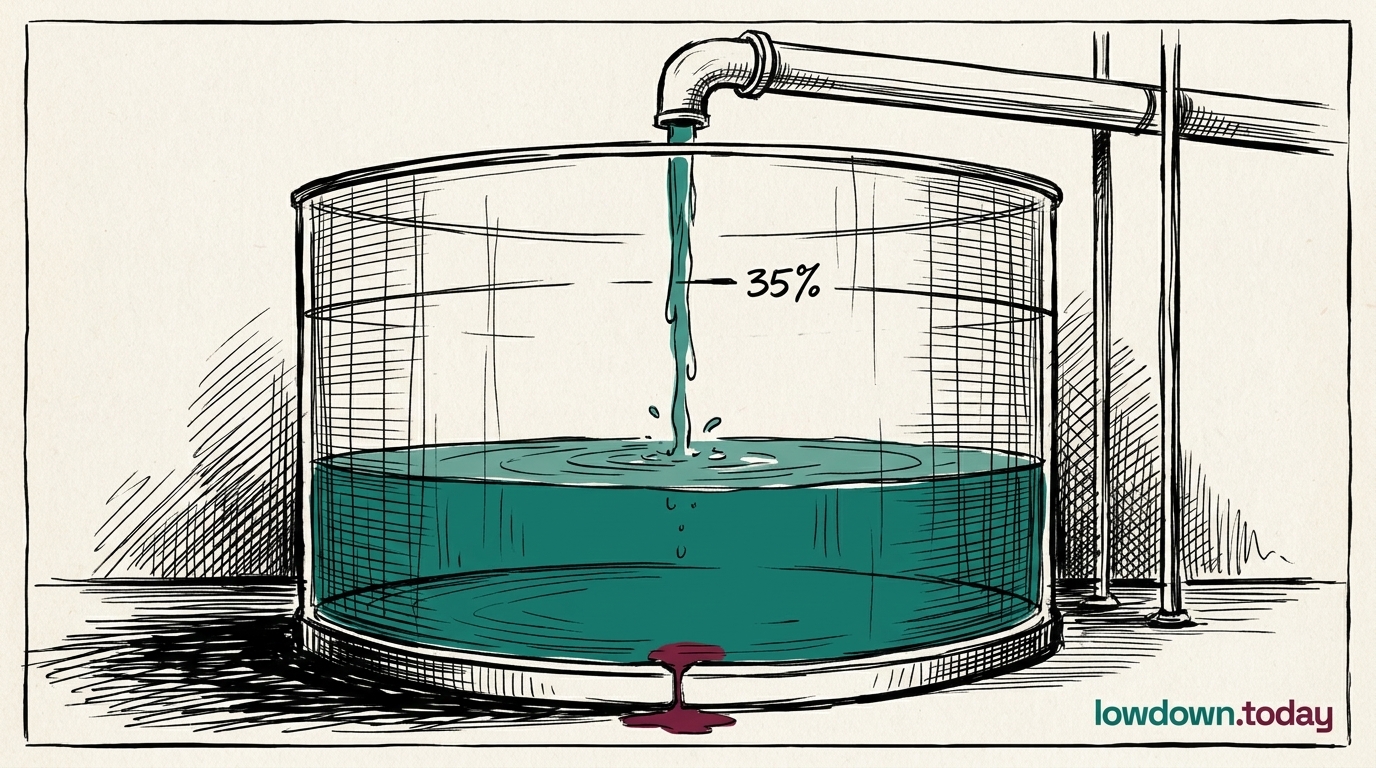
Update #9 · Storage 35% met, 80% trajectory still missed

Yahoo Finance· 12 May 2026
Read original
Different Perspectives
EU carbon and storage regulators
EUA carbon broke EUR 81/tonne on 13 July as the ETS Market Stability Reserve's scheduled withdrawals met fresh fuel-switching demand from France's nuclear curtailment. Brussels' mandatory storage-fill rule kept German and French injection running regardless of the TTF swings, the mechanism working as designed four years after the 2022 shock.
Equinor
Equinor
Equinor returned its Asgard field from maintenance on 11 July, lifting Gassco's exit nominations to 319.8 mcm/day just as TTF round-tripped on Hormuz risk. The restart gave Norway spare pipeline capacity to help Europe absorb the gas rally without drawing down storage, reinforcing its role as the post-2022 swing supplier.
Germany
Germany
Germany briefly became the cheaper leg of the FR-DE spread on 12 July as French reactors went offline, while its own storage injection tripled to 723 GWh on 11 July under the EU's mandatory fill rule. Berlin's CCGT fleet absorbed the extra load at a time when EUA's climb past EUR 81 is raising its own marginal cost too.
EDF
EDF
EDF took Chooz, Golfech and Bugey fully offline on 12 July under river-cooling discharge limits, then secured a temperature exemption for Bugey to 20 July rather than wait for the rivers to cool. The government's willingness to relax the environmental ceiling shows French grid security now outweighs the permit breach when reactor hardware itself is undamaged.
Storage and injection-pace desk
EU storage sat at 51.1% on 8 July, still running below the pace needed for an 80% November target, and the JKM-TTF Asia premium of roughly USD 1.4-2.4/MMBtu was already pulling marginal cargoes east before Qatar's withdrawal compounded the gap. October's top-up remains the binding constraint, not this week's price level.
EDF / France
EDF / France
EDF added Chooz to its heat-curtailment watch list as a precaution against the second heat dome peaking 9-14 July, alongside standing warnings at Blayais, Bugey, Golfech and Saint-Alban. No output cut has been confirmed at any site as of 10 July.
