Skip to content
You can now search across every topic, entity and event.What's new
European Energy Markets
31JUL

A second worldwide alert in three days

2 min read
09:44UTC

The State Department's second worldwide alert in three days warns that Iran-aligned groups may target Americans anywhere, and cites a Jordan casualty toll Washington revised the same evening.

EconomicDeveloping
Key takeaway

The second worldwide alert in three days names no new country and cites a toll already superseded.

The US State Department issued a Worldwide Caution security alert on Tuesday 21 July, warning that Iran and Iran-aligned groups may target American interests and citizens anywhere 1. Level 4 Do Not Travel remains in force for Iran, Iraq and Israel, and the alert flags further commercial flight cancellations and airspace closures.

Washington had already gone worldwide on 18 July , which makes this the second such instrument inside three days. The newer one names no additional country, sets no new threshold and carries no figure that outlived the day it was published.

It cites the Jordan attack as two dead and one missing. Sergeant Angel S. Rampersad's status moved from missing to believed deceased later that same day, so Washington's broadest public warning went out carrying a toll its own government revised before the evening was over.

Consular posts adjust their security posture on this text, and it does other work besides. Travel insurers reprice war-risk cover against the wording, and corporate security departments treat it as the trigger for their duty-of-care obligations. An advisory of this kind therefore moves money and staffing decisions some weeks before it changes what any individual traveller does.


Deep Analysis

In plain English

The State Department runs two separate warning systems for Americans abroad. A Travel Advisory covers one country, like Iran or Iraq being rated 'Do Not Travel'. A Worldwide Caution is broader: it tells every American, everywhere, that people or groups linked to Iran might target them or US interests, wherever in the world they are. Washington issued its first Worldwide Caution over this conflict on 18 July, then issued a second one on 21 July, just three days later. That is unusual. It suggests officials do not think the threat has settled down, and it applies whether you are travelling to Jordan or simply flying through an unrelated country with a US embassy or military base nearby.

Deep Analysis
Root Causes

A Worldwide Caution is a distinct instrument from a country Travel Advisory: it applies when State judges a threat travels with US citizens and interests rather than staying inside a mapped territory. Iran, Iraq and Israel already carried Level 4 Do Not Travel advisories before 21 July, so this alert exists to cover an American in a country with no country-specific warning at all.

Issuing it twice inside three days points to an intelligence picture that had not settled between the two instruments. State does not normally re-issue a global caution this soon after the first; doing so again on 21 July signals the threat assessment behind was already judged insufficient within 72 hours.

What could happen next?
  • Meaning

    A second global caution inside three days signals State's threat assessment shifted meaningfully between 18 and 21 July, not that the 18 July alert was simply being renewed.

  • Risk

    The alert was drafted citing a Jordan toll of two dead and one missing, then overtaken within hours by the Pentagon's revision of Sergeant Rampersad's status to believed deceased, showing how fast-moving casualty reporting can outpace a same-day advisory.

First Reported In

Update #159 · A second strait closes by radio alone

US Department of State· 22 Jul 2026
Read original
Causes and effects
This Event
A second worldwide alert in three days
A Worldwide Caution is the department's broadest instrument, and issuing two of them inside three days puts its own expectation of spread on the record.
Different Perspectives
Spain's LNG terminal operators
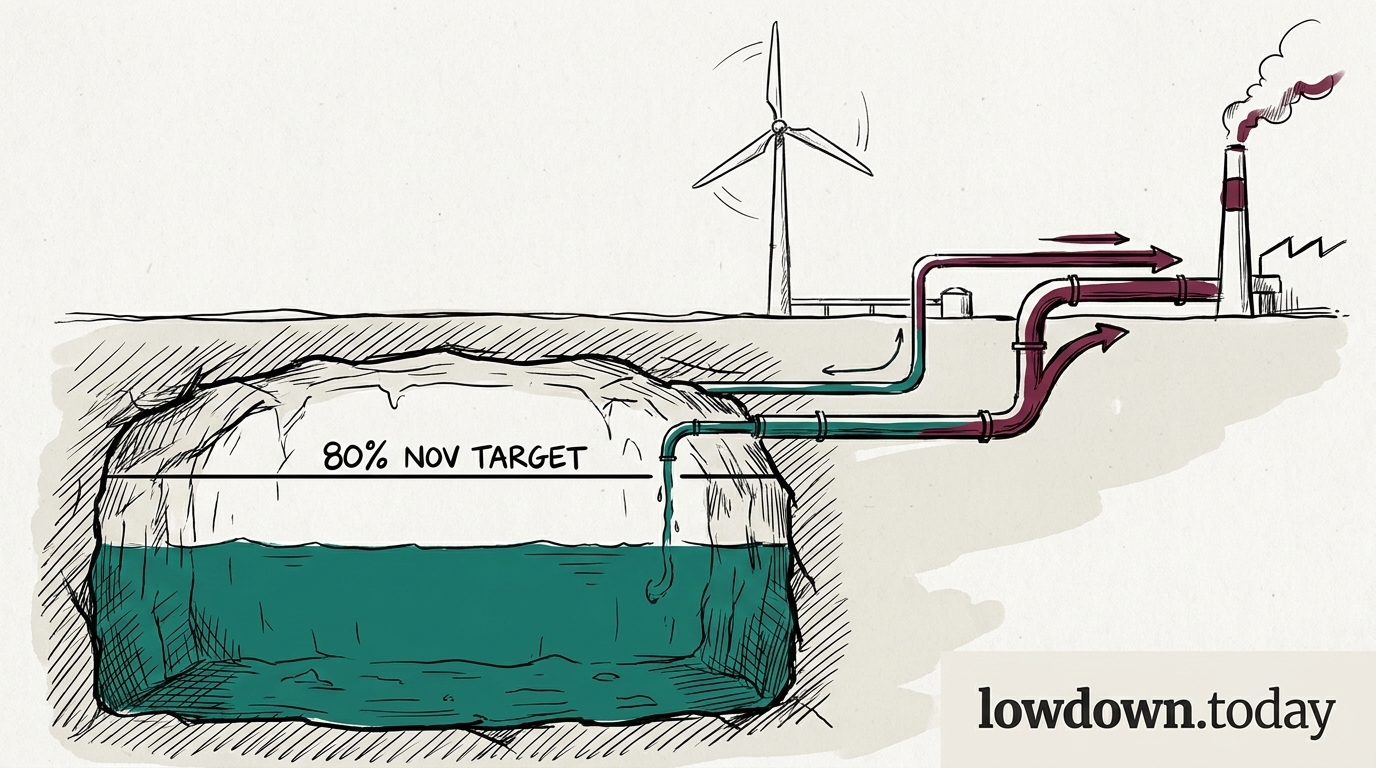
Spain's 9,145 GWh terminal inventory is the largest single stock in the EU LNG network, an option value that can reroute cargoes wherever the winter strip pays best rather than a cavern gas obligation tied to a fixed date. That flexibility matters more as Germany's cavern shortfall pushes more of the winter security question onto import infrastructure.
European Commission
European Commission
Brussels holds the bloc to 90% on a flexible window while Germany, holding roughly a quarter of EU storage capacity, tracks toward missing its own lower 80% figure by 21 points. A national shortfall this size in the anchor market matters more to bloc security than the flexible timetable alone can absorb.
French power exporters and CRE
French day-ahead rose in step with Germany but by less, reopening a EUR 7-17 premium that makes northward export flows commercially attractive again after the EUR 43.09 discount evaporated in days. CRE separately authorised RTE and Enedis to buy flexibility locally, betting the coming winter's binding constraint is grid congestion rather than a shortage of firm capacity.
TTF trading desk
TTF trading desk
A visible national shortfall like Germany's 21-point gap is a directional signal, not noise, for a desk holding the summer-winter spread. TTF's flat EUR 58-60 range through this week's German price swings says the market has not yet chosen to reprice refill risk into the front of the curve.
German cavern and CCGT operators
German caverns kept buying prompt gas at TTF near EUR 58-60 through the inversion; the wind collapse to 2.4 GW then flipped the spark spread to plus EUR 29 and put turbines back in the same queue. Every day turbines win that bid, injection at a third of the 877 GWh/day pace needed falls further behind.
Slovakia
Slovakia
Slovakia says it dropped its hold-out on the 21st sanctions package only after Ursula von der Leyen personally signed written gas-price and supply guarantees. The Council of the European Union's own 17,238-character release on the package names neither Slovakia nor any guarantee, leaving Bratislava's account unconfirmed by the institutional record.



