Skip to content
You can now search across every topic, entity and event.What's new
European Energy Markets
23JUL

Two shocks squeeze the spark, not FR-DE

2 min read
19:31UTC

German and French day-ahead rose together over 6-10 July, keeping the FR-DE spread compressed while a firmer TTF and flat EUA at EUR 78.95 squeezed the clean spark spread instead.

EconomicAssessed
Key takeaway

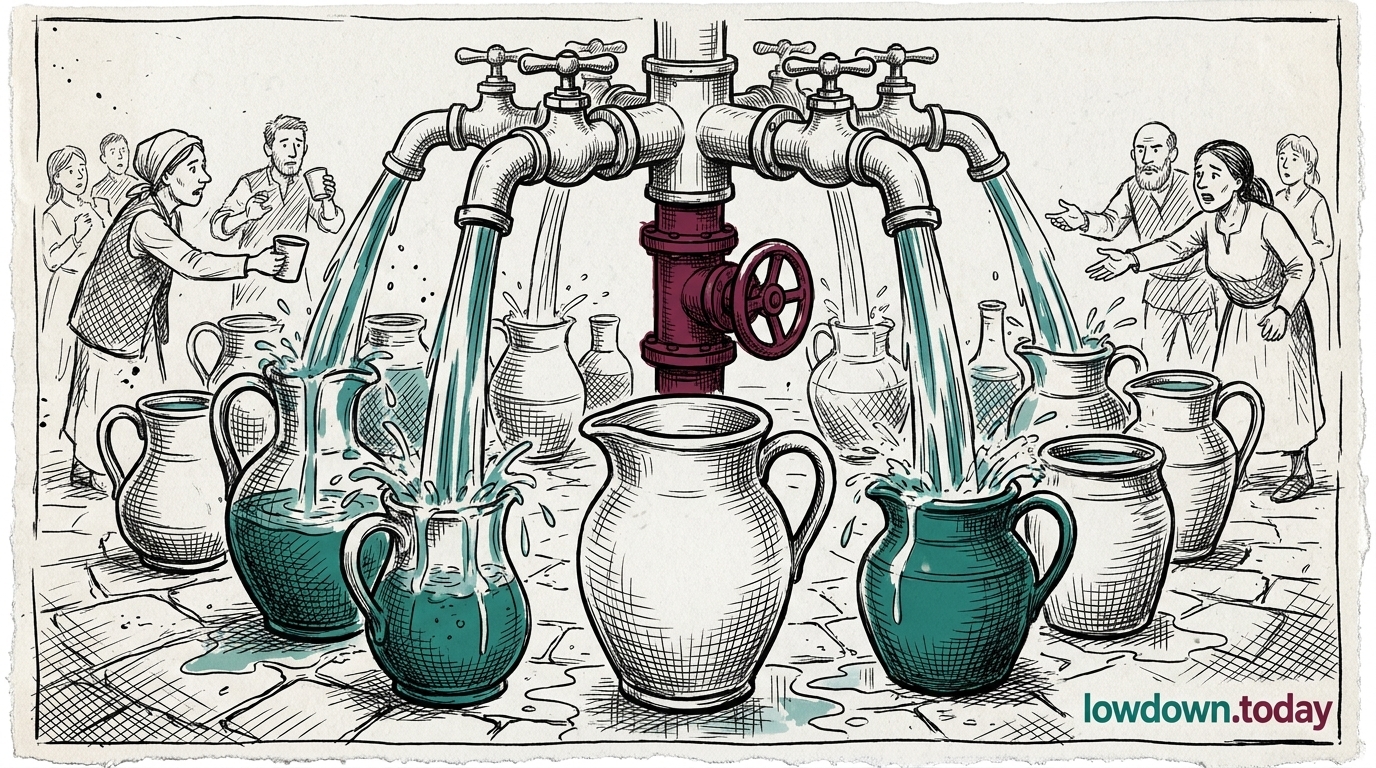
Two shocks at once compressed the FR-DE spread and squeezed the clean spark spread instead.

German day-ahead baseload cleared 93.78, 71.66, 100.73, 124.58 and 123.04 EUR/MWh across 6 to 10 July, while France cleared 86.97, 89.30, 94.32, 110.02 and 118.68 12. Both legs rose together, so the DE-minus-FR spread swung only from -17.64 to +14.56, France the dearer leg on 7 July, a world away from the EUR 71.50 gap the 30 June heat opened when German wind collapsed alone . That spread had already compressed towards EUR 18-26 by 5 July .

The clean spark spread carries this squeeze, not the cross-border one. TTF firmed on the prompt with no matching lift in CCGT running margin, while EUA carbon settled 78.95 EUR/tCO2 on 9 July, roughly flat on the day 3 . The same margin pressure reached EUR 74 as recently as 30 June . Flat carbon isolates the move as fuel-and-power rather than a carbon-cost shift. Settled baseload stayed moderate at 100 to 125 EUR/MWh, well below the 200-plus evening peaks forecasters flagged, so the pressure reads as a margin squeeze on spark economics, not a power-price explosion.


Deep Analysis

In plain English

A spark spread is the profit margin a gas power plant makes: the electricity price it sells at, minus the cost of the gas it burns to make that electricity. When gas prices rise faster than electricity prices, that margin gets squeezed. This week, German and French electricity prices rose together rather than one country becoming much more expensive than the other, which is what usually happens when only one side has a problem like low wind. Instead, both countries are paying more for the gas that increasingly sets their electricity price, a Europe-wide cost pressure rather than a one-country weather problem.

Deep Analysis
Root Causes

Germany's marginal price is set by its gas-fired plants whenever wind is short, so a firming TTF prompt raises the clearing price directly. Because carbon has not moved in the same window, the squeeze lands entirely on the CCGT operating margin rather than being partly offset by cheaper emissions costs.

France normally provides a cheaper nuclear-led floor that decouples its price from Germany's gas-driven one, which is why the two countries usually diverge under stress; this window's parallel rise instead suggests France's own thermal and import-exposed margin is being squeezed by the same TTF move, not by a separate French-specific constraint.

What could happen next?
  • Consequence

    CCGT operators in both Germany and France see thinner margins on new generation even as headline power prices rise, since fuel costs are keeping pace with the power-price increase.

  • Meaning

    A squeeze that hits both countries together, rather than one, marks a fuel-cost-driven episode distinct from the wind-dependent divergence of 30 June.

First Reported In

Update #25 · Qatari LNG strike puts TTF back over EUR 50

Investing.com· 10 Jul 2026
Read original
Different Perspectives
French industrial power consumers
France's day-ahead discount to Germany has nearly closed as TTF and EUA rise together on both sides of the border, eroding the arbitrage French industry relied on through the summer. A standing negative spark removes the German demand buffer that kept that spread wide.
TTF trading desks
TTF trading desks
Desks are reading the inversion as an injection-arbitrage trade: buy TTF at EUR 62.4/MWh now, accept the near-term loss on the spread, and sell into the winter strip once caverns are forced back into the market. The 0.8 GWh/day German print makes that trade increasingly asymmetric.
Oxford Institute for Energy Studies
Two straight sessions of negative clean spark spread confirm gas has stopped setting German power prices cleanly; CCGT dispatch now follows the spread's sign, not storage need. Caverns quitting the prompt bid on 21 July is that mechanism working exactly as the structural read predicts.
European Commission
European Commission
State-aid approval for StromVKG has not been granted, a status Bundesnetzagentur's own scheme page confirms, and Brussels was not consulted before the auction opened. Every award from the 8 September deadline stays exposed to a formal proceeding or clawback once the Commission rules.
Bundesnetzagentur
Bundesnetzagentur
Bundesnetzagentur opened the first 4.5 GW StromVKG capacity auction on 21 July, bids due 8 September, without waiting for EU state-aid clearance. Berlin is treating Germany's 24% share of EU storage as urgent enough to move first on capacity and negotiate the state-aid question with Brussels afterwards.
Marine insurers and AIS trackers covering Hormuz
AIS data shows severe curtailment on 20 July, 479 vessels anchored, 36 dark, 123 still broadcasting inside the strait, not the closure the IRGC claims. War-risk premiums move on the unresolved CENTCOM-IRGC contest itself, since underwriters price the dispute as much as the count.
