Skip to content
You can now search across every topic, entity and event.What's new
European Energy Markets
23JUL

Timera puts a number on the inversion

4 min read
19:31UTC

Timera Energy quantified the TTF summer 2026 premium over winter at more than EUR 0.5/MWh, tying the inversion to 58 mtpa of new LNG due in H2 2026 and confirming the injection incentive is structurally gone.

EconomicDeveloping
Key takeaway

Timera fixed the strip inversion as structural; Bruegel and OIES silence lets a sub-80 percent landing become consensus.

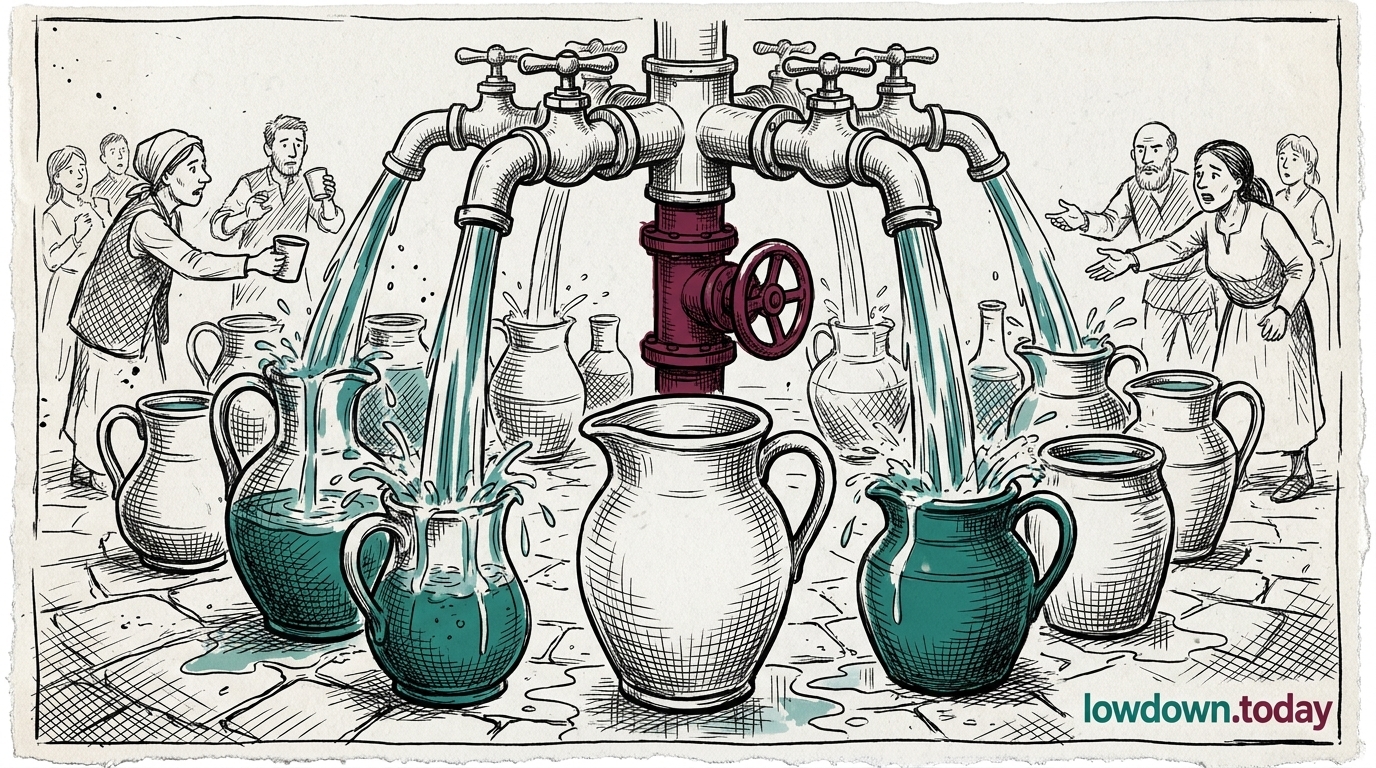
Timera Energy quantified the TTF summer 2026 premium over winter at more than EUR 0.5/MWh and tied the inversion to 58 mtpa of new LNG export capacity due online in H2 2026 1. Timera is a London energy-markets research consultancy; the read is that the curve structure is a structural feature of an oversupplying global LNG market, not a cyclical anomaly. That is the mechanism underneath every mandate-driven injection print this week : with the strip inverted, the intrinsic incentive to fill in summer and sell in winter is gone, not merely thin.

What the modellers did not publish carries the louder signal. Bruegel, the Brussels think tank whose refill model anchors EU policy debate, and OIES, the Oxford Energy institute, both went quiet: neither issued a revised refill model through the EUR 47-50 TTF band in the 22-26 May window.

That silence is itself information. Bruegel's existing model priced refill at EUR 26bn at EUR 45/MWh, calibrated for an 80 percent delivery, and the EUR 50 break has not triggered a recalibration. The absence lets the EUR 35bn mid-range settle as the operative number for a sub-80 percent November landing without a formal publication forcing the institutions to own it. For desks pricing winter-strip hedges off a published landing assumption, the consensus is drifting lower than any institution has yet committed to in print, and the 11 June ACER workshop is the next venue where that gap could close.


Deep Analysis

In plain English

Timera Energy is a London research firm that specialises in analysing gas and electricity markets. Their analysis in May 2026 put a specific number on something that has been affecting European gas storage all season: summer gas costs more than winter gas on the futures market, a situation called a price 'inversion'. Normally, gas companies fill underground stores in summer (when gas is cheaper) and sell it in winter (when it is more expensive and they make a profit). The price difference pays for the cost of storage. Right now that price relationship is reversed: summer gas trades at about EUR 0.50 per megawatt-hour more than winter gas. So filling storage at summer prices and selling at lower winter prices produces a guaranteed loss. No commercial company fills its tanks at a guaranteed loss. Timera links this inversion to a big wave of new LNG export terminals coming online globally in the second half of 2026. LNG stands for liquefied natural gas, which is gas that has been cooled to liquid form so it can be shipped by tanker. An extra 58 million tonnes per year of new export capacity coming online means more gas available globally, which pushes future winter gas prices lower and makes the inversion worse. The concern flagged in this update is that two major research institutions, Bruegel in Brussels and the Oxford Institute for Energy Studies, have not published any updated cost estimates accounting for the fact that European stores are filling more slowly than planned and at higher-than-expected prices. EU energy ministers and treasury teams are calibrating budget decisions against the EUR 35bn Bruegel mid-range figure, which was published in April and has not been updated to reflect May's slower pace and higher prices.

What could happen next?
  • Consequence

    Bruegel and OIES silence on a revised refill model at EUR 47-51 TTF and sub-0.4 pp/day pace means EU energy policy is being calibrated against a EUR 26bn cost estimate that understates both price and pace shortfall. The operative sub-80% cost is unquantified by any authoritative institution.

    Short term · Assessed
  • Risk

    If 58 mtpa of H2 2026 LNG capacity commissions on schedule, the summer-over-winter TTF inversion deepens through Q3 2026, eliminating commercial injection incentive for an additional season and entrenching mandate-dependency as the bloc's storage architecture.

    Medium term · Reported
  • Precedent

    A third consecutive injection season dominated by state mandate rather than commercial arbitrage (after 2022 emergency measures and 2025 partial subsidy schemes) would provide sufficient evidence for the European Commission to propose a permanent EU-level storage injection financial instrument.

    Long term · Suggested
First Reported In

Update #12 · EU refill doubles on mandates as TTF fades

Timera Energy· 26 May 2026
Read original
Different Perspectives
French industrial power consumers
France's day-ahead discount to Germany has nearly closed as TTF and EUA rise together on both sides of the border, eroding the arbitrage French industry relied on through the summer. A standing negative spark removes the German demand buffer that kept that spread wide.
TTF trading desks
TTF trading desks
Desks are reading the inversion as an injection-arbitrage trade: buy TTF at EUR 62.4/MWh now, accept the near-term loss on the spread, and sell into the winter strip once caverns are forced back into the market. The 0.8 GWh/day German print makes that trade increasingly asymmetric.
Oxford Institute for Energy Studies
Two straight sessions of negative clean spark spread confirm gas has stopped setting German power prices cleanly; CCGT dispatch now follows the spread's sign, not storage need. Caverns quitting the prompt bid on 21 July is that mechanism working exactly as the structural read predicts.
European Commission
European Commission
State-aid approval for StromVKG has not been granted, a status Bundesnetzagentur's own scheme page confirms, and Brussels was not consulted before the auction opened. Every award from the 8 September deadline stays exposed to a formal proceeding or clawback once the Commission rules.
Bundesnetzagentur
Bundesnetzagentur
Bundesnetzagentur opened the first 4.5 GW StromVKG capacity auction on 21 July, bids due 8 September, without waiting for EU state-aid clearance. Berlin is treating Germany's 24% share of EU storage as urgent enough to move first on capacity and negotiate the state-aid question with Brussels afterwards.
Marine insurers and AIS trackers covering Hormuz
AIS data shows severe curtailment on 20 July, 479 vessels anchored, 36 dark, 123 still broadcasting inside the strait, not the closure the IRGC claims. War-risk premiums move on the unresolved CENTCOM-IRGC contest itself, since underwriters price the dispute as much as the count.
