Skip to content
You can now search across every topic, entity and event.What's new
European Energy Markets
23JUL

Renewables pass fossil fuels, gas bill rises

3 min read
19:31UTC

Wind and solar generated more EU electricity than fossil fuels for the first time in 2025, yet the power sector's gas bill still climbed 16%.

EconomicDeveloping
Key takeaway

Wind and solar hit 30% of EU generation in 2025, but the gas bill still rose 16% on hydro shortfalls.

Ember published its European Electricity Review showing wind and solar exceeded fossil fuels in EU electricity generation for the first time in 2025: renewables at thirty percent against fossil fuels' share. The milestone marks a structural shift in the generation mix. But the EU power sector's gas import bill still reached EUR 32 billion in 2025, up 16% year-on-year, because gas generation itself rose 8% to compensate for reduced hydro output.

The transition insulates unevenly. Spain is largely protected from TTF pass-through; Italy, the Netherlands, and Belgium are fully exposed. Ember's data confirms that the merit order mechanism, where the most expensive fuel needed to meet demand sets the price for all generation, means gas retains pricing power far beyond its share of actual generation. In markets where gas sets the marginal price most hours (Italy being the clearest case), the rising renewables share delivers environmental benefit but limited consumer price relief.

The structural implication for traders: EU-wide renewables statistics overstate the degree to which the bloc is insulated from gas price shocks. Market-by-market merit order composition, not aggregate generation share, determines price exposure.


Deep Analysis

In plain English

In 2025, for the first time ever, European wind turbines and solar panels produced more electricity than all fossil fuels combined. This sounds like a major milestone for clean energy, and in generation terms it is. But here is the complication: Europe's gas import bill for electricity still went up by 16%, to EUR 32 billion. This is because wind and solar do not blow and shine all the time. When they stop, something else needs to fill in quickly, and right now gas stations are the primary backup. Gas is now used less for routine power but more for emergency top-ups, which happen to be at the most expensive market hours.

Deep Analysis
Root Causes

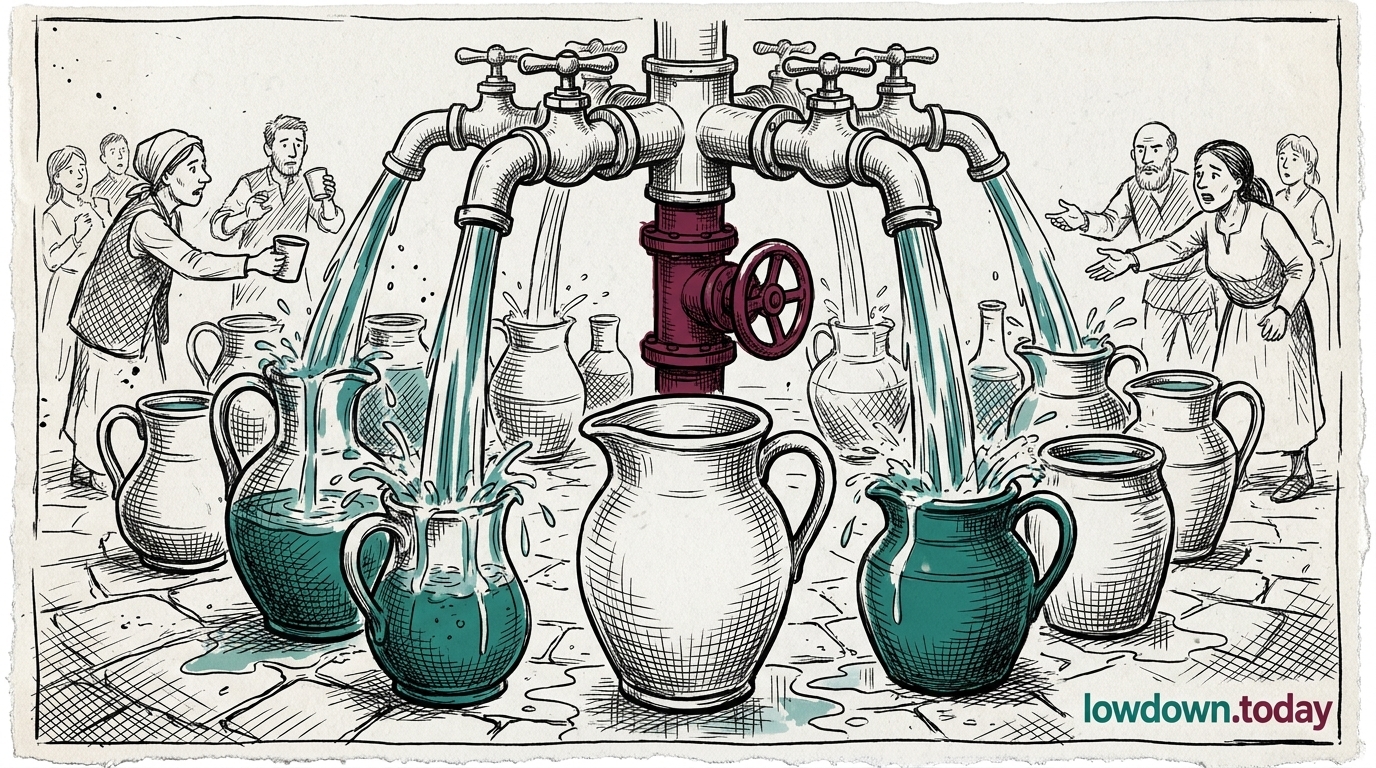
The simultaneous achievement of renewable majority and rising gas bills reflects the merit order's structural mechanics: wind and solar push gas out of baseload hours but increase gas's role in marginal hours, where gas must provide rapid ramping to cover renewable generation shortfalls.

Gas-fired plants running fewer hours but at higher marginal prices can generate the same or higher revenue, and their fuel costs per unit of production are higher because they operate less efficiently at low capacity factors.

The hydro shortfall is the second structural factor. European reservoir hydro output fell 8% in 2025 due to below-average Alpine snowpack and drought in Iberia's river basins. Gas compensated for this on an essentially unplanned basis, at spot prices, because the hydro shortfall was not foreseeable six months in advance when storage injection contracts were placed.

What could happen next?
  • Consequence

    The EUR 32 billion gas bill for power generation creates a permanent structural argument for accelerating battery storage and interconnection investment, as each alternative capacity unit reduces the volume of spot gas purchased at peak prices.

  • Risk

    If Alpine hydro output continues below long-run averages due to climate-related snowpack decline, gas compensation demand will remain a structural feature of EU electricity markets regardless of renewable capacity growth.

First Reported In

Update #1 · Europe's thinnest gas cushion since 2018

Bruegel· 13 Apr 2026
Read original
Causes and effects
This Event
Renewables pass fossil fuels, gas bill rises
The paradox of rising renewables share alongside a rising gas bill exposes the merit order's structural flaw: even a minority fuel can set prices for the majority of hours.
Different Perspectives
French industrial power consumers
France's day-ahead discount to Germany has nearly closed as TTF and EUA rise together on both sides of the border, eroding the arbitrage French industry relied on through the summer. A standing negative spark removes the German demand buffer that kept that spread wide.
TTF trading desks
TTF trading desks
Desks are reading the inversion as an injection-arbitrage trade: buy TTF at EUR 62.4/MWh now, accept the near-term loss on the spread, and sell into the winter strip once caverns are forced back into the market. The 0.8 GWh/day German print makes that trade increasingly asymmetric.
Oxford Institute for Energy Studies
Two straight sessions of negative clean spark spread confirm gas has stopped setting German power prices cleanly; CCGT dispatch now follows the spread's sign, not storage need. Caverns quitting the prompt bid on 21 July is that mechanism working exactly as the structural read predicts.
European Commission
European Commission
State-aid approval for StromVKG has not been granted, a status Bundesnetzagentur's own scheme page confirms, and Brussels was not consulted before the auction opened. Every award from the 8 September deadline stays exposed to a formal proceeding or clawback once the Commission rules.
Bundesnetzagentur
Bundesnetzagentur
Bundesnetzagentur opened the first 4.5 GW StromVKG capacity auction on 21 July, bids due 8 September, without waiting for EU state-aid clearance. Berlin is treating Germany's 24% share of EU storage as urgent enough to move first on capacity and negotiate the state-aid question with Brussels afterwards.
Marine insurers and AIS trackers covering Hormuz
AIS data shows severe curtailment on 20 July, 479 vessels anchored, 36 dark, 123 still broadcasting inside the strait, not the closure the IRGC claims. War-risk premiums move on the unresolved CENTCOM-IRGC contest itself, since underwriters price the dispute as much as the count.
