Skip to content
You can now search across every topic, entity and event.What's new
European Energy Markets
26JUN

French heat flips the FR-DE spread

3 min read
13:51UTC

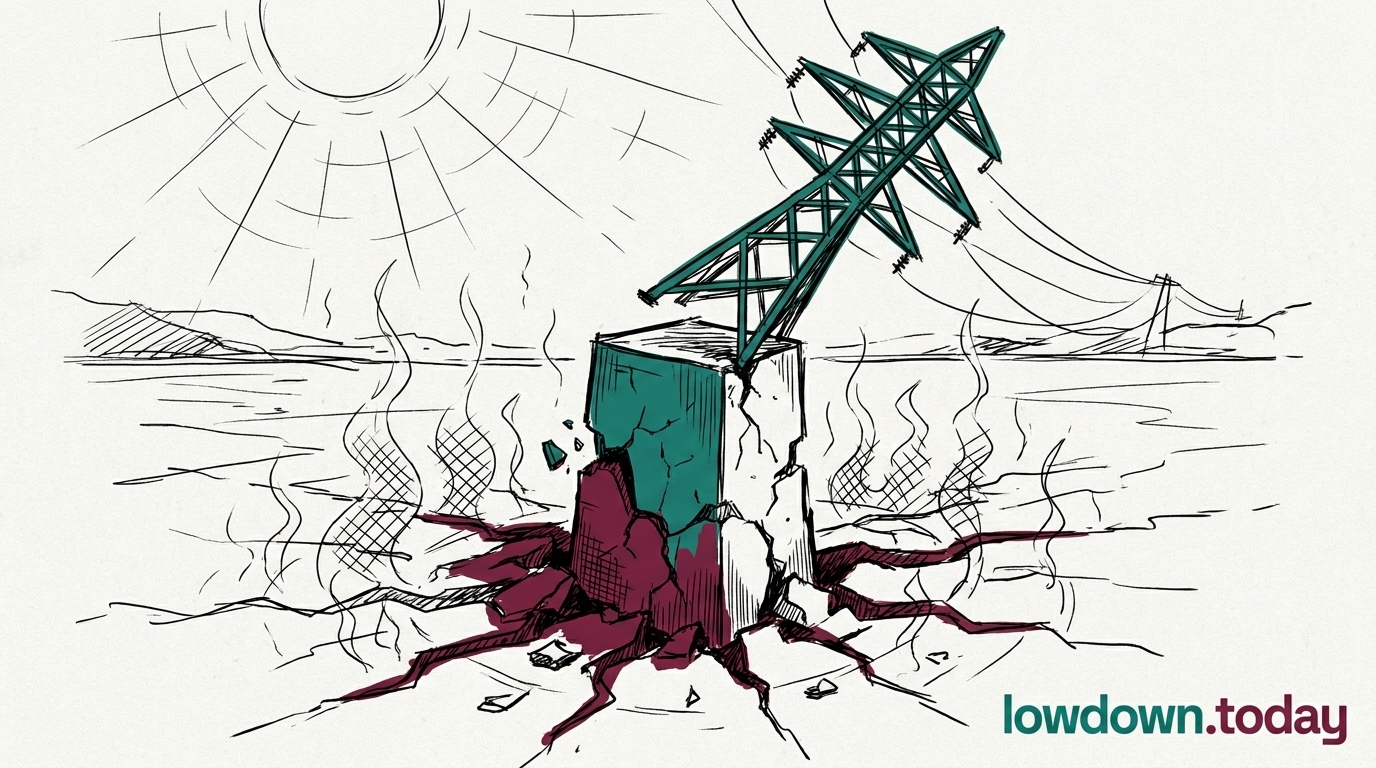
EDF took Chooz, Golfech and Bugey fully offline on Sunday as river-cooling limits bit, flipping French day-ahead power to roughly EUR 7/MWh above Germany for the first time in weeks.

EconomicDeveloping
Key takeaway

French power briefly cleared dearer than German on a weather-bounded reactor outage, with restarts due late July.

EDF (Electricite de France, France's state nuclear operator) took three reactors fully offline on Sunday 12 July, shutting Chooz on the Meuse, Golfech on the Garonne and Bugey on the Rhone on cooling-water discharge limits 1. Eight further reactors ran at reduced power. EDF had won a Rhone-temperature exemption for Bugey from the economy ministry on Saturday 11 July, valid to 20 July, with the government judging grid security worth the environmental breach 2.

EDF's plants on the Rhone, Garonne and Meuse draw river water to cool their condensers and must throttle output when the returned water would push downstream temperatures past regulatory ceilings. Reactor hardware sat available; the rivers, not the turbines, forced the cut. That distinction is why the government can relax the constraint by decree, as it did for Bugey, and why the summer France-Germany trade now carries a policy-discretion component on top of a weather one.

The curtailment inverted the topic's defining trade. French day-ahead power cleared roughly EUR 7/MWh above Germany on Sunday 12 July, reversing the EUR 18-26/MWh France-cheaper spread of 5 July 3. With reactors off, gas-fired plant moved up the merit order to set the French marginal price, so the nuclear-long-France, carbon-short-Germany relative-value play briefly ran the other way. That play had reset France cheaper by EUR 17.29 barely a fortnight earlier . EDF had flagged fresh heat-curtailment risk at Chooz only three days earlier, on 9 July , and the risk duly materialised.

By Monday 13 July the spread had settled back to about EUR 3/MWh with France cheaper again, still far inside the early-July gap 4. The reversal carries a clock: Bugey's exemption expires 20 July, and one market report puts Chooz-2 back on 25 July 5. Treat the daily averages as approximate, drawn from hourly prints on Fraunhofer ISE's energy-charts feed; the sign flip itself is robust.


Deep Analysis

In plain English

France gets most of its electricity from nuclear power plants, and several of them sit on rivers rather than the coast. They use river water to cool the reactor, then release warmer water back into the river. To protect fish and river ecosystems, French rules cap how warm that returned water can get. During a hot spell the river is already warm, so a plant hits its legal limit faster and has to power down, even though nothing is wrong with the reactor itself. That is what happened at Chooz, Golfech and Bugey on 12 July: three plants went offline for environmental-permit reasons, not a fault, which briefly made French electricity more expensive than German electricity before regulators eased the limit at Bugey and prices settled back down.

Deep Analysis
Root Causes

The constraint is regulatory, not mechanical: EDF's river-cooled reactors (Chooz on the Meuse, Golfech on the Garonne, Bugey on the Rhone) operate under discharge-temperature permits that cap how much heat the plant may add to the river. When river temperatures climb during a heatwave, the permitted discharge margin shrinks even though the reactor itself is undamaged, forcing a shutdown or derated output regardless of grid need.

The fix is administrative rather than physical: France's nuclear safety authority can issue a temporary derogation raising the discharge ceiling, as it did for Bugey to 20 July, which is why some of the fleet returns within days while the rest stays offline until the exemption is granted.

First Reported In

Update #26 · Gas and power decouple as French heat bites

energy-charts.info (Fraunhofer ISE)· 13 Jul 2026
Read original
Different Perspectives
EU carbon and storage regulators
EUA carbon broke EUR 81/tonne on 13 July as the ETS Market Stability Reserve's scheduled withdrawals met fresh fuel-switching demand from France's nuclear curtailment. Brussels' mandatory storage-fill rule kept German and French injection running regardless of the TTF swings, the mechanism working as designed four years after the 2022 shock.
Equinor
Equinor
Equinor returned its Asgard field from maintenance on 11 July, lifting Gassco's exit nominations to 319.8 mcm/day just as TTF round-tripped on Hormuz risk. The restart gave Norway spare pipeline capacity to help Europe absorb the gas rally without drawing down storage, reinforcing its role as the post-2022 swing supplier.
Germany
Germany
Germany briefly became the cheaper leg of the FR-DE spread on 12 July as French reactors went offline, while its own storage injection tripled to 723 GWh on 11 July under the EU's mandatory fill rule. Berlin's CCGT fleet absorbed the extra load at a time when EUA's climb past EUR 81 is raising its own marginal cost too.
EDF
EDF
EDF took Chooz, Golfech and Bugey fully offline on 12 July under river-cooling discharge limits, then secured a temperature exemption for Bugey to 20 July rather than wait for the rivers to cool. The government's willingness to relax the environmental ceiling shows French grid security now outweighs the permit breach when reactor hardware itself is undamaged.
Storage and injection-pace desk
EU storage sat at 51.1% on 8 July, still running below the pace needed for an 80% November target, and the JKM-TTF Asia premium of roughly USD 1.4-2.4/MMBtu was already pulling marginal cargoes east before Qatar's withdrawal compounded the gap. October's top-up remains the binding constraint, not this week's price level.
EDF / France
EDF / France
EDF added Chooz to its heat-curtailment watch list as a precaution against the second heat dome peaking 9-14 July, alongside standing warnings at Blayais, Bugey, Golfech and Saint-Alban. No output cut has been confirmed at any site as of 10 July.
