Skip to content
You can now search across every topic, entity and event.What's new
European Energy Markets
22JUN

US partly lifts its Anthropic model curb

3 min read
13:56UTC

The US Commerce Department partially lifted its restriction on Anthropic's top models on 27 June, fifteen days after the order, turning a hard cut-off into a fast-moving one.

EconomicDeveloping
Key takeaway

Commerce partly lifted the Anthropic restriction within fifteen days, exposing US model access as an adjustable policy lever.

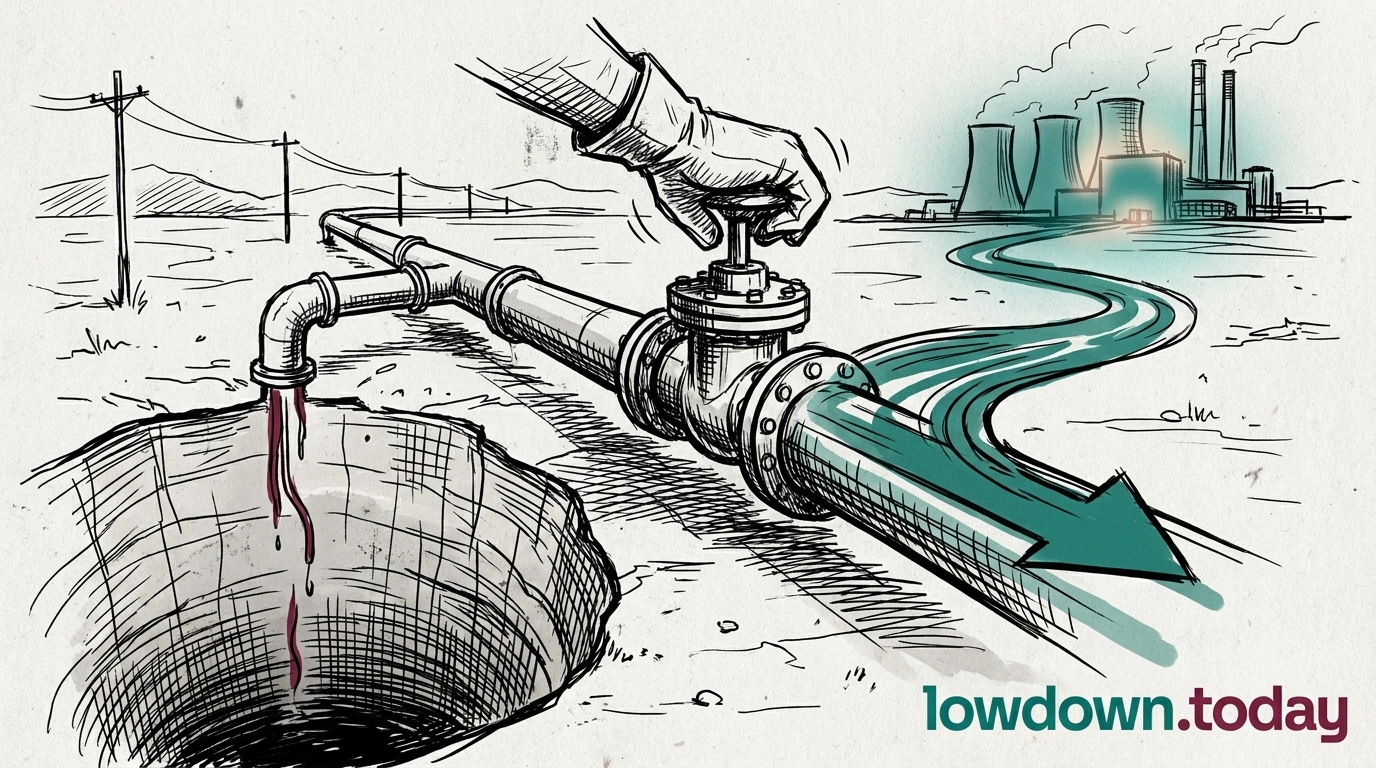
The US Commerce Department partially lifted its restriction on Anthropic's frontier models on 27 June, turning a hard cut-off into a fast-moving one. The reversal came fifteen days after the original order that had pulled the two models worldwide, converting an outright block into a partial, conditional restriction whose remaining scope is still unsettled.

Commerce did not spell out which users regain access or on what terms. The speed of the climbdown, barely two weeks from order to partial lift, shows the restriction working as a policy lever rather than a fixed technical limit, one Washington can tighten or loosen at will. The same discretion runs through the 24 July trade ruling now approaching .

The episode lands five weeks before the EU AI Act's general-purpose AI (GPAI) rules start to bite on 2 August, the date the bloc's AI Office can begin fining model providers. European enterprises weighing procurement against that clock now face a moving target. A model whose availability can change inside a single quarter is hard to standardise on, and that hands the European labs an opening they did not have to win.


Deep Analysis

In plain English

Fifteen days after the US government ordered Anthropic to cut off access to its most powerful AI models for users outside America, a different US government body, the Commerce Department, partially reversed that decision on 27 June. The models were not fully restored to their previous state, but users could access them again under new conditions. The episode matters not because access was cut and then partially restored, but because of what that sequence reveals: the US government treated Anthropic model access as a switch it controls, turned it off, and then turned it partly back on within a fortnight. European businesses that had built their software or services around Anthropic models now know that the switch exists. Five weeks later, the EU's new rules for powerful AI models come into force, and any business using those models needs to plan for the possibility that access could be interrupted again.

What could happen next?
  • Risk

    European enterprises that retained Anthropic models after the partial lift face a documented precedent: the US can reimpose the restriction without advance notice, leaving GPAI-regulated workflows in compliance jeopardy.

    Immediate · Assessed
  • Opportunity

    The partial lift's demonstrated conditionality accelerates commercial migration to EU-incorporated AI providers, creating a defined addressable market for Mistral and Aleph Alpha among GPAI-regulated enterprise buyers.

    Short term · Reported
  • Precedent

    The 15-day order-to-reversal cycle establishes that US export controls on AI models can be imposed and partially lifted on policy grounds within a single business month, making frontier-model access a managed political variable rather than a stable commercial service.

    Long term · Assessed
First Reported In

Update #10 · Digital euro to trilogue; Senate bars CBDC

CNBC· 30 Jun 2026
Read original
Causes and effects
This Event
US partly lifts its Anthropic model curb
The fast partial reversal shows US restrictions on frontier-model access can move within a single quarter, complicating European procurement before 2 August enforcement.
Different Perspectives
Cross-border power traders
The France-Germany day-ahead spread flipped from a EUR 17.20 German premium on 1 August to a EUR 4.15 French premium on 3 August, the same day French curtailment peaked. They cannot yet attribute the flip to curtailment alone, since a like-for-like overnight comparison shows French nuclear output rising while wind fell and demand returned on the weekday step.
EDF
EDF
River-cooling limits took 7.6 GW, 12 per cent of its fleet, offline on 3 August, the highest curtailment since the heatwave began, with an easing forecast to 4.3 GW on 4 August and 3 GW after. It manages the cut as a recurring seasonal constraint, expecting it to lift with river temperature, not repair.
Gasunie
Gasunie
TTF, the Dutch hub it operates, drifted to roughly EUR 55 to 58 per MWh across the window, staying inside its recent range through both the German spark reversal and the French curtailment. It reads a flat hub price as evidence that neither event this window carried enough weight to move the fuel leg on its own.
German gas-fired generators
Record German solar of 18,761 MW on 2 August pushed the clean spark spread to minus 18.48 EUR/MWh, a loss-making day, before it returned to plus 16.20 on 3 August. They now price dispatch against post-solar residual load rather than wind alone, since the sign flipped inside 48 hours on unchanged fuel and carbon costs.
European Commission (DG Energy)
Its implementing-measures register logged transposition notices from only Portugal and Slovakia against Wednesday's Article 94 deadline for Directive (EU) 2024/1788, with 25 states silent. It expects the register to fill only gradually, since filing routinely lags legislating and any infringement track against non-notifying states runs on a slower clock than the deadline itself.
Spain's LNG terminal operators
Spain's 9,145 GWh terminal inventory is the largest single stock in the EU LNG network, an option value that can reroute cargoes wherever the winter strip pays best rather than a cavern gas obligation tied to a fixed date. That flexibility matters more as Germany's cavern shortfall pushes more of the winter security question onto import infrastructure.



