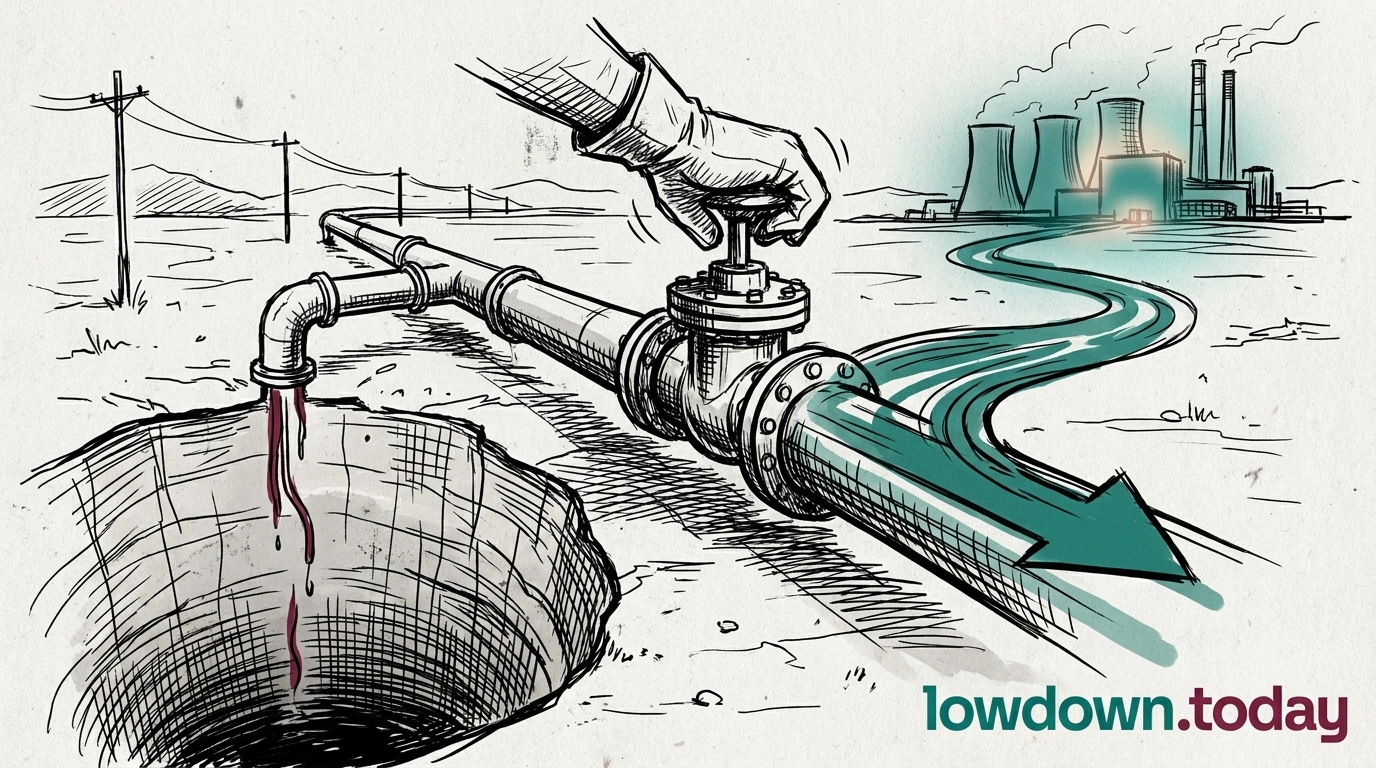
ISW (Institute for the Study of War) assessed on 3 May 2026 that Russia suffered a net territorial loss of 116 km² in April, the first net loss since Ukraine's Kursk incursion in August 20241. Russia's average daily territorial advance fell to 2.9 km² per day over January-April 2026, against 9.76 km² per day in the same period of 2025: a 70% deceleration2.
Russia cited an April gain of 28.28 km² when including infiltrations in contested grey zones. ISW's net figure of minus 116 km² results from subtracting Ukrainian counterattacks and contested-zone reversals from that gross 28.28 km². Russian forces advance into grey-zone terrain that is not held at fortification depth; when Ukrainian counterattacks clear the position, it drops from the verified count without a corresponding Russian acknowledgement. The same mechanism produced Gerasimov's 5:1 exaggeration ratio on Luhansk claims documented in early May. TASS publishes the 28.28 km² gross figure; Russian operational planners work with a different number.
Over the November 2025-April 2026 window, Russia seized 1,443 km² against 2,368 km² in the equivalent period the prior year: 38% less3. The kill rate rose 6.5% while engagements fell in early May, meaning Russia is sustaining higher attrition at lower contact tempo. That pattern has historically indicated manpower pressure rather than an operational choice to reduce tempo. The 800-drone barrage on 13 May runs independently of the ground picture. The diplomatic posture in May frames the war as near-complete at the same moment the battlefield picture is running in the other direction.




