Skip to content
Welcome, thoughtbot's Giant Robots listeners!Start here
European Energy Markets
22JUN

Red Cat signs Ukraine's state arms exporter

2 min read
13:56UTC

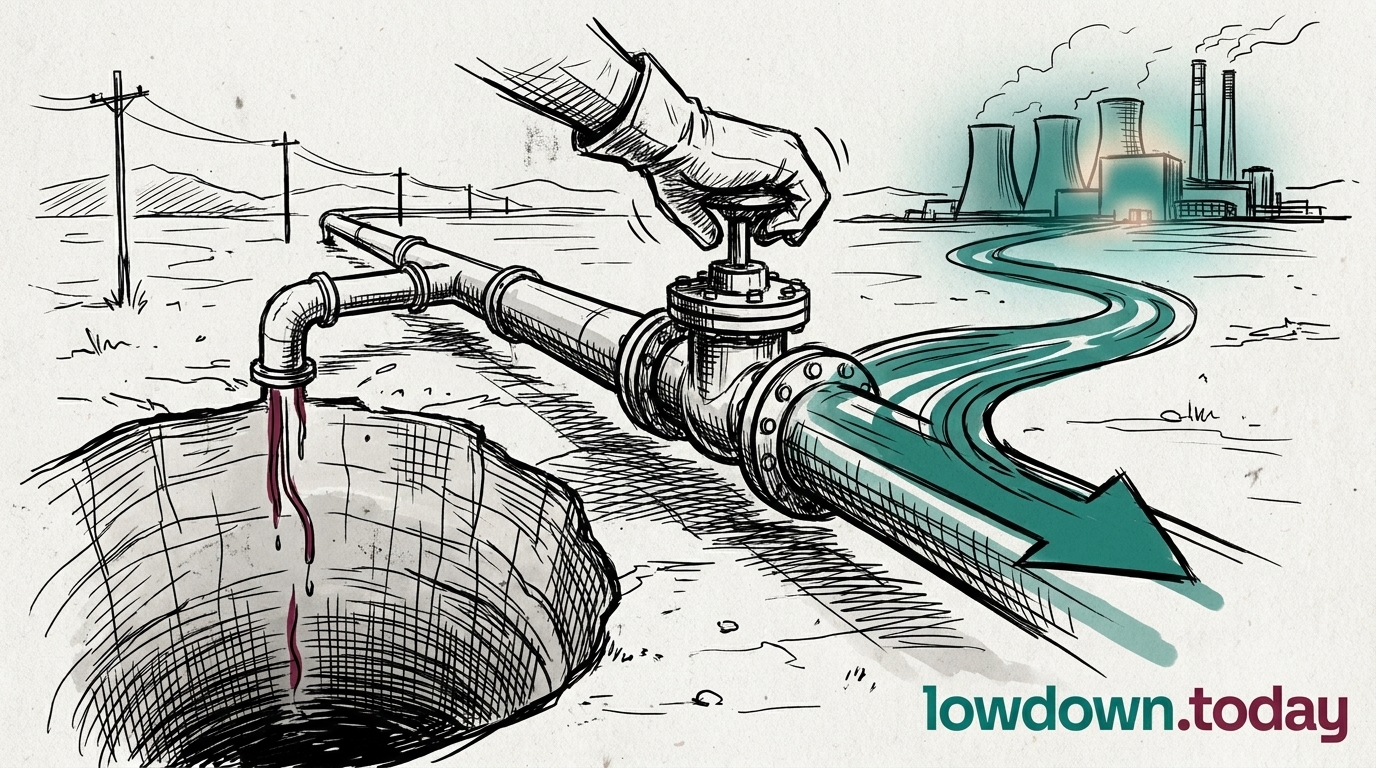
Red Cat Holdings disclosed via an SEC filing a formal partnership with Spetstechnoexport, Ukraine's Ministry of Defence arms exporter, to build next-generation unmanned and robotic systems.

EconomicDeveloping

Red Cat Holdings (Nasdaq: RCAT) disclosed on 7 May, via a US Securities and Exchange Commission (SEC) Form 8-K, a formal partnership with Spetstechnoexport (STE), Ukraine's Ministry of Defence (MoD) state arms exporter, to develop next-generation unmanned and robotic systems⁠1. STE operates under the Ukroboronprom defence group as Kyiv's official intermediary for international weapons trade.

The deal rests on commercial momentum Red Cat logged a quarter earlier, when Q1 revenue jumped 849% to $15.5m and a NATO ally placed a Black Widow drone order through the Alliance's procurement agency, the NSPA (NATO Support and Procurement Agency). The STE tie converts that growth into a state-to-firm channel for Ukrainian combat-iterated designs.

A US-listed manufacturer signing Ukraine's MoD exporter counts as sovereign-sanctioned production, not the export-ban circumvention Kyiv relied on through 2025. Red Cat still needs Western buyers and NSPA paperwork to move product, so the partnership embeds Ukrainian production in the allied supply chain without making it independent of allied gatekeepers.

Deep Analysis

In plain English

Red Cat is a small US company listed on the Nasdaq stock exchange that makes reconnaissance drones, including one called the Black Widow used by US Special Forces. Spetstechnoexport is the Ukrainian government's official arms sales company. The two have formally partnered to develop next-generation drone systems together. Because Red Cat is publicly listed, US law required it to file a public notice (called a Form 8-K) disclosing the deal. That notice is now a public document, meaning anyone can read that a US drone company and Ukraine's defence ministry are building new weapons together.

Deep Analysis
Root Causes

Red Cat needed the SEC 8-K disclosure because Spetstechnoexport is a foreign government entity: material agreements with foreign state entities trigger disclosure obligations under SEC rules for publicly listed companies, unlike purely commercial partnerships.

Ukraine chose to formalise through Spetstechnoexport rather than a commercial subsidiary because the MoD-backed entity provides guarantees a private firm cannot: continuity regardless of commercial failure, state-level export licensing, and diplomatic protection for the partnership's products in third-country sales.

What could happen next?
  • Opportunity

    Red Cat gains access to Ukrainian combat-feedback loops for its next-generation systems without bearing the R&D cost of full-scale field testing, the partnership converts Spetstechnoexport's battlefield data into a commercial product development asset.

    Medium term · Assessed
  • Risk

    Short-seller or FOIA scrutiny of the public 8-K filing could expose procurement volumes, pricing, or capability specifications that both parties would prefer to keep restricted, following the precedent of the Fuzzy Panda Research LRIP contract reveal (ID:1743).

    Short term · Assessed
  • Precedent

    The Red Cat/STE structure provides a replicable template for other small-cap US defence firms to formalise Ukrainian state partnerships through public market disclosure mechanisms, potentially accelerating the broader commercialisation of Ukraine's wartime drone data.

    Medium term · Assessed
First Reported In

Update #11 · Ukraine starts exporting the factory

SEC / Red Cat Holdings· 7 Jun 2026
Read original →
Different Perspectives
Cross-border power traders
The France-Germany day-ahead spread flipped from a EUR 17.20 German premium on 1 August to a EUR 4.15 French premium on 3 August, the same day French curtailment peaked. They cannot yet attribute the flip to curtailment alone, since a like-for-like overnight comparison shows French nuclear output rising while wind fell and demand returned on the weekday step.
EDF
EDF
River-cooling limits took 7.6 GW, 12 per cent of its fleet, offline on 3 August, the highest curtailment since the heatwave began, with an easing forecast to 4.3 GW on 4 August and 3 GW after. It manages the cut as a recurring seasonal constraint, expecting it to lift with river temperature, not repair.
Gasunie
Gasunie
TTF, the Dutch hub it operates, drifted to roughly EUR 55 to 58 per MWh across the window, staying inside its recent range through both the German spark reversal and the French curtailment. It reads a flat hub price as evidence that neither event this window carried enough weight to move the fuel leg on its own.
German gas-fired generators
Record German solar of 18,761 MW on 2 August pushed the clean spark spread to minus 18.48 EUR/MWh, a loss-making day, before it returned to plus 16.20 on 3 August. They now price dispatch against post-solar residual load rather than wind alone, since the sign flipped inside 48 hours on unchanged fuel and carbon costs.
European Commission (DG Energy)
Its implementing-measures register logged transposition notices from only Portugal and Slovakia against Wednesday's Article 94 deadline for Directive (EU) 2024/1788, with 25 states silent. It expects the register to fill only gradually, since filing routinely lags legislating and any infringement track against non-notifying states runs on a slower clock than the deadline itself.
Spain's LNG terminal operators
Spain's 9,145 GWh terminal inventory is the largest single stock in the EU LNG network, an option value that can reroute cargoes wherever the winter strip pays best rather than a cavern gas obligation tied to a fixed date. That flexibility matters more as Germany's cavern shortfall pushes more of the winter security question onto import infrastructure.

Written with AI from Lowdown's published reporting. Not individually reviewed by an editor. Editorial standards.