Skip to content
You can now search across every topic, entity and event.What's new
European Energy Markets
18JUN

Rubio slips Iran deal timeline to months

2 min read
09:57UTC

Secretary of State Marco Rubio said on 7-8 June that Iran's enrichment matters could take months to resolve, walking back the administration's earlier weekend timeline.

EconomicDeveloping
Key takeaway

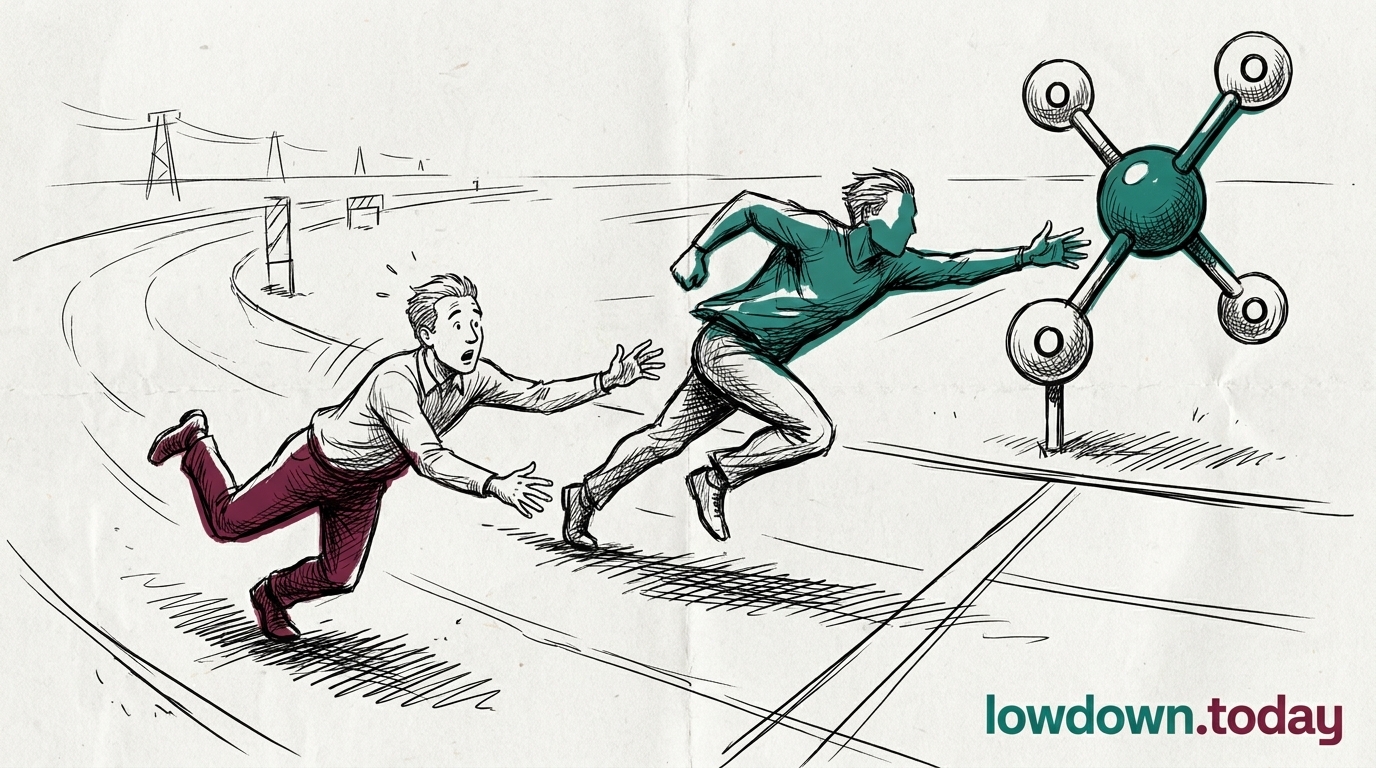
Rubio stretched the Iran deal from this weekend to months, with nothing signed and a strike in between.

Secretary of State Marco Rubio said on 7-8 June that Iran's enrichment matters "could take months" to resolve 1. That walks back the administration's earlier line that a deal "could happen over the weekend", and no Iran instrument was signed across 7-8 June.

The slip belongs in the Trump words-versus-action ledger. No US-Iran deal was put on paper across 5-6 June while the president talked up an imminent settlement; Rubio's months estimate now stretches that gap from days into a quarter. Rezaei's financial precondition remains the substantive sticking point, and the IDF strike inside Iran adds a kinetic complication a negotiating track measured in months can ill absorb.


Deep Analysis

In plain English

US Secretary of State Marco Rubio, the top US diplomat, said on 7-8 June that sorting out Iran's uranium enrichment issues would take months. This contradicted President Trump, who had said days earlier that a deal could happen 'over the weekend'. Nothing was signed. The gap matters because two parties need to agree: Iran has demanded $24 billion in frozen assets be released before any deal (a condition the US has publicly refused), and the UN nuclear agency has not had inspectors inside Iran for 97 days, meaning no one outside Iran can verify what state the uranium stockpile is in. A deal without that verification is something no US president could credibly sell domestically. Rubio's months estimate is a more honest timetable than Trump's weekend framing.

Deep Analysis
Root Causes

Trump's withdrawal from the 2015 JCPOA (nuclear deal) in 2018 destroyed the trust architecture that made that agreement possible. Iran's position since 2018 has been that any new deal requires upfront sanctions relief before compliance steps, having seen a previous deal abandoned by the same government after Iran met its obligations.

This structural trust deficit makes Rubio's 'Hormuz first, sanctions later' sequence (stated at Senate Foreign Relations on 2 June) non-starter logic from Tehran's perspective. The months estimate reflects the time needed to bridge a gap that the 2018 withdrawal created.

What could happen next?
  • Consequence

    The rial hit 1,762,000 per dollar on Day 100 (ID:3974), erasing all deal-optimism gains from the prior fortnight; Rubio's months estimate, once reported in Tehran markets, is likely to push it further, removing any economic incentive for the Iranian government to concede quickly.

  • Risk

    Each week without a signed instrument increases the probability that the US midterm elections in November 2026 move Iran policy into electoral politics, making any administration concession on sanctions relief domestically harder to defend.

First Reported In

Update #121 · Trump said don't strike; Israel struck Iran

InvestingLive· 8 Jun 2026
Read original
Causes and effects
Different Perspectives
Cross-border power traders
The France-Germany day-ahead spread flipped from a EUR 17.20 German premium on 1 August to a EUR 4.15 French premium on 3 August, the same day French curtailment peaked. They cannot yet attribute the flip to curtailment alone, since a like-for-like overnight comparison shows French nuclear output rising while wind fell and demand returned on the weekday step.
EDF
EDF
River-cooling limits took 7.6 GW, 12 per cent of its fleet, offline on 3 August, the highest curtailment since the heatwave began, with an easing forecast to 4.3 GW on 4 August and 3 GW after. It manages the cut as a recurring seasonal constraint, expecting it to lift with river temperature, not repair.
Gasunie
Gasunie
TTF, the Dutch hub it operates, drifted to roughly EUR 55 to 58 per MWh across the window, staying inside its recent range through both the German spark reversal and the French curtailment. It reads a flat hub price as evidence that neither event this window carried enough weight to move the fuel leg on its own.
German gas-fired generators
Record German solar of 18,761 MW on 2 August pushed the clean spark spread to minus 18.48 EUR/MWh, a loss-making day, before it returned to plus 16.20 on 3 August. They now price dispatch against post-solar residual load rather than wind alone, since the sign flipped inside 48 hours on unchanged fuel and carbon costs.
European Commission (DG Energy)
Its implementing-measures register logged transposition notices from only Portugal and Slovakia against Wednesday's Article 94 deadline for Directive (EU) 2024/1788, with 25 states silent. It expects the register to fill only gradually, since filing routinely lags legislating and any infringement track against non-notifying states runs on a slower clock than the deadline itself.
Spain's LNG terminal operators
Spain's 9,145 GWh terminal inventory is the largest single stock in the EU LNG network, an option value that can reroute cargoes wherever the winter strip pays best rather than a cavern gas obligation tied to a fixed date. That flexibility matters more as Germany's cavern shortfall pushes more of the winter security question onto import infrastructure.



