Skip to content
You can now search across every topic, entity and event.What's new
European Energy Markets
15JUN

StromVKG passes, bid ceiling up 41%

2 min read
12:23UTC

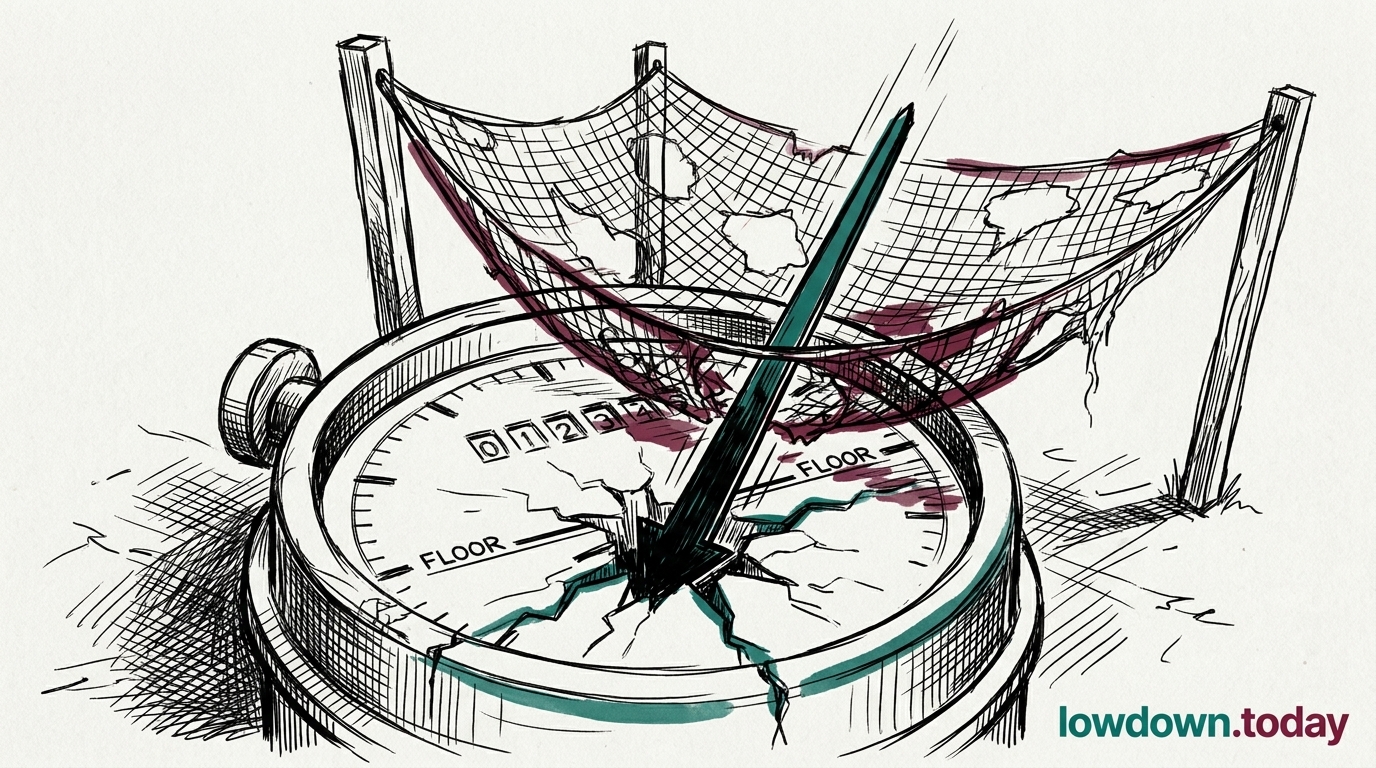
The Bundestag passed StromVKG on 9 July with SPD votes, raising the capacity-auction bid ceiling 41% to EUR 244,000/MW and splitting new capacity one-third north, two-thirds south.

EconomicDeveloping
Key takeaway

Germany raised its capacity-auction ceiling 41%, choosing firm-supply certainty over auction price discipline.

The Bundestag passed the StromVKG capacity law in final plenary on Thursday 9 July, the CDU/CSU and SPD carrying it against AfD, The Greens and the Left 1. StromVKG, Germany's electricity capacity-payment statute, commissions 11 GW of new hydrogen-ready gas capacity, with the first 9 GW tendered in two 4.5 GW tranches on 8 September and 22 December 2026 and a network-charge surcharge of EUR 1-3bn a year from 2031.

Committee stage changed the auction economics. The bid ceiling rose from EUR 173,000/MW to EUR 244,000/MW, a 41% increase that lifts the clearing cost operators can bid into 2. A locational split now directs one-third of new capacity to northern Germany and two-thirds to the south, where industrial load concentrates and the retired nuclear fleet once anchored the grid, and barriers for battery-storage bidders were lowered. The arc ran from first reading through the 24 June Anhoerung to committee clearance, where the Greens' hydrogen-conversion motion failed .

The SPD threatened to block this law in April; it passed on 9 July with SPD votes. Raising the ceiling 41% signals that the government expected the September auction to clear thin at the old cap and chose cost certainty over price discipline. Germany is legislating dispatchable backup precisely as its merchant CCGTs whipsaw on the clean spark spread, and the capacity payment funds the firm megawatts that spread will not.


Deep Analysis

In plain English

StromVKG is a new German law, finally passed by the Bundestag on 9 July, designed to make sure Germany has enough back-up power plants for days when wind and solar are not producing much electricity. It works by paying gas-fired power plant operators in advance to have capacity ready, through a competitive auction, rather than only paying them when they actually generate power. The final version raises the maximum price the government will pay in that auction by 41%, and splits where the plants can be built: roughly a third in the north, two-thirds in the south, because the country's power grid cannot easily move electricity between the two regions. All new plants must be able to run on hydrogen by 2045.

Deep Analysis
Root Causes

The 41% bid-ceiling increase responds to a structural gap exposed on 30 June, when the lowest wind week of the year combined with a heat surge to push Germany's day-ahead price to EUR 195/MWh with every incremental megawatt coming from thermal plant. Without enough dispatchable capacity cleared in advance, a renewables-heavy grid repeats that exposure on any low-wind day.

The north-south locational split addresses a separate constraint: Germany's transmission grid cannot move enough power from northern wind and southern demand centres without local generation, which is why the law now pays roughly twice as much capacity to site in the south specifically.

What could happen next?
  • Consequence

    A higher bid ceiling raises the network-charge surcharge German consumers eventually pay for capacity, a cost financed from 2031 estimated at EUR 1-3bn a year.

  • Meaning

    The north-south locational split formally acknowledges that Germany's grid, not just its total generation capacity, constrains supply security.

First Reported In

Update #25 · Qatari LNG strike puts TTF back over EUR 50

Deutscher Bundestag· 10 Jul 2026
Read original
Different Perspectives
Spain's LNG terminal operators
Spain's 9,145 GWh terminal inventory is the largest single stock in the EU LNG network, an option value that can reroute cargoes wherever the winter strip pays best rather than a cavern gas obligation tied to a fixed date. That flexibility matters more as Germany's cavern shortfall pushes more of the winter security question onto import infrastructure.
European Commission
European Commission
Brussels holds the bloc to 90% on a flexible window while Germany, holding roughly a quarter of EU storage capacity, tracks toward missing its own lower 80% figure by 21 points. A national shortfall this size in the anchor market matters more to bloc security than the flexible timetable alone can absorb.
French power exporters and CRE
French day-ahead rose in step with Germany but by less, reopening a EUR 7-17 premium that makes northward export flows commercially attractive again after the EUR 43.09 discount evaporated in days. CRE separately authorised RTE and Enedis to buy flexibility locally, betting the coming winter's binding constraint is grid congestion rather than a shortage of firm capacity.
TTF trading desk
TTF trading desk
A visible national shortfall like Germany's 21-point gap is a directional signal, not noise, for a desk holding the summer-winter spread. TTF's flat EUR 58-60 range through this week's German price swings says the market has not yet chosen to reprice refill risk into the front of the curve.
German cavern and CCGT operators
German caverns kept buying prompt gas at TTF near EUR 58-60 through the inversion; the wind collapse to 2.4 GW then flipped the spark spread to plus EUR 29 and put turbines back in the same queue. Every day turbines win that bid, injection at a third of the 877 GWh/day pace needed falls further behind.
Slovakia
Slovakia
Slovakia says it dropped its hold-out on the 21st sanctions package only after Ursula von der Leyen personally signed written gas-price and supply guarantees. The Council of the European Union's own 17,238-character release on the package names neither Slovakia nor any guarantee, leaving Bratislava's account unconfirmed by the institutional record.



