Skip to content
You can now search across every topic, entity and event.What's new
European Energy Markets
15JUN

IRGC Blocks Pezeshkian as He Warns of Collapse

2 min read
12:23UTC

Iran's elected president says the economy will fail within weeks. The generals who control access to the Supreme Leader rejected his assessment.

EconomicDeveloping
Key takeaway

The IRGC benefits from the war that Pezeshkian says will destroy Iran's economy.

Ahmad Vahidi, the IRGC's effective chief, continued to block President Masoud Pezeshkian from reaching Supreme Leader Mojtaba Khamenei on 5 April . 1 Vahidi also blocked civilian government appointments. The military council that seized access to the Supreme Leader now oversees daily operations.

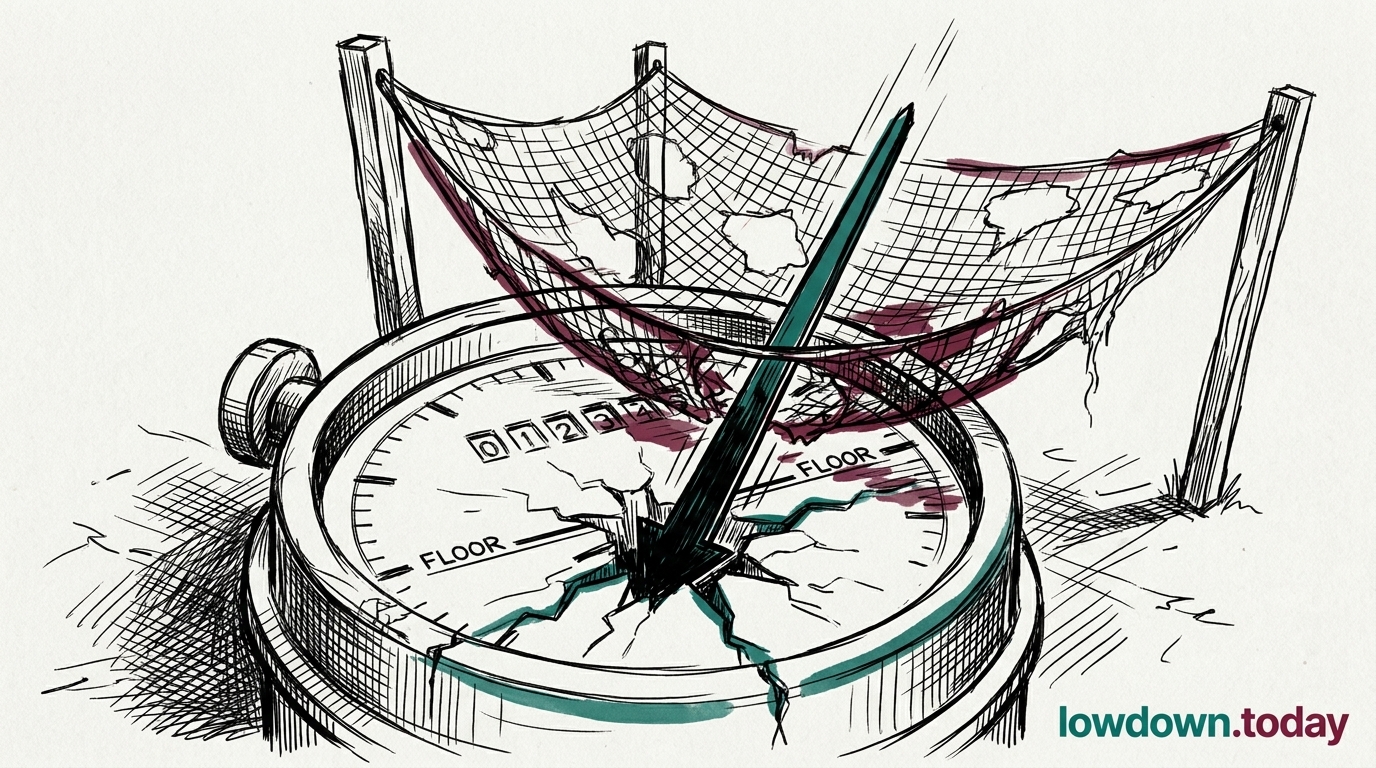
Pezeshkian has warned privately of "complete economic collapse within three to four weeks without a ceasefire." The IRGC leadership rejected the assessment. Accepting a ceasefire would require the IRGC to relinquish the control it has gained over civilian governance. The generals who would need to negotiate are the same generals whose authority depends on continuing to fight.

Iran's General Aliabadi dismissed Trump's latest threat as "helpless, nervous, unbalanced and stupid," adding: "the gates of hell will open for you." No path to a ceasefire runs through the IRGC.


Deep Analysis

In plain English

Iran has an elected president, Masoud Pezeshkian, who says the country is heading for total economic collapse in three to four weeks without a ceasefire. But the generals of the Revolutionary Guard, the most powerful military force in the country, are blocking the president from speaking to the Supreme Leader. The Supreme Leader is the person with actual authority over whether Iran negotiates. The generals who would need to agree to a ceasefire have gained power because of the war. Agreeing to a ceasefire means giving some of that power back.

Deep Analysis
Root Causes

The IRGC's incentive structure during wartime is fundamentally different from the civilian government's. The IRGC gains expanded authority, budget, and political influence from the conflict. Pezeshkian's ceasefire warning, if acted upon, would require the IRGC to relinquish those gains. The institutional interest of the IRGC in continuing the war is the structural cause of Pezeshkian's isolation.

Ahmad Vahidi's role is specifically relevant: Vahidi was previously Iran's Defence Minister (2009-13) and is under Interpol notice for the 1994 Buenos Aires AMIA bombing. His institutional knowledge of how to consolidate security sector control within Iran's factional system is deep and specific.

What could happen next?
  • Consequence

    Any ceasefire requires IRGC acceptance, but the IRGC's institutional interests are served by the war's continuation. This creates a structural deadlock independent of any diplomatic framework.

  • Risk

    IRGC wartime power consolidation may prove irreversible post-conflict, further marginalising Iran's elected civilian government in the conflict's aftermath.

First Reported In

Update #59 · Day 37: A Ground War Inside Iran That Nobody Will Name

Jerusalem Post· 5 Apr 2026
Read original
Different Perspectives
Spain's LNG terminal operators
Spain's 9,145 GWh terminal inventory is the largest single stock in the EU LNG network, an option value that can reroute cargoes wherever the winter strip pays best rather than a cavern gas obligation tied to a fixed date. That flexibility matters more as Germany's cavern shortfall pushes more of the winter security question onto import infrastructure.
European Commission
European Commission
Brussels holds the bloc to 90% on a flexible window while Germany, holding roughly a quarter of EU storage capacity, tracks toward missing its own lower 80% figure by 21 points. A national shortfall this size in the anchor market matters more to bloc security than the flexible timetable alone can absorb.
French power exporters and CRE
French day-ahead rose in step with Germany but by less, reopening a EUR 7-17 premium that makes northward export flows commercially attractive again after the EUR 43.09 discount evaporated in days. CRE separately authorised RTE and Enedis to buy flexibility locally, betting the coming winter's binding constraint is grid congestion rather than a shortage of firm capacity.
TTF trading desk
TTF trading desk
A visible national shortfall like Germany's 21-point gap is a directional signal, not noise, for a desk holding the summer-winter spread. TTF's flat EUR 58-60 range through this week's German price swings says the market has not yet chosen to reprice refill risk into the front of the curve.
German cavern and CCGT operators
German caverns kept buying prompt gas at TTF near EUR 58-60 through the inversion; the wind collapse to 2.4 GW then flipped the spark spread to plus EUR 29 and put turbines back in the same queue. Every day turbines win that bid, injection at a third of the 877 GWh/day pace needed falls further behind.
Slovakia
Slovakia
Slovakia says it dropped its hold-out on the 21st sanctions package only after Ursula von der Leyen personally signed written gas-price and supply guarantees. The Council of the European Union's own 17,238-character release on the package names neither Slovakia nor any guarantee, leaving Bratislava's account unconfirmed by the institutional record.



