Skip to content
You can now search across every topic, entity and event.What's new
European Energy Markets
15JUN

Gabbard: Iran degraded, not obliterated

4 min read
12:23UTC

The Director of National Intelligence told senators Iran's government is 'intact but largely degraded' — and left out her own office's written assertion that the nuclear programme was 'obliterated.'

EconomicDeveloping
Key takeaway

Omitting contradictory intelligence findings from public testimony repeats the pre-Iraq playbook that destroyed US institutional credibility for a generation.

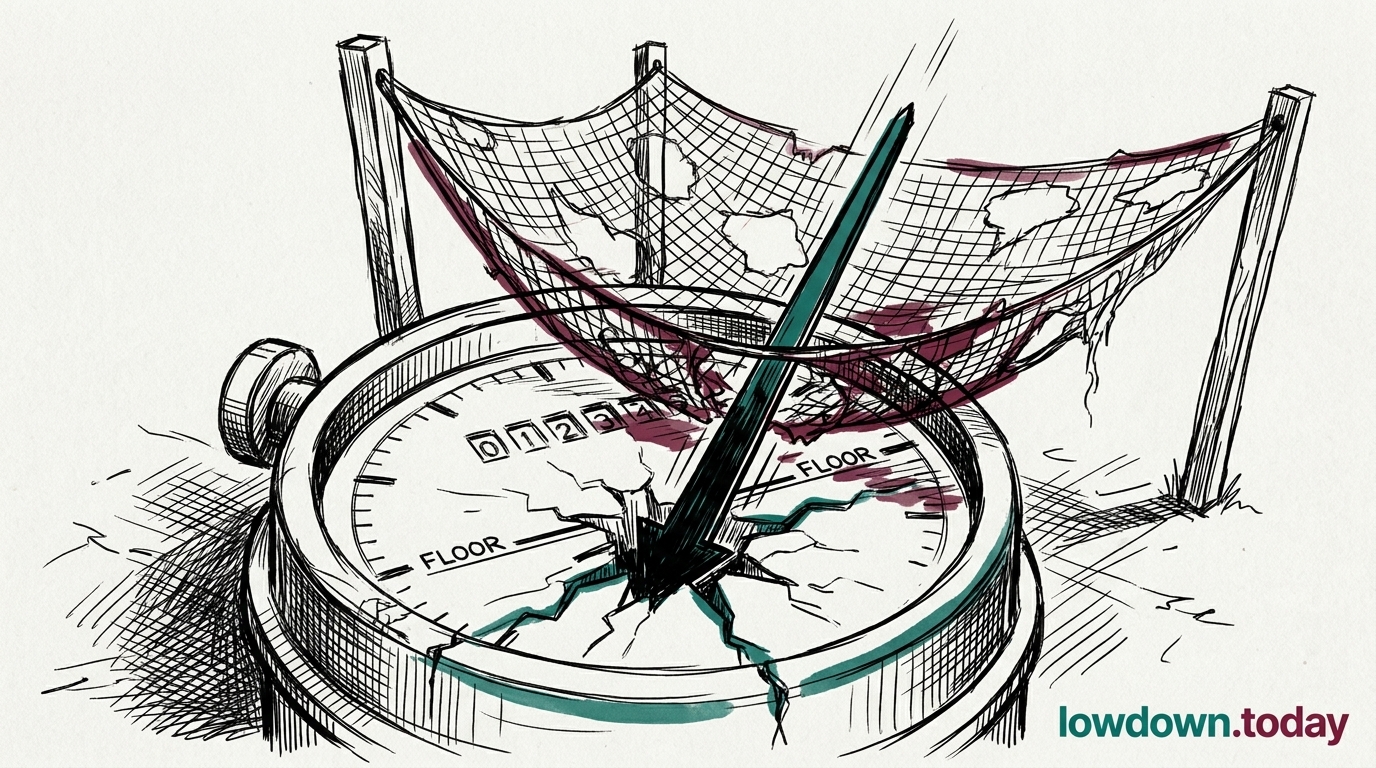
DNI Tulsi Gabbard told the Senate Intelligence Committee on 18 March that Iran's government "appears to be intact but largely degraded." Her verbal testimony omitted a written assertion — prepared by her own office and submitted to the committee — that Iran's nuclear enrichment programme had been "obliterated." Senator Mark Warner, the committee's vice chairman, stated she "chose to omit the parts that contradict Trump" 1. Senator Michael Bennet added: "The war is not ending, it is escalating" and the mission "has become less clear" 2.

The distinction between what Gabbard's office wrote and what she said aloud matters. Written testimony submitted to intelligence committees enters the official record; verbal testimony is delivered under oath and subject to questioning by senators who hold security clearances and access to raw intelligence. By omitting the "obliterated" claim rather than defending it, Gabbard signalled that the assertion could not survive scrutiny from committee members who can read the same source material. Defence Secretary Hegseth had claimed five days earlier that Iran's missile volume was down 90% and drone launches down 95% — language calibrated for press conferences, not for hearings where senators can cross-reference classified reporting.

Her characterisation of the Iranian government as "intact but largely degraded" defines the distance between current operations and any achievable end-state. Trump acknowledged on 14 March that popular revolution — his stated objective — faces "a very big hurdle" when the population lacks weapons . NBC News reported that military officials include off-ramp options in Trump's daily war briefings; he has not taken any . Three members of The Supreme Leader's inner circle are dead in 48 hours, yet the DNI's own assessment is that the government structure holds. The Administration has not articulated what "largely degraded" is supposed to produce if it does not produce collapse.

The hearing came the same day six Democratic senators forced a War Powers Resolution vote and one day after Joe Kent resigned as counterterrorism director, stating Iran "posed no imminent threat" . Congressional pressure is now building on two fronts: the legal authority to wage the war and the reliability of the intelligence used to justify it. Senate Republicans blocked the War Powers vote, but Democrats' threat of daily procedural action ensures the pressure does not recede. The last time a DNI's credibility became a sustained congressional issue — James Clapper's 2013 testimony on NSA surveillance before the same committee — the political consequences ran for years.


Deep Analysis

In plain English

The Director of National Intelligence — the official responsible for coordinating all US intelligence agencies — went before the Senate to brief on what the US knows about Iran's nuclear programme. Her written prepared remarks reportedly stated the programme was effectively destroyed. But she omitted that claim when she spoke aloud. Senators noticed the gap and accused her of hiding findings that contradict the president's public position. The problem: Congress and the public are being asked to take positions on an active war based on an intelligence picture that the intelligence community's own written record may not support.

Deep Analysis
Synthesis

The convergence of Gabbard's omission and Grossi's public contradiction (Event 11) creates a qualitatively more damaging two-track credibility problem. The administration's nuclear narrative is now contradicted by both its own classified written testimony and by the principal international nuclear monitoring body. Each contradiction alone is manageable; together they constitute a systematic evidentiary failure that will shape every post-war accountability process and non-proliferation negotiation.

Root Causes

The structural driver is the DNI's political appointment status. Unlike the CIA Director, whose statutory mandate includes an obligation to provide unvarnished assessments to Congress, the DNI role — created in 2004 — was designed as a presidential coordination and advisory function, inherently more susceptible to politicisation. Gabbard's omission is partly a product of that institutional design flaw, not solely an individual decision.

Escalation

The testimony gap, now public, gives Democrats documented grounds to demand declassification of the written testimony. This escalates the executive-legislative conflict at a moment when the administration needs congressional acquiescence for operational continuity — creating leverage for the minority that the War Powers vote alone had not provided.

What could happen next?
  • Consequence

    Democratic senators will cite the testimony gap to justify continued daily War Powers votes, deepening the constitutional standoff at an operationally critical moment for the administration.

    Immediate · Assessed
  • Meaning

    Senator Bennet's statement that the mission 'has become less clear' signals Congress lacks a shared, stated definition of military success — a governance vacuum with no resolution mechanism in sight.

    Immediate · Reported
  • Risk

    European allies calibrating diplomatic positions against US intelligence assessments may begin applying additional discount factors to Washington-sourced intelligence across all domains.

    Short term · Suggested
  • Precedent

    Omitting contradictory classified findings from public congressional testimony during an active conflict establishes a new norm for executive intelligence management in wartime.

    Long term · Assessed
First Reported In

Update #41 · South Pars struck; Iran hits Qatar's LNG

Al Jazeera· 19 Mar 2026
Read original
Causes and effects
This Event
Gabbard: Iran degraded, not obliterated
The gap between Gabbard's written and verbal testimony is the most direct public evidence that the intelligence community's institutional assessment diverges from the administration's political narrative on the war's core stated objective. Combined with the War Powers vote and Kent's resignation, congressional oversight pressure is building simultaneously on both the legal authority and intelligence foundation of the campaign.
Different Perspectives
Spain's LNG terminal operators
Spain's 9,145 GWh terminal inventory is the largest single stock in the EU LNG network, an option value that can reroute cargoes wherever the winter strip pays best rather than a cavern gas obligation tied to a fixed date. That flexibility matters more as Germany's cavern shortfall pushes more of the winter security question onto import infrastructure.
European Commission
European Commission
Brussels holds the bloc to 90% on a flexible window while Germany, holding roughly a quarter of EU storage capacity, tracks toward missing its own lower 80% figure by 21 points. A national shortfall this size in the anchor market matters more to bloc security than the flexible timetable alone can absorb.
French power exporters and CRE
French day-ahead rose in step with Germany but by less, reopening a EUR 7-17 premium that makes northward export flows commercially attractive again after the EUR 43.09 discount evaporated in days. CRE separately authorised RTE and Enedis to buy flexibility locally, betting the coming winter's binding constraint is grid congestion rather than a shortage of firm capacity.
TTF trading desk
TTF trading desk
A visible national shortfall like Germany's 21-point gap is a directional signal, not noise, for a desk holding the summer-winter spread. TTF's flat EUR 58-60 range through this week's German price swings says the market has not yet chosen to reprice refill risk into the front of the curve.
German cavern and CCGT operators
German caverns kept buying prompt gas at TTF near EUR 58-60 through the inversion; the wind collapse to 2.4 GW then flipped the spark spread to plus EUR 29 and put turbines back in the same queue. Every day turbines win that bid, injection at a third of the 877 GWh/day pace needed falls further behind.
Slovakia
Slovakia
Slovakia says it dropped its hold-out on the 21st sanctions package only after Ursula von der Leyen personally signed written gas-price and supply guarantees. The Council of the European Union's own 17,238-character release on the package names neither Slovakia nor any guarantee, leaving Bratislava's account unconfirmed by the institutional record.



