Skip to content
You can now search across every topic, entity and event.What's new
European Energy Markets
15JUN

Brent holds at $95 as markets wait

2 min read
12:23UTC

Oil prices stayed flat at $95-97, pricing a sustained stalemate rather than confidence in resolution.

EconomicDeveloping
Key takeaway

Brent above $95 reflects a market that expects neither resolution nor collapse.

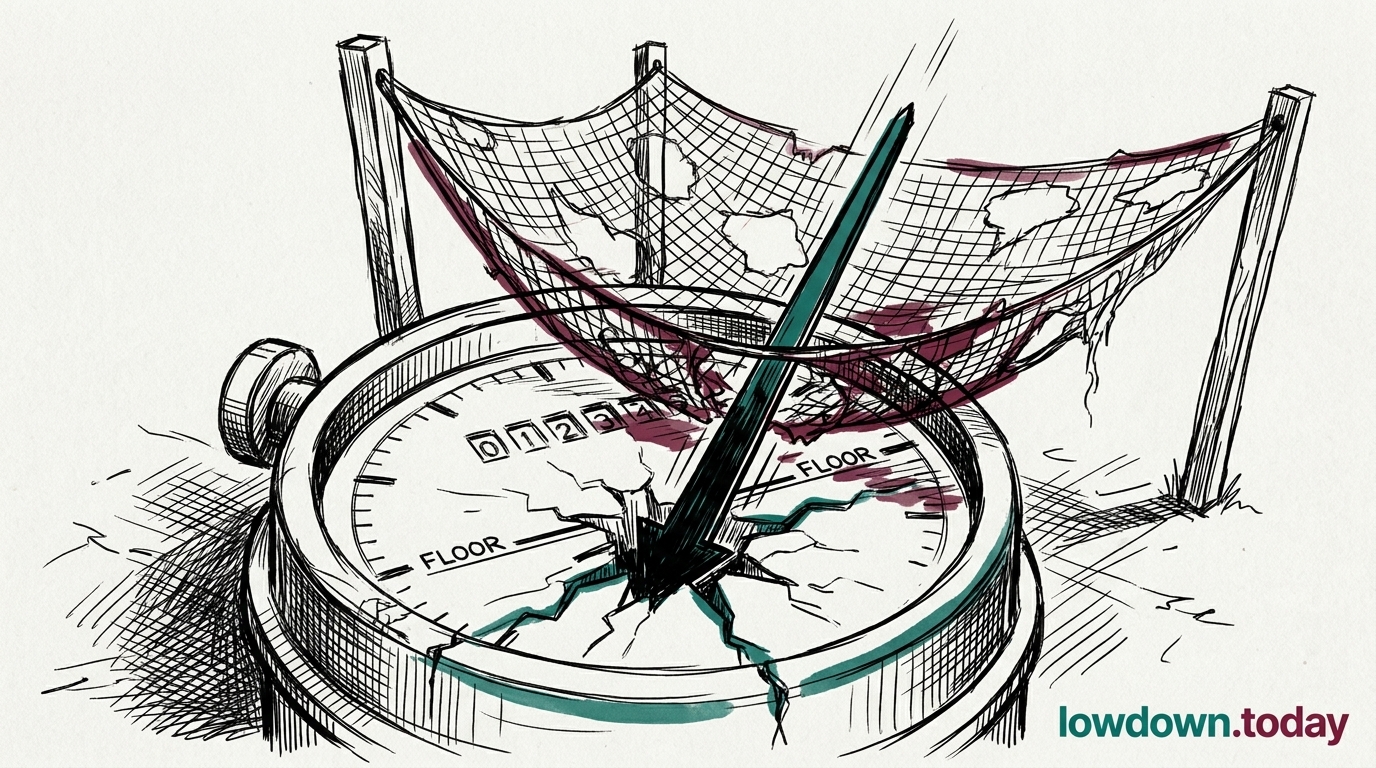
Brent Crude traded between $95.20 and $96.69 on 11-12 April, essentially flat from the prior update's $96.39 . The post-ceasefire drop to $92 proved temporary; Brent has since recovered and settled into a narrow band above $95.

The flat range tells a story. Markets are not pricing in a clean resolution. They are not pricing in a return to conflict either. They are pricing a structural stalemate: the Hormuz strait stays mostly closed, supply stays constrained, and nobody knows what happens when the ceasefire expires.

Oxford Economics projects world GDP growth at 1.4% in 2026 if the conflict persists, down from a 2.6% baseline. War risk insurance premiums remain four to five times pre-war levels. Commercial vessels rerouting via the Cape of Good Hope add 10 to 20 days per voyage, and US importer freight rates have risen by up to 50%.

Most equity markets have not yet priced in a sustained conflict scenario, which means the current oil price may be an underestimate of the economic shock if the ceasefire collapses without a replacement framework. Brent peaked sharply higher before the ceasefire was announced; a return to those levels would sharpen the GDP drag considerably.


Deep Analysis

In plain English

Brent crude is the global oil price benchmark. It is trading just above $95 per barrel, roughly $20 above where it was before the conflict. The fact it has stayed flat, neither rising sharply nor falling, tells you what the markets think: they expect the stalemate to continue for a while, but they do not expect a catastrophic escalation either. Oxford Economics, one of the most widely-cited economic forecasting institutions, estimates that if this conflict drags on, the world economy will grow by only 1.4% in 2026, down from 2.6% without the conflict. That 1.2-percentage-point reduction does not sound like much, but at the scale of the global economy it represents roughly $1.2 trillion in lost output, roughly the entire GDP of Spain for a year. For ordinary people, the most direct effect is energy costs. Sustained $95+ Brent flows through to petrol, diesel, gas, and electricity prices over weeks to months.

What could happen next?
  • Consequence

    Markets pricing a structural stalemate rather than resolution means Brent will stay elevated regardless of ceasefire expiry, unless Hormuz transit actually resumes at scale, a signal the first oil tanker full transit would provide.

  • Risk

    The Oxford Economics 1.4% global growth scenario is predicated on sustained conflict without re-escalation; a return to active hostilities would trigger a spike above $110, potentially pushing the global economy into recession territory.

First Reported In

Update #66 · Islamabad collapses: 10 days to expiry

Stimson Center· 12 Apr 2026
Read original
Different Perspectives
Spain's LNG terminal operators
Spain's 9,145 GWh terminal inventory is the largest single stock in the EU LNG network, an option value that can reroute cargoes wherever the winter strip pays best rather than a cavern gas obligation tied to a fixed date. That flexibility matters more as Germany's cavern shortfall pushes more of the winter security question onto import infrastructure.
European Commission
European Commission
Brussels holds the bloc to 90% on a flexible window while Germany, holding roughly a quarter of EU storage capacity, tracks toward missing its own lower 80% figure by 21 points. A national shortfall this size in the anchor market matters more to bloc security than the flexible timetable alone can absorb.
French power exporters and CRE
French day-ahead rose in step with Germany but by less, reopening a EUR 7-17 premium that makes northward export flows commercially attractive again after the EUR 43.09 discount evaporated in days. CRE separately authorised RTE and Enedis to buy flexibility locally, betting the coming winter's binding constraint is grid congestion rather than a shortage of firm capacity.
TTF trading desk
TTF trading desk
A visible national shortfall like Germany's 21-point gap is a directional signal, not noise, for a desk holding the summer-winter spread. TTF's flat EUR 58-60 range through this week's German price swings says the market has not yet chosen to reprice refill risk into the front of the curve.
German cavern and CCGT operators
German caverns kept buying prompt gas at TTF near EUR 58-60 through the inversion; the wind collapse to 2.4 GW then flipped the spark spread to plus EUR 29 and put turbines back in the same queue. Every day turbines win that bid, injection at a third of the 877 GWh/day pace needed falls further behind.
Slovakia
Slovakia
Slovakia says it dropped its hold-out on the 21st sanctions package only after Ursula von der Leyen personally signed written gas-price and supply guarantees. The Council of the European Union's own 17,238-character release on the package names neither Slovakia nor any guarantee, leaving Bratislava's account unconfirmed by the institutional record.



