Skip to content
Briefings are running a touch slower this week while we rebuild the foundations.See roadmap
European Energy Markets
11JUN

Troll fault pulls Norwegian gas offline

4 min read
09:04UTC

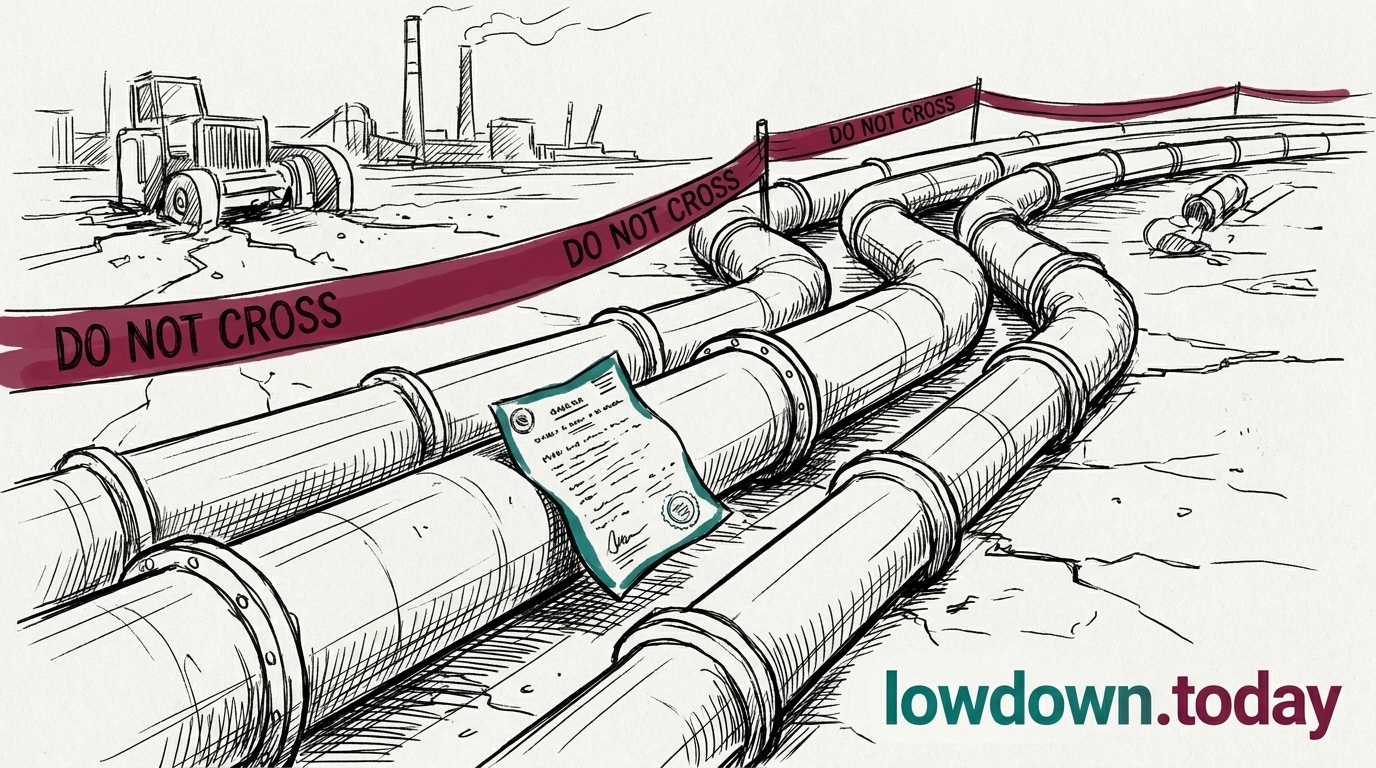
A Troll A compressor failure found during a 21 May annual test cut Equinor's Troll send-out by 34.6 mcm/day from 26 May, stacking on Hammerfest to remove more than 50 mcm/day of Norwegian supply.

EconomicDeveloping
Key takeaway

Troll plus Hammerfest removed 50-plus mcm/day, leaving the curve a Troll-restart long it has not paid for.

Equinor's Troll field, Norway's largest, extended a partial outage to 31 May after a compressor failure on the Troll A platform was found during a 21 May annual test, cutting send-out by 34.6 mcm/day from 26 to 30 May, roughly 26% of normal throughput, with a further 16.2 mcm/day off on 30-31 May 1. Gassco filed the regulatory notice as operator of the Kollsnes processing plant that routes Troll production to Europe.

This is a fresh mechanical fault, distinct from the planned Hammerfest maintenance that has run since 22 April with no restart guidance . Stacked together, the two assets put more than 50 mcm/day of flexible Norwegian molecules out during the window. The buffer was already thinning: Sodir's April print showed Norwegian sales easing to 10.2 bcm from 10.8 bcm in March before Troll tripped.

The curve treated none of it as material. A dated, verified physical loss of this size would normally bid the prompt, yet TTF fell across the window as the benchmark chased Iran diplomacy over molecules. That leaves the Troll restart as an unpriced asymmetric long: if Equinor holds the 31 May date the loss reverses on schedule, but Hammerfest cycles have overrun before, and a compressor repair that slips into June re-tightens a prompt that is currently paying nothing for the risk.


Deep Analysis

In plain English

Troll is Norway's largest natural gas field, sitting under the North Sea. It supplies gas to European countries via an undersea pipeline system. Think of it as one of Europe's most important gas taps. On 21 May 2026, engineers discovered a broken compressor during a routine annual inspection of the Troll A platform. A compressor is essentially a pump that pressurises gas so it can travel through the pipeline. Without it working properly, the field can only send about three-quarters of its normal gas output to European buyers. To make things worse, Norway's only LNG export plant, at Hammerfest in the far north of the country, has also been shut down since 22 April for maintenance with no confirmed restart date. Together, these two Norwegian problems mean Europe is currently receiving more than 50 million cubic metres per day less gas from Norway than normal. Despite this real, confirmed supply loss, European gas prices actually fell on 26 May because of news about a possible deal between the US and Iran that might reopen another major gas route. That is unusual and suggests the gas market is currently more focused on diplomatic news than on actual supply and demand.

Deep Analysis
Root Causes

Two distinct supply degradation events have combined to put over 50 mcm/day of Norwegian production offline simultaneously in the 26-31 May window.

The Troll A compressor failure discovered during the 21 May annual test is a fresh unplanned outage. Annual test regimes on ageing offshore compressor infrastructure carry a non-trivial probability of revealing latent faults under stress conditions that do not appear during normal operations.

The Troll field has operated since 1996; its compressor trains at Troll A have been subject to ongoing service extension beyond their original design life, increasing the probability of test-triggered fault discovery.

Hammerfest LNG's unresolved return date compounds the Troll loss. As of 26 May, Hammerfest has been offline since 22 April with no confirmed return guidance from Equinor beyond the original 10 July target, which carries poor odds given the 2025 precedent. Sodir's April production data at 10.2 bcm, down 0.6 bcm month-on-month from March's 10.8 bcm, confirmed Norwegian export capacity was already declining before either outage reached full severity.

The market's failure to price this combined outage in TTF on 26 May, despite 50-plus mcm/day of verified Norwegian supply offline, reflects the Iran diplomacy premium dominating the TTF signal. A market that responds to geopolitical headlines rather than physical balances is structurally slower to price supply outages unless they coincide with diplomatic bearishness.

What could happen next?
  • Risk

    A Troll-restart slip past 31 May, consistent with the Hammerfest 2025 compressor-fault precedent of 24-day extension, would remove an additional 34.6 mcm/day of Norwegian supply at the height of the injection season, compounding the storage pace deficit against the 80% November target.

  • Risk

    If Hammerfest also overruns its 10 July return date, Norwegian export capacity remains more than 50 mcm/day below nameplate through July, at which point the injection season is entering its critical window for achieving any significant fill acceleration.

First Reported In

Update #12 · EU refill doubles on mandates as TTF fades

OE Digital· 26 May 2026
Read original
Different Perspectives
Amsterdam-Rotterdam-Antwerp gas trading desks
TTF failing to fall with three bearish physical signals on 11 June confirms EUR 50 as a diplomatic ceiling rather than a physical floor; the Iran escalation premium of roughly EUR 2-3/MWh is the sole bid not corroborated by a molecule. Winter Cal-26 long against summer TTF short is the structural position FNB Gas's broken-mechanism verdict supports.
German capacity planners and industrial buyers
The cabinet-approved StromVKG entering Bundestag is a direct acknowledgement that EUR 124/MWh day-ahead power and a EUR -8 spark spread make Germany's grid unfinanceable on market terms; the 2031 first-capacity date is five years of exposure before any relief arrives from the 9 GW programme.
ACER and the European Commission
ACER's 11 June REMIT workshop and the 12 June guidance lock signal the surveillance regime entering its first full enforcement cycle under expanded cross-border powers, with 204 STORs in 2025 already doubling the prior year before the new powers activated. The Article 207 TFEU pipeline ban framing has produced no CJEU stay, validating the trade-measure classification strategy.
LNG spot traders and cargo routers
The JKM-TTF arb at USD 2.368/MMBtu sits above the USD 1.80-2.00 round-trip threshold, routing Atlantic spot cargoes east with positive carry and compressing European import volumes through the injection season. At USD 2.368 the arb still points Asia comfortably; the next weekly laycan window is the operative data point.
Hungary and Slovakia
Neither Budapest's February 2026 CJEU annulment challenge nor Slovakia's signalled application has produced a stay; with six days remaining the legal route has not bought the supply-protection time it was intended to. After 17 June, Hungary's long-term Gazprom-TurkStream contract to at least September 2027 becomes the sole remaining Russian pipeline import line for both states.
Hungary and Slovakia (Central European supply-security bloc)
Nine days from the 17 June short-term pipeline ban, neither Hungary's February CJEU challenge nor Slovakia's signalled application has produced a stay; the legal route has not bought the supply-protection time it was intended to. After 17 June, Hungary's long-term Gazprom-TurkStream contract to 2036 becomes the sole remaining Russian pipeline import route for both states.



